

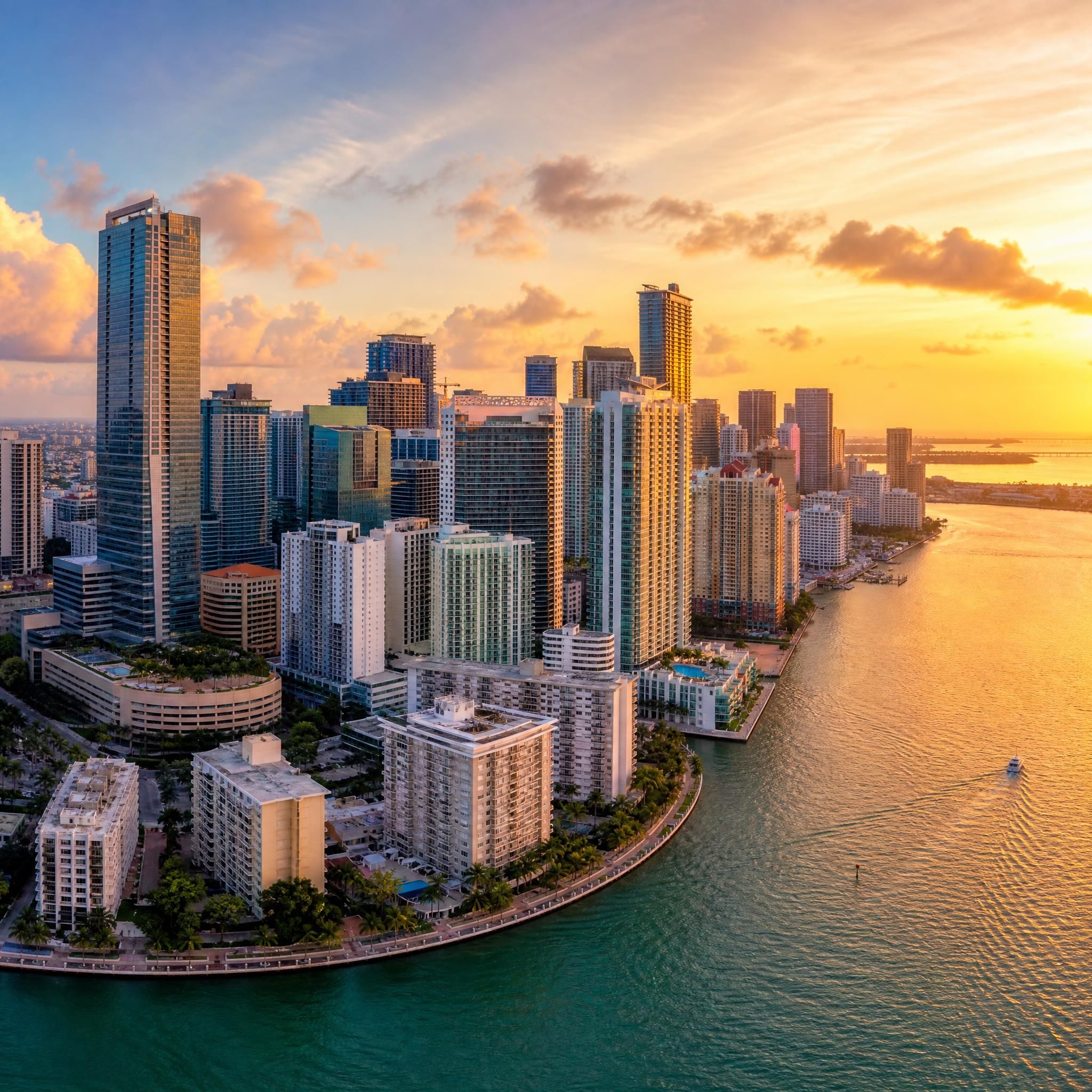
You've decided Miami is the destination. The skyline is calling, the waterfront lifestyle is beckoning, and the tax advantages are impossible to ignore. But between that first spark of interest and the moment you hold the keys to your new luxury residence, there's a maze of decisions, timelines, deposit structures, developer vetting, and neighborhood trade-offs that can make or break your investment.
This is not a general overview of Miami luxury real estate. This is your actionable playbook — a step-by-step guide to navigating the new construction luxury homes Miami market in 2026 with confidence, clarity, and a strategy that actually works.
Whether you're eyeing a sleek Brickell high-rise, a waterfront retreat in Edgewater, or a boutique residence in Coconut Grove, these practical strategies will help you move smarter, faster, and with far less risk.
Table of contents
- Step 1: Know the Market Before You Shop
- Step 2: Choose Your Neighborhood Strategically
- Step 3: Vet the Developer Like a Pro
- Step 4: Master the Pre-Construction Deposit Structure
- Step 5: Run Your Investment Numbers Honestly
- Step 6: Build the Right Team Around You
- FAQ
- Key Statistics
Step 1: know the market before you shop
Before you walk into a sales gallery or request a floor plan, you need a clear picture of where Miami's luxury new construction market stands in 2026 — and more importantly, where it's headed.
The current landscape
Miami's luxury real estate market remains a magnet for wealthy buyers from around the world. In 2025, South Florida posted the second-most $10M+ home sales in its history, with about one luxury transaction per day, signaling continued appetite at the highest price points.
But the market has matured. The frenzy of 2021–2022 has given way to something more sustainable. The Miami-Dade market is displaying a mix of steady growth in some segments and increased opportunities in others. Overall, the market has moved away from rapid price appreciation toward a more sustainable pace, with experts anticipating moderate growth of around 2–4% in many segments.
What this means for new construction buyers
The shift to a more measured market is actually good news for buyers. You have more negotiating leverage than in 2021, more time to conduct due diligence, and more projects to compare. However, the best units in the most desirable towers still move fast.
Practical action: Before touring any developments, spend two weeks researching price per square foot trends in your target neighborhood. Brickell condo prices in 2026 show general resale at approximately $657–$695/sq ft, while pre-construction ultra-luxury branded projects (St. Regis, Cipriani, 888 Brickell/Dolce & Gabbana) command $2,500–$3,000+ per sq ft. Knowing this baseline protects you from overpaying and helps you identify genuine value.
📊 40–60% – Miami-Dade Luxury Home Appreciation Since 2020
Step 2: choose your neighborhood strategically
One of the most consequential decisions you'll make is where in Miami to buy. Each neighborhood has a distinct investment profile, lifestyle character, and supply-demand dynamic. Here's how to think about the major luxury new construction zones.
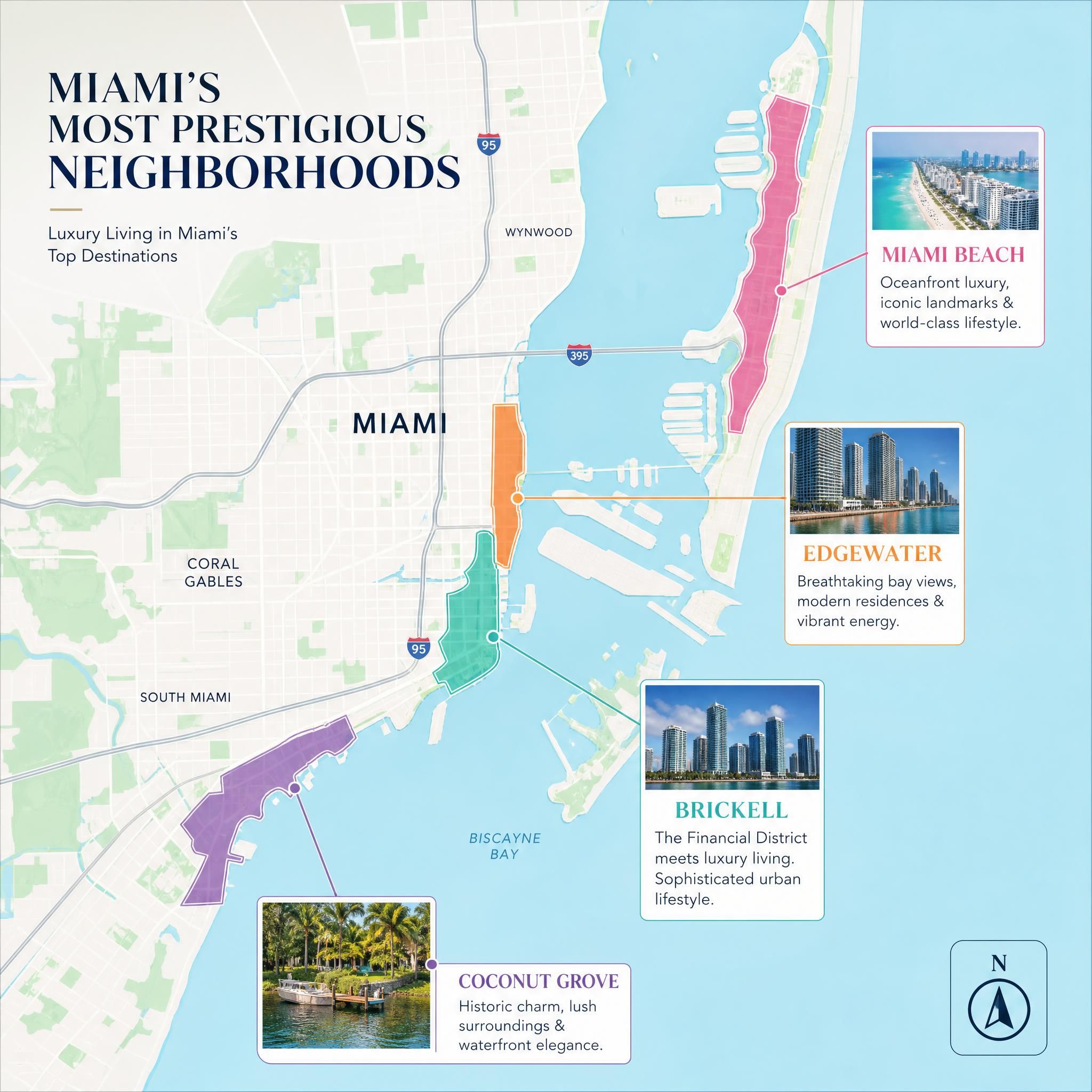
Brickell: urban sophistication, maximum rental demand
Brickell is Miami's financial district and its most supply-active luxury submarket. Brickell alone accounts for approximately 4,254 of South Florida's 9,026 units currently in the pipeline — nearly 47% concentrated in one submarket. That concentration is both an opportunity and a risk.
Best for: Buyers who want strong rental income from young professionals and corporate relocators, or those seeking a primary urban residence with walkability.
Watch out for: When multiple investor-heavy towers deliver simultaneously, sellers and landlords all try to exit at once, which can compress prices exactly when you need them to hold. If you're buying pre-construction in Brickell, stagger your exit timeline and target buildings with a high owner-occupancy ratio.
Notable 2026 launches include a 74-story tower at 619 Brickell Avenue offering 300 luxury condos, and a $650M Belgian-partnered development — both signaling the neighborhood's continued global investor appeal.
Edgewater: the emerging ultra-luxury corridor
Positioned between Brickell and Wynwood, Edgewater is one of Miami's most exciting stories in 2026. The neighborhood offers a best value-growth balance with waterfront views and new development, with Edgewater units yielding 5.0 to 6.0 percent gross rental returns.
In March 2026, The Cove Residences in Edgewater marked a rare simultaneous sales launch and groundbreaking — a sign of developer confidence in the area's momentum.
Best for: Buyers who want waterfront views at lower price points than Miami Beach, with strong appreciation upside.
Coconut grove: boutique luxury and long-term value
Coconut Grove is Miami's oldest neighborhood and one of its most stable luxury markets. In March 2026, The Residences at Mandarin Oriental set a new pricing record on Miami's mainland with two penthouses selling at $49.9 million each — a powerful signal of the area's ultra-luxury ceiling.
Coconut Grove offers a unique blend of tropical scenery, luxury waterfront homes, and a relaxed community atmosphere, appealing to buyers seeking larger homes, private waterfront properties, and a quieter lifestyle compared to downtown Miami.
Best for: Long-term appreciation plays, primary residences, and buyers prioritizing privacy over nightlife.
Miami beach: oceanfront prestige, premium pricing
Miami Beach commands the highest prices and the most international buyer attention. Recent transactions underscore the market's depth: a MasTec CEO-led firm purchased a Miami Beach mansion for $19M in June 2026, while bayfront properties are routinely fetching multi-million-dollar premiums.
Best for: International buyers, vacation rental investors, and those seeking trophy assets with global resale liquidity.
| Neighborhood | Avg Price Range | Rental Yield | Best Strategy |
|---|---|---|---|
| Brickell | $600K – $3M+ | 5–6.5% | Rental income / urban living |
| Edgewater | $800K – $5M | 5–6% | Appreciation / waterfront value |
| Coconut Grove | $1.2M – $50M+ | 3–4% | Long-term hold / primary residence |
| Miami Beach | $1M – $110M+ | 4–5% | Trophy asset / short-term rental |
| Wynwood/Design District | $1.4M – $5M+ | 4–5% | Cultural lifestyle / appreciation |
Step 3: vet the developer like a pro
This is the step most buyers rush — and the one that matters most. In a market with dozens of active projects, developer quality varies enormously. A spectacular unit in a troubled development can become a financial nightmare.
The 7-point developer checklist
Use this framework before signing anything:
- Track record: How many projects has this developer completed in South Florida? Do those buildings hold their value?
- Lender identity: A project with a reputable construction lender (major bank or institutional fund) is a strong signal. Watch for sales teams refusing to disclose the construction lender identity — this is a yellow flag.
- Pre-sales percentage: Is the project selling well? A project at 40% or less pre-sales 18 months into construction is a warning sign.
- Escrow protections: Under Florida law, the first 10% of your deposit must be held in escrow. Confirm the escrow agent in writing and verify refund rights.
- Litigation history: Always ask whether the association or developer is involved in any active lawsuits. The recent Aston Martin Residences construction defect claims filed by residents in April 2026 are a reminder that even branded luxury towers are not immune to issues.
- Rendering consistency: Marketing materials with dramatic rendering changes between phases can signal design compromises or budget cuts mid-construction.
- Delivery timeline history: Has this developer delivered projects on time before? Delays of 12–18 months are common; delays of 3+ years signal systemic problems.
Expert insight: "The developer matters more than the building. A mediocre unit at a great developer almost always outperforms a spectacular unit at a mediocre developer over a 5-year hold."
📊 18–28% from contract to first resale – Brickell Branded Projects Appreciation at Delivery
Step 4: master the pre-construction deposit structure
Understanding how money flows in a pre-construction deal is not optional — it's essential to protecting your capital and planning your liquidity.
How deposits work
Pre-construction purchases require staged deposits over the construction period, typically 20% to 50% of the purchase price. You only need a mortgage at closing, which could be 2 to 3 years after signing the contract. During the construction phase, you are making deposits from your own funds into the developer's escrow account.
A typical luxury Miami deposit schedule looks like this:
| Milestone | Deposit Amount |
|---|---|
| Contract execution | 10% |
| Groundbreaking | 10% |
| Halfway construction milestone | 10% |
| Top-off | 10% |
| Total before closing | 40% |
| Remaining balance at closing | 60% |
Cash vs. financing: the strategic decision
All-cash purchases represent roughly 30% to 40% of condo transactions in South Florida's luxury segment. Some developers offer a 2% to 5% discount for all-cash buyers, and you also avoid the risk of mortgage denial at closing, which can lead to deposit forfeiture.
If you're financing, most buyers begin the mortgage process 6 to 12 months before the estimated closing date. For US citizens and residents, conventional jumbo loans are available with competitive rates and 20 to 25% down. For foreign nationals, several banks offer specialized programs with 30 to 50% down payment requirements.
Practical tip: Map your exact deposit schedule against your personal liquidity calendar the moment you sign. Missing a deposit milestone can result in forfeiture of all funds paid to date — there is no grace period in most luxury developer contracts.
The rescission window
Florida law gives buyers a short window to cancel after receiving the offering package. Use this time to have a real estate attorney review every document. This is not a step to skip for a $1M+ purchase.
Step 5: run your investment numbers honestly
Miami's luxury new construction market offers compelling returns — but only when you run the full math, not just the headline numbers.
The complete cost picture
Beyond the purchase price, budget for:
- HOA fees: $1,900+ per month for luxury high-rises
- Property insurance: $2,000–$4,000+ annually (elevated post-Surfside in coastal buildings)
- Property taxes: Approximately $730/month on an $880,000 purchase
- Vacancy and maintenance: 5–10% of gross rental income
Realistic rental yield expectations
Projected gross rental yields for Miami pre-construction condos in 2026 range from 4.5 to 6.5 percent annually, depending on neighborhood and unit type. Brickell one-bedroom units yield approximately 5.5 to 6.5 percent, while Edgewater units yield 5.0 to 6.0 percent.
Short-term rental strategies in buildings that permit them can generate 15 to 25 percent higher income than traditional annual leases, though with higher vacancy rates and management costs.
Critical check: Before banking on short-term rental income, verify the building's rental policy. Many luxury towers restrict Airbnb-style rentals to protect the residential character. Latin American investors have been particularly active in Brickell specifically because several new towers permit short-term rentals — but this is the exception, not the rule.
The tax advantage math
Florida's zero state income tax is a genuine, quantifiable advantage. Tax benefits for Miami investors include full mortgage interest deduction, property tax deduction, 27.5-year depreciation schedule, and HOA fees and insurance as operating expenses, with these advantages reducing effective after-tax costs by 30–40% for many investors.
For a buyer relocating from New York or California, the combined state income tax savings alone can offset a significant portion of annual carrying costs.
📊 102% from 2015 to 2025 – Miami Luxury Condo 10-Year Appreciation
Step 6: build the right team around you
The single most consistent differentiator between buyers who thrive in Miami's luxury new construction market and those who struggle is the quality of their advisory team.
The four professionals you need
1. A Luxury Buyer's Agent with Pre-Construction Expertise
This is not the developer's sales agent. You need an independent agent who represents your interests, has relationships with multiple developers, and can provide honest comparative analysis. Having an experienced pre-construction buyer's agent provides valuable insight into the developer, past buildings and performance, and the ability to professionally negotiate details that are meaningful to you.
2. A Florida Real Estate Attorney
Review every contract before signing. The prospectus for a new development can run hundreds of pages. An attorney who specializes in Florida condominium law will identify problematic clauses around deposit forfeiture, assignment rights, and construction warranties.
3. A Lender Who Knows Miami
A good lender who works regularly in the Miami market will flag potential warrantability issues before you get too deep into the transaction. Not all buildings qualify for conventional financing — knowing this early saves you from a deal that collapses at closing.
4. A Property Manager (If Renting)
If your strategy involves rental income, engage a property manager before closing. The best managers in luxury buildings have waitlists of qualified tenants and can often have your unit leased before you receive the keys.
Timing is a strategy
The best pre-construction deals are available in the earliest phases — before a project launches publicly. This requires relationships. A well-connected buyer's agent can secure you priority access, better unit selection, and occasionally developer incentives (parking upgrades, storage units, closing cost contributions) that are never advertised.
Frequently asked questions (FAQ)
What is the minimum budget for new construction luxury homes in miami in 2026?
Entry-level luxury new construction in Miami starts at approximately $1.3M–$1.5M in neighborhoods like Brickell and Bay Harbor Islands. True ultra-luxury branded residences in Brickell, Miami Beach, and Coconut Grove typically begin at $3M–$5M and can exceed $50M for penthouse units.
How long does the pre-construction process take from contract to keys?
Most Miami luxury pre-construction projects have a 2–4 year timeline from contract signing to delivery. Projects breaking ground in 2026 are generally targeting 2028–2029 delivery. Always build a 6–12 month buffer into your timeline planning.
Can foreign buyers purchase new construction luxury condos in miami?
Yes. No special visa or residency status is required to purchase real estate in the US. Foreign buyers follow the same deposit schedule as domestic buyers, though financing options are more limited. Several banks offer foreign national mortgage programs requiring 30–50% down. A US-based attorney and US bank account are strongly recommended.
Is it better to buy pre-construction or move-in ready in 2026?
Pre-construction offers price appreciation potential, customization opportunities, and staged payment flexibility. Move-in ready properties offer certainty — you see exactly what you're buying and can generate rental income immediately. In a market where branded Brickell projects have shown 18–28% appreciation from contract to first resale, pre-construction has historically rewarded patient buyers.
What are the biggest risks in miami luxury new construction?
The primary risks are: developer default or project delays, over-supply in specific submarkets (particularly Brickell), insurance cost increases for coastal buildings, and HOA special assessments in buildings with deferred maintenance. All are manageable with proper due diligence and the right advisory team.
Key statistics
📊 40–60% — Miami-Dade luxury home price appreciation since 2020, driven by domestic migration and international capital (Source: LuxuryPriceDrops.com, 2026)
💡 4.5–6.5% — Gross rental yields for new construction luxury condos in Miami in 2026, outperforming New York (2.5–3.5%) and Los Angeles (3.0–4.0%) (Source: LuxuryDade Q1 2026 Report)
🏙️ $565M+ — Construction financing secured by JLL for a single ultra-luxury condominium tower in Miami, reflecting institutional confidence in the market (Source: JLL, 2025)
📈 102% — Miami condo appreciation over the past decade (2015–2025), with luxury new construction in Brickell, Edgewater, and Miami Beach projected at 3–5% annually going forward (Source: Miami Association of Realtors)
Conclusion: your miami strategy starts today
The Miami luxury new construction market in 2026 rewards buyers who come prepared. The opportunity is real — the tax advantages, the rental yields, the lifestyle, and the long-term appreciation story are all intact. But so are the complexities: deposit structures, developer vetting, neighborhood supply dynamics, and insurance realities that can turn a great-looking deal into a costly mistake.
The buyers who win in this market are not the ones who move fastest. They're the ones who move smartest — with a clear neighborhood strategy, a vetted developer, a full understanding of their deposit obligations, and a team of specialists who have navigated these waters before.
Miami's skyline is expanding. New towers are rising in Brickell, Edgewater, Coconut Grove, and beyond. The question isn't whether Miami is worth buying into — it clearly is. The question is whether you're ready to buy into it the right way.
Ready to take the next step? Schedule a private consultation with a Miami luxury new construction specialist, request access to current pre-construction opportunities before they go public, or download our exclusive Miami Luxury Market Report to benchmark your options. Your elevated Miami life is closer than you think — but only if you build the right foundation first.


