

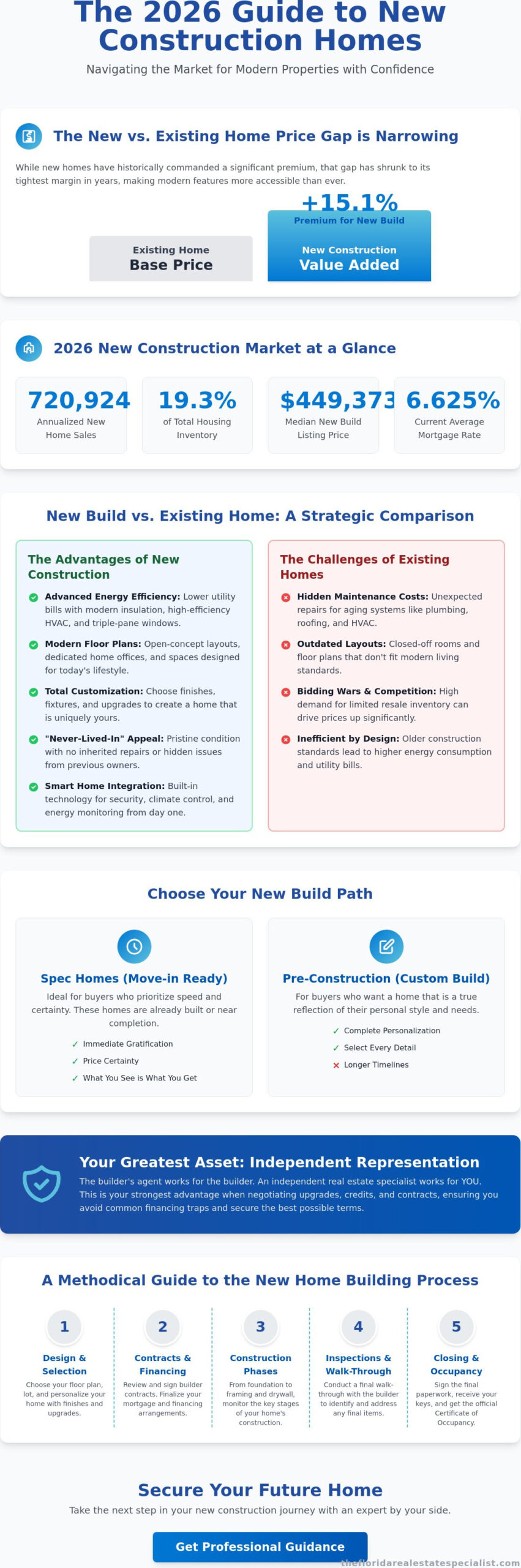
Did you know that the price gap between newly built properties and existing homes has narrowed to its tightest margin in years? While new construction homes currently carry a 15.1% premium, the value of modern energy standards and move-in-ready design is more accessible than ever. You likely feel the weight of this decision. Is the wait worth it? Can you trust the builder’s timeline? These questions are common, and your desire for clarity, security, and a fair deal is completely valid.
We understand that the complexity of builder contracts and the fear of hidden costs can be overwhelming. This guide is designed to replace that uncertainty with a clear, proven path to success. You’ll discover how to approach the 2026 market with total confidence, from mastering the various building stages to negotiating effectively with national homebuilders. We’ll walk through the necessity of professional representation, the impact of current 6.625% mortgage rates, and the way to ensure your new home meets the highest standards of modern living. Your journey toward homeownership should be methodical, logical, and steady.
Key Takeaways
- Master the distinction between move-in ready spec homes and fully custom builds to align your purchase with your specific timeline and lifestyle needs.
- Gain a competitive edge by identifying the long-term financial benefits of advanced energy efficiency and floor plans tailored for modern remote work.
- Navigate the building process with precision by learning how to evaluate builder incentives without falling into common financing traps.
- Discover why independent representation is your strongest asset when negotiating upgrades, credits, and contracts for new construction homes.
- Ensure a smooth final transition by understanding the critical steps from the design phase through to the official Certificate of Occupancy.
Understanding the New Construction Home Landscape in 2026
The market for new construction homes has transformed into a primary driver of the national real estate economy. As of April 2026, new home sales reached an annualized rate of 720,924 units, representing a steady 2.6% increase from the previous month. This growth isn’t accidental. With new builds making up 19.3% of total housing inventory, buyers are increasingly turning to modern developments to avoid the maintenance issues and bidding wars common in the resale market. This year is particularly pivotal due to the March 13, 2026 Executive Order aimed at removing regulatory barriers. These changes streamline the process of constructing a house, making it easier for developers to meet the high demand for modern housing.
Building a home is more than a financial transaction. It’s an emotional journey that begins with a vision and ends with a key. You might feel a mix of excitement and anxiety. Will the build stay on schedule? Will the finishes look like the rendering? These feelings are natural. The 2026 building standards now prioritize high-performance features. Items like heat pumps, advanced insulation, and triple-pane windows are becoming the baseline. This shift ensures your investment is protected against rising energy costs while providing a level of comfort that older homes simply cannot match.
Spec Homes vs. Pre-Construction: Which is Right for You?
Choosing between a spec home and pre-construction depends on your priorities. Spec homes, or “move-in ready” properties, are already built or near completion. They offer immediate gratification and price certainty. If you prefer to select every tile and floor plan detail, pre-construction is your path. This allows you to personalize new construction homes from the ground up. While pre-construction timelines are longer, the reward is a home that reflects your unique lifestyle. Pricing structures vary, but the median listing price for new builds currently sits at $449,373, offering a clear benchmark for your budget.
The Role of National Homebuilders in Today’s Market
National homebuilders are the architects of today’s communities. They don’t just build houses; they design entire environments with parks, pools, and shared spaces. Townhomes now constitute 18% of all single-family construction, reflecting a shift toward denser, more walkable neighborhoods. When evaluating a builder, look beyond the shiny model home. Research their past performance and long-term reputation. Examine their standard feature list to see if items like smart energy monitoring are included or treated as expensive upgrades. A builder’s portfolio is a roadmap of their quality and reliability.
The Strategic Advantages of Choosing New Over Resale
Resale homes often come with a history of hidden repairs, outdated layouts, and aging systems. Choosing a new build offers a definitive “clean slate” that eliminates the anxiety of inherited maintenance issues. While resale inventory can be unpredictable, new construction homes provide a predictable, high-quality foundation for your life. You aren’t just buying a house. You are investing in a modern lifestyle designed for 2026. This decision brings clarity, security, and long-term value to your portfolio.
Modern floor plans now prioritize the way we actually live. You’ll find dedicated home offices, multi-generational living spaces, and open concepts that facilitate connection. Older homes often require expensive structural changes to achieve this flow. With a new build, the architecture already matches your daily rhythm. If you are considering making this transition, you can buy a property with the guidance of a professional who understands these nuances.
Energy Efficiency and Smart Home Integration
The 2026 building codes have raised the bar for thermoregulation and sustainable materials. New homes now feature high-efficiency HVAC systems and solar-ready roofs as standard expectations. These aren’t just “green” buzzwords. They represent a significant reduction in your monthly utility bills. Built-in smart home technology further enhances this efficiency, allowing you to monitor energy use in real-time. This level of integration is difficult and costly to retrofit into an existing structure.
Customization and the “Never-Lived-In” Appeal
There is a profound psychological benefit to being the first owner of a property. You don’t have to wonder about the quality of past DIY projects or the condition of the pipes behind the walls. Everything is pristine. The design center experience allows you to personalize your environment before you move in. You can select:
- High-performance flooring that stands up to modern wear.
- Cabinetry and fixtures that reflect current aesthetic trends.
- Quartz or natural stone countertops that offer durability and style.
By selecting your finishes early, you avoid the “renovation fatigue” that often plagues buyers of older properties. You move into a home that is already finished to your exact standards. This methodical approach ensures your home is modern, efficient, and personalized from day one.
A Methodical Guide to the New Home Building Process
The path to owning new construction homes is structured and logical, yet it requires a steady hand to navigate. It begins with financing. Many builders will steer you toward their “preferred lender” by offering attractive closing credits. While these incentives are tempting, you must verify if the interest rate aligns with the current 30-year fixed market average of 6.625%. Sometimes, the “free” credit is offset by a higher long-term rate or hidden fees. Securing your own pre-approval provides a baseline for comparison. It ensures you move forward with clarity and financial security.
Once the foundation is set, you enter the design phase. This is where your vision takes shape. It’s vital to choose finishes that stand the test of time rather than chasing fleeting trends. As construction progresses through framing and into the final finishes, you’ll witness the physical manifestation of your investment. Understanding this progression helps alleviate the stress of the wait. You’re building a future, not just a structure.
Navigating Builder Contracts and Earnest Money
Builder contracts are not the standard agreements used in resale transactions. They’re often drafted to protect the developer’s interests first. You must look closely for escalation clauses. With domestic steel prices up 16% and copper projected to reach $12,500 per metric ton, builders use these clauses to pass material cost increases to the buyer. Protecting your earnest money requires specific contingency language. Ensure your deposit is refundable if the build exceeds a certain price threshold or if the timeline shifts beyond a reasonable window. This methodical approach protects your capital and your peace of mind.
The Inspection Timeline: Beyond the Builder’s Word
Even the most reputable builders can overlook details. Hiring an independent inspector is your greatest safeguard. You need three specific eyes on the project:
- The Pre-Pour Inspection: Checking the foundation before the concrete hides the plumbing and rebar.
- The Pre-Drywall Inspection: This is the most critical phase. It’s your only chance to verify the electrical, plumbing, and framing before they’re sealed away.
- The Final Orientation: This is when you create your punch list. Do not accept the keys until every item is documented and a timeline for repair is established.
A thorough inspection strategy ensures your home meets the modern energy and safety standards you expect. It replaces uncertainty with a sense of calm and security.
Why Independent Representation is Your Greatest Asset
Stepping into a model home feels like entering a perfectly curated dream. The lighting is flawless. The finishes are high-end. The sales representative is incredibly welcoming. It’s easy to feel a sense of ease in this environment, but you must ask one critical question: who truly represents your interests? The “Sales Rep Myth” suggests that the person behind the desk is there to guide you through the purchase. In reality, that representative is an employee of the builder. Their fiduciary duty is to the developer’s bottom line, not your bank account. You deserve a dedicated advocate who provides clarity, security, and a foundation of trust.
An independent agent acts as your professional shield. They understand the nuances of new construction homes and can spot red flags that a buyer might overlook. From analyzing site maps to reviewing complex builder disclosures, your agent ensures you aren’t walking into a lopsided agreement. This partnership moves you away from a purely transactional experience and toward a supported journey. If you are ready to move forward, you can buy a property with the confidence that an expert is in your corner.
The Advocate vs. The Sales Representative
The construction process is rarely a straight line. With persistent labor shortages and material volatility still affecting the industry in 2026, delays are almost inevitable. When these challenges arise, your agent serves as a “calm in the storm.” They manage the relationship with the builder, handling disputes over timelines or quality without you having to shoulder the stress. While the sales rep is focused on closing the file, your agent is focused on your long-term satisfaction. They provide the steady hand needed to lead you through a volatile marketplace.
Negotiating the Best Possible Terms
Many buyers believe that builder prices are non-negotiable. While the base price might be firm, there is often significant room for movement in other areas. An experienced agent knows how to secure design center credits, lot premium reductions, or even contributions toward your closing costs. They understand which incentives are currently on the table and how to leverage them for your benefit. Once you visit a builder without an agent, you may forfeit your right to professional representation. This is why it’s vital to have your broker present from that very first model home tour. The builder typically pays the commission from a marketing budget, meaning you receive this specialized guidance at no out-of-pocket cost. It’s a strategic advantage that ensures you don’t leave money on the table.
Securing Your Future: Next Steps in Your Home Journey
Moving is a high-stakes transition. It requires timing, logistics, and patience. It’s about aligning the sale of your current residence with the completion of your new build to ensure you aren’t left between properties. Have you considered the practical details of a temporary lease-back or a bridge solution? These are the nuances that separate a stressful move from a seamless one. You’ve navigated the contracts, the design center, and the construction milestones. Now, you’re at the threshold of a fresh start, a clean slate, and a secure future.
The Certificate of Occupancy is the official signal that your home is complete. This document is issued by the local building department once all inspections are passed and the structure meets every safety code. It’s your final assurance of quality. Once this document is in hand, the closing day process begins in earnest. This final phase is where the methodical planning of the previous months pays off. You are no longer just looking at new construction homes on a site map; you are preparing to step into your reality.
Closing Day and the Final Handover
Closing day is the culmination of your journey. You’ll need to bring your identification, certified funds, and a sense of accomplishment. Most importantly, bring the final punch list we established during your orientation. Verify that the builder has corrected every item. Do not sign until you are satisfied. Receiving the keys to a never-before-lived-in space is a powerful moment. It represents the successful end of a complex process and the beginning of a new chapter. We focus on the details so you can focus on the future.
After the move, your focus shifts to preservation. Manage your home warranty like a professional asset. Most new builds come with a tiered warranty: one year for workmanship, two years for systems, and ten years for structural integrity. Keep a calendar for seasonal maintenance to protect your systems. Your new home is an investment that requires stewardship. This proactive approach ensures your home remains the sanctuary you envisioned for years to come.
Your Partnership for Long-Term Real Estate Success
The market can feel volatile. It can feel confusing. But with the right guide, it becomes a structured path to success. The Florida Real Estate Specialist acts as the steady hand that leads you through every complexity. We are committed to your outcome, your satisfaction, and your peace of mind. We don’t just help you find a house; we help you secure a home. Our approach is methodical, logical, and steady. We provide the authoritative guidance and deep reassurance you need to move forward with professional confidence. Contact our specialists today to begin your new construction search.
Your Future Starts with a Solid Foundation
Your journey toward a modern, energy-efficient home is a strategic investment in your quality of life. By choosing a new build, you’ve prioritized functional beauty, sustainable standards, and the peace of mind that comes with a comprehensive warranty. You now understand that the building process is a series of logical milestones, from the initial pre-approval to the final punch list. Navigating the market for new construction homes requires more than just a vision; it requires a partnership with a guide who understands the intricacies of builder negotiations and high-stakes contracts.
We provide the authoritative market knowledge and methodical, step-by-step guidance you need to move forward with total confidence. Our expertise ensures you aren’t just another transaction to a builder, but a savvy buyer with a professional advocate in your corner. We are committed to your thoroughness, your security, and your ultimate satisfaction. It’s time to replace uncertainty with clarity and move toward your goals with a steady hand.
Partner with a specialist who advocates for your new home vision.
Take the next step with the assurance that your future home is being built on a foundation of trust and expert advocacy. Your new chapter is waiting.
Frequently Asked Questions
Do I really need a real estate agent for new construction?
You absolutely need independent representation to ensure your interests are protected throughout the build. The sales representative in the model home is an employee of the builder and owes their fiduciary duty to the developer. An independent agent provides you with unbiased advocacy, contract expertise, and a steady hand during negotiations. Since the builder typically pays the agent’s commission from a separate marketing budget, you receive this professional guidance at no out-of-pocket cost.
Is it possible to negotiate the price of a new construction home?
Negotiation is certainly possible, though it often focuses on incentives rather than the base sales price. While builders prefer to keep base prices consistent to protect the value of the community, they frequently offer concessions such as design center credits, lot premium reductions, or contributions toward closing costs. In late 2025, about 40% of builders utilized price reductions and incentives to attract buyers. A seasoned agent knows how to leverage these trends to secure the most favorable terms for your investment.
How long does the building process typically take in 2026?
The construction timeline generally ranges from six to twelve months depending on the complexity of the build and current labor availability. “Move-in ready” spec homes can be settled in as little as 30 to 45 days, while fully custom projects require a longer commitment. While material prices for items like copper and steel remain volatile in 2026, a methodical approach to project management helps keep your timeline on track. Your agent will provide regular updates to ensure you feel informed and secure during every phase.
Are builder warranties the same as home insurance?
Builder warranties and home insurance serve two distinct and essential purposes. Home insurance protects you against accidental damage, theft, and natural disasters. In contrast, a builder warranty covers specific defects in materials and workmanship for a set period. Most new construction homes include a tiered warranty: one year for labor and materials, two years for mechanical systems, and ten years for structural integrity. Understanding these differences provides a foundation of trust and long-term security for your property.
Can I use my own lender for a new construction home?
You have the legal right to use any lender you choose for your home purchase. Builders often encourage the use of their “preferred lender” by offering attractive financial incentives or closing cost credits. However, it is vital to compare these offers against the current 30-year fixed market rate of 6.625%. Sometimes a third-party lender can provide a more competitive interest rate or lower fees that outweigh the builder’s initial credit. We help you evaluate these options with professional confidence.
What happens if the builder misses the completion date?
The resolution for a missed completion date is governed by the specific delay clauses in your purchase agreement. Most builder contracts include “force majeure” or “unavoidable delay” language that allows for extensions due to weather, labor shortages, or material scarcity. It is critical to have an expert review these disclosures before you sign. We act as your advocate to manage the relationship with the builder, ensuring that communication remains clear and that your move-in plans are protected as much as possible.
What is a “punch list” and why is it important?
A punch list is a detailed inventory of minor repairs, adjustments, or finishing touches that must be completed before the final handover. This list is created during your final walk-through and orientation. It covers everything from paint touch-ups to ensuring all appliances are functioning perfectly. This step is vital because it holds the builder accountable for the quality of the finished product. Never sign the final closing documents until every item on your punch list is documented with a clear plan for completion.
Are new construction homes more energy-efficient than older homes?
Modern new construction homes are significantly more energy-efficient than resale properties due to stringent 2026 building codes. New builds incorporate advanced technologies like heat pumps, triple-pane windows, and high-performance insulation as standard features. These elements work together to regulate temperature and reduce your monthly utility expenses. This commitment to sustainable building not only lowers your cost of ownership but also ensures your home meets the highest modern standards for comfort and environmental stewardship.


