
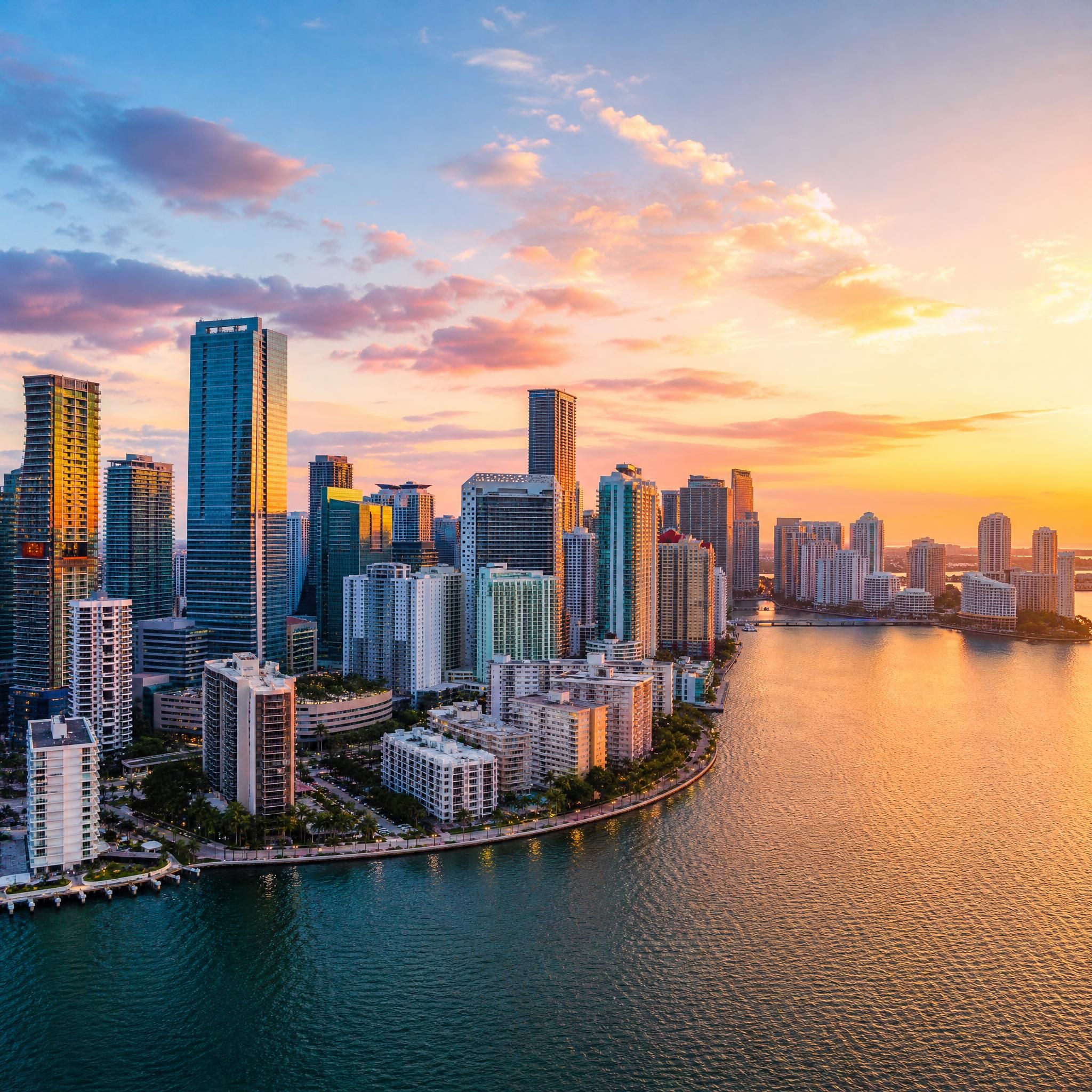
Miami has crossed a historic threshold. Miami is now home to more million-dollar listings than New York — a sign the luxury housing market's center of gravity continues to drift south. For buyers eyeing new construction luxury homes in Miami, this isn't just a headline — it's a window of strategic opportunity. But navigating Miami's high-stakes pre-construction landscape requires more than enthusiasm. It demands a clear playbook.
This guide cuts through the noise and delivers exactly that: a step-by-step, actionable roadmap for buying luxury condos in Miami's new construction market in 2026 — from vetting developers to decoding deposit structures, choosing the right neighborhood, and closing with confidence.
Table of contents
- Step 1: Know the Market Before You Move
- Step 2: Choose the Right Neighborhood for Your Goals
- Step 3: Vet Developers Like a Pro
- Step 4: Master the Deposit Structure
- Step 5: Navigate Financing for New Construction
- Step 6: Decode HOA Fees and True Monthly Costs
- Step 7: Conduct Airtight Due Diligence
- Step 8: Negotiate Smartly and Close with Confidence
- FAQ
- Key Statistics
Step 1: know the market before you move
Before you tour a single model unit, you need to understand the landscape you're entering. Miami's luxury real estate market in 2026 is unlike any other in the United States — and knowing its dynamics gives you a decisive edge.
The Miami metro officially surpassed New York by the end of 2025, boasting 10,513 active million-dollar listings compared to New York's 9,216. This shift reflects not only stronger inventory growth in Miami, but also relative scarcity in New York.
The average condo sale price reached $880,065 in Q1 2026, up 18.57% from Q4 2025. Luxury condos ($2M+) command $1,445 per square foot with stable year-over-year appreciation. South Beach is leading the charge with dramatic price gains.
What this means for buyers: Pre-construction is now a price-setting mechanism, not a discount play. Q1 2026 luxury pre-construction signed contracts cleared 12–18% above initial release pricing. Pre-construction is now setting the price; resale follows. If you're waiting for a dip, the data suggests you're waiting in the wrong direction.
Actionable Tips:
- Track price per square foot by neighborhood, not just listing price. Brickell, Edgewater, and South Beach all move at different velocities.
- Monitor new project launches — early reservation-stage pricing is typically the most favorable entry point.
- International demand is a powerful force: foreigners are buying 52% of new-construction homes in certain Florida markets, keeping demand structural rather than cyclical.
- Understand that cash dominates this market. Miami's luxury buyers are more likely to be cash buyers, international purchasers, retirees, or second-home buyers. These demographics are less sensitive to mortgage rates, school calendars, and seasonal norms.
📊 $880,065 (+18.57% QoQ) – Miami Luxury Condo Average Price Q1 2026
Step 2: choose the right neighborhood for your goals
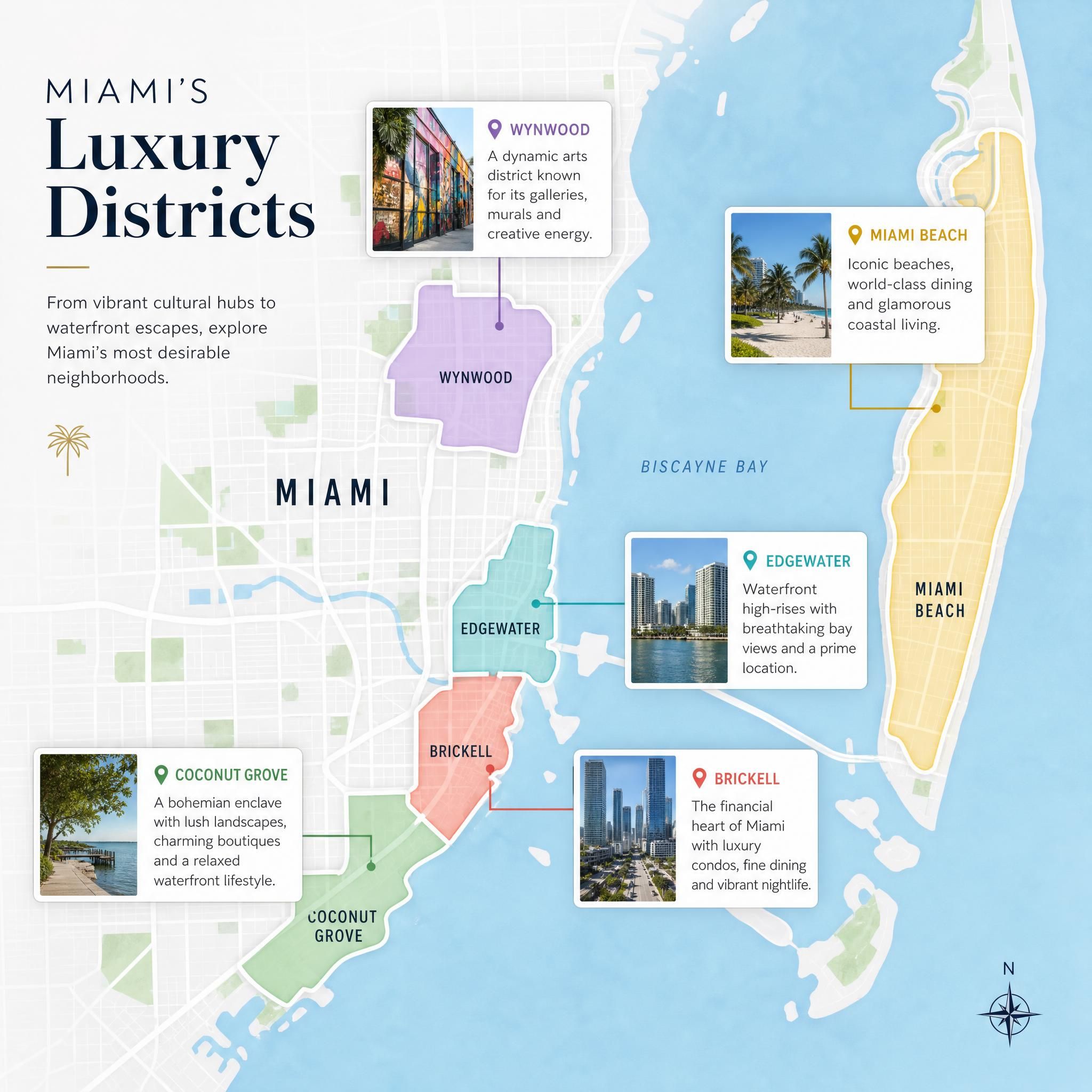
Not all Miami luxury neighborhoods are created equal — and the right choice depends on whether you're buying for lifestyle, investment, or both. Here's a strategic breakdown of the top zones for luxury condos Miami new construction in 2026:
| Neighborhood | Best For | Price Range (PSF) | Vibe |
|---|---|---|---|
| Brickell | Urban professionals, finance crowd | $1,200–$2,000+ | Wall Street South — walkable, high-energy |
| Miami Beach / South Beach | Oceanfront lifestyle, international buyers | $1,500–$2,700+ | Glamour, beach, culture |
| Edgewater | Waterfront value, art scene | $900–$1,400 | Up-and-coming, bayfront serenity |
| Coconut Grove | Families, privacy, nature | $1,000–$1,600 | Historic charm, lush canopy |
| Wynwood / Design District | Culture-forward buyers, younger HNW | $800–$1,300 | Creative, gallery-driven, eclectic |
Brickell remains the epicenter of Miami's financial district boom. PMG has launched sales for the next phase of Brickell condos with office suites, reflecting the neighborhood's evolution into a live-work-play ecosystem. A proposed 74-story tower at 619 Brickell Ave will deliver 300 luxury condos, adding to an already electric pipeline.
Coconut Grove is experiencing a renaissance. Coconut Grove Miami is seeing luxury new developments emerge in South Florida's oldest neighborhood, with the Four Seasons Coconut Grove generating significant buzz as potentially the finest new condo in Miami.
Miami waterfront properties continue to command extraordinary premiums. Bayfront Miami Beach properties are fetching megamillion prices, and a waterfront compound on Miami Beach's exclusive Sunset Islands recently listed for $110 million — signaling where the ceiling truly lies.
Actionable Tip: If appreciation is your primary goal, target neighborhoods with active commercial development nearby — new corporate HQs, financial firms, and tech campuses directly fuel residential demand. Brickell's "Citadel effect" is a textbook example.
Step 3: vet developers like a pro
In Miami's new construction luxury market, the developer's reputation is as important as the building's address. A stunning rendering means nothing if the developer has a history of delays, cost overruns, or poor build quality. Here's how to separate the elite from the rest.
The Developer Due Diligence Checklist:
✅ Track Record — How many towers have they completed? On time? On spec? Research their portfolio in Miami specifically. Names like Related Group, Dezer Development, and OKO Group carry institutional credibility.
✅ Financial Backing — Is the project properly capitalized? JLL secured over $565 million in construction financing for an ultra-luxury condominium tower in Miami — the scale of financing matters. Undercapitalized projects face delays or cancellations.
✅ Brand Partnerships — Branded residences carry both prestige and resale power. Bentley Residences Miami is rising as the world's first Bentley-branded luxury condo tower, with construction hitting its 7th floor. Brand-affiliated projects like Bentley, Mercedes-Benz Places, and Four Seasons command premium pricing and tend to retain value more robustly at resale.
✅ Delivery Timeline Realism — Ask for the developer's historical delivery record. The contract may state an estimated completion date, but Florida law gives developers significant latitude on extensions. Vague deposit protections, open-ended delivery timelines, broad pass-through cost clauses, and unclear assignment rules are common warning signs that merit attorney review.
✅ Active Litigation — Always ask whether the condo association or developer is involved in any active lawsuits. Construction defect claims or ongoing litigation can affect your property's insurability and resale value.
✅ Post-Surfside Compliance — Since the Surfside collapse, Florida has enacted rigorous new reserve and inspection requirements. Four post-Surfside forces are repricing older condo stock: 30-year recertification milestone findings, statutory reserve funding requirements that are no longer waivable, compounding HOA increases from insurance and maintenance, and explicit buyer/lender pricing of structural and assessment risk. New construction should already meet these standards — but verify.
Step 4: master the deposit structure
Understanding how Miami pre-construction deposits work is one of the most critical practical skills a luxury buyer can have. Get it wrong and you could face unexpected liquidity pressure. Get it right and you can engineer a strategic entry that aligns with your financial timeline.

How the Typical 2026 Deposit Schedule Works:
Most ultra-luxury towers ask for a total deposit between 40 and 50 percent of the purchase price, spread across reservation, contract signing, groundbreaking, structural milestones such as top-off, and sometimes a later pre-closing installment, with the remaining balance due at closing.
A common breakdown looks like this:
| Milestone | Deposit % |
|---|---|
| Contract Signing | 10% |
| Groundbreaking | 10% |
| Construction Milestone (e.g., Top-Off) | 10–20% |
| Pre-Closing Installment | 10% (select projects) |
| Balance at Closing | ~70% or remaining |
Actionable Strategies:
- Buy at reservation stage for the best unit selection and pricing. Early buyers in flagship projects often secure pricing that appreciates significantly before delivery.
- Instead of wiring 40 or 50 percent of the purchase price on day one, you can align deposits with liquidity events, investment maturities, or the sale of other assets. In a rising market, locking a residence at today's price while the building delivers over the next two to three years can also create a built-in equity uplift by the time you close.
- Negotiate assignment rights early. The ability to sell your contract before closing (assign it to another buyer) is a valuable exit option — but it must be explicitly permitted in the contract.
- Always have a Florida real estate attorney review the contract before signing. Look specifically for: deposit protection provisions, force majeure clauses, and what happens to your deposit if the developer cancels.
📊 40–50% of purchase price – Typical Pre-Construction Deposit Total
Step 5: navigate financing for new construction
Financing a luxury condo Miami new construction purchase is fundamentally different from a standard mortgage. Most buyers in this segment are cash buyers — but if you plan to finance, here's what you need to know before you sign anything.
Key Principle: You do not take out a construction loan for your unit. The developer handles building financing. You secure permanent financing only at closing, when the building is complete.
Actionable Steps for Financed Buyers:
-
Pre-qualify before you tour. Pre-qualify financing or proof of funds first — this is step one in every serious Miami luxury acquisition. Sellers and developers will not engage without it.
-
Understand condo project eligibility. Lenders evaluate both you and the condo project. Project eligibility can turn on owner-occupancy ratios, reserve funding, insurance, litigation, and rental policies. If you expect to use conforming or government-backed loans, confirm qualification early with your lender.
-
Non-contingent contracts are standard. Many pre-construction contracts are not contingent on financing. If you need a loan, seek explicit contingency language or be sure you can perform if financing changes.
-
Plan for appraisal gaps. Appraisers rely on comparable new sales and developer pricing; if comps are limited, values can be conservative, which may affect loan proceeds for financing. Have a plan to cover a gap between the appraised value and your purchase price.
-
Loop in your lender during due diligence. Share the condo documents package with your loan officer immediately. A lender experienced in Miami luxury deals will flag warrantability issues before you're too deep in the transaction.
Step 6: decode HOA fees and true monthly costs
One of the most overlooked costs in luxury condo ownership is the monthly HOA fee — and in Miami's amenity-rich towers, these can be substantial. HOA fees vary 4x between buildings — which means your true monthly carrying cost can look very different from one development to the next.
What Drives High HOA Fees in Miami New Construction:
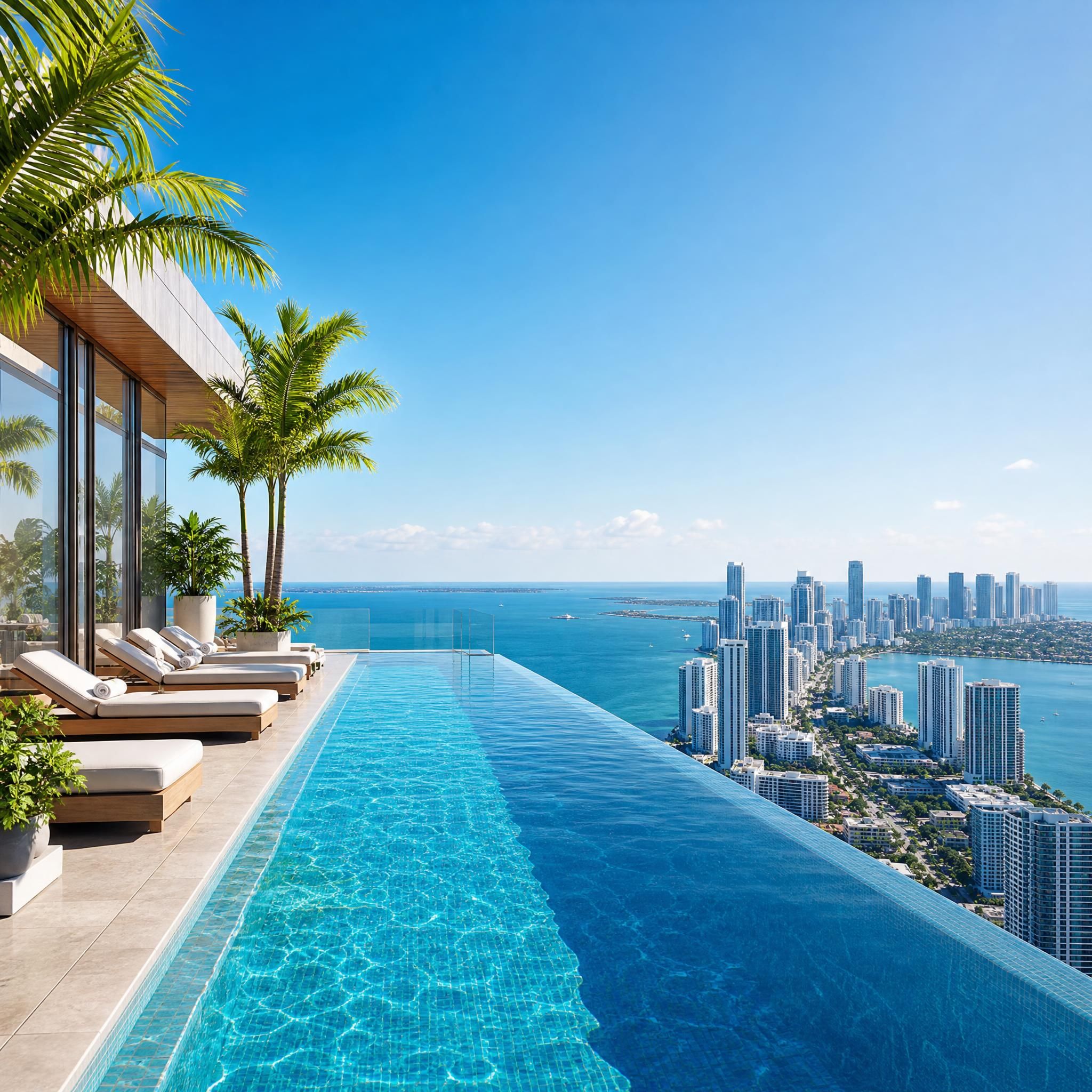
- Resort-style amenities: Rooftop pools, spas, concierge, valet, private beach clubs, wine cellars, and cinema rooms all cost money to operate.
- Branded residences: Hotel-branded buildings (Four Seasons, Ritz-Carlton, Waldorf Astoria) come with hospitality-grade services — and hospitality-grade fees.
- Reserve funding requirements: Post-Surfside legislation mandates fully funded reserves, which has increased monthly costs industry-wide.
- Insurance: Florida's property insurance market has tightened significantly; buildings in coastal flood zones carry elevated master policy costs.
Actionable Tips for HOA Evaluation:
- Request the draft operating budget before signing. Review how reserves are funded and whether the developer is subsidizing fees during the initial period (a common tactic that leads to increases after the developer control period ends).
- Compare fee-per-square-foot across comparable buildings, not just the absolute dollar amount.
- Ask specifically about special assessments — one-time charges for major repairs or upgrades not covered by reserves. In older buildings, these can be six figures. In new construction, they should be minimal — but check.
- Factor in property taxes (Miami-Dade's millage rate), flood insurance, and HO-6 contents/interior coverage to get a true picture of monthly ownership cost.
📊 $1,538/sq ft (+37% YoY) – Miami Luxury Condo Price Per Square Foot (South Beach)
Step 7: conduct airtight due diligence
Once you're under contract, the due diligence phase is your last line of defense — and in Miami's complex condo market, it deserves serious attention. In Florida, sellers of resale condos are required to provide buyers with a set of governing documents. For new construction, the developer provides a prospectus.
Your Pre-Construction Due Diligence Checklist:
| Document | What to Look For |
|---|---|
| Developer Prospectus | Unit specs, finish standards, delivery timeline, cancellation rights |
| Condo Declaration | Rental restrictions, pet policies, short-term rental rules |
| Operating Budget | Reserve funding levels, fee escalation provisions |
| Construction Timeline | Milestone dates, penalty provisions for delays |
| Assignment Clause | When and how you can sell your contract |
| Warranty Schedule | Coverage periods for finishes, systems, and structure |
Red Flags That Should Make You Pause:
- Delivery timelines with no penalty provisions for the developer
- Deposit protections that are vague or conditional
- HOA budgets that look artificially low (developer subsidy)
- Rental restrictions that conflict with your investment thesis
- No independent escrow for your deposit funds
Pro Tip: Always hire a Florida real estate attorney with pre-construction experience — not just a general practice lawyer. The nuances of Florida's Condominium Act and the specific language in developer contracts require specialized expertise.
Step 8: negotiate smartly and close with confidence
Many buyers assume developer pricing is fixed. It often isn't — especially if you know what levers to pull.
What You Can Negotiate in a Miami Pre-Construction Deal:
- Unit selection priority — Early buyers often get first pick of floors, views, and layouts. This alone can be worth more than a price discount.
- Upgrades and customization packages — Developers may offer complimentary upgrades (flooring, appliances, cabinetry) in lieu of price reductions, which protects their comp pricing.
- Parking spaces — Additional parking spots can be negotiated, particularly for penthouse or large-format units.
- Assignment rights — Getting favorable assignment language written into your contract gives you flexibility to sell before closing if your circumstances change.
- Closing cost contributions — Some developers will contribute toward title insurance or other closing costs, particularly in early sales phases.
The Closing Process in Miami:
Florida title companies handle closing, not attorneys — a key difference from many other states. 60–90 day closings are standard for resale transactions, but pre-construction closings are triggered by building completion, which can be 2–4 years after contract signing.
Work with a Buyer's Agent — Always. A specialized luxury buyer's agent in Miami costs you nothing (the developer pays the commission) but provides access to off-market inventory, pre-launch pricing, and critical negotiating leverage. Look for agents with documented experience in the specific neighborhoods and price points you're targeting.
Questions fréquentes (FAQ)
What is the best time to buy a pre-construction luxury condo in miami?
The optimal entry point is typically the reservation or early pre-sales phase, before the project launches publicly. This is when pricing is most favorable, unit selection is widest, and developers are most motivated to negotiate. Once a project is 30–50% sold, pricing typically increases and the best units are gone.
How much do i need to put down on a miami luxury new construction condo?
Deposit requirements vary by project and phase. Early reservation deposits can be as low as $50,000–$100,000 to hold a unit, but full deposit structures for ultra-luxury towers typically require 40–50% of the purchase price spread across construction milestones, with the balance due at closing.
Are miami new construction condos a good investment in 2026?
The data supports a cautiously optimistic view. Miami's luxury market has demonstrated strong appreciation, particularly in new construction and branded residences. However, buyers should model their investment based on specific submarket dynamics, HOA costs, rental income potential, and their individual hold period — not just headline market trends.
What are the biggest risks of buying pre-construction in miami?
The primary risks include: construction delays, developer financial difficulties, changes to the final product versus what was promised, and market shifts during the 2–4 year construction period. Mitigating these risks requires thorough developer vetting, attorney-reviewed contracts, and deposit escrow protections.
Do i need a real estate attorney to buy a new construction condo in miami?
While not legally required, it is strongly recommended. Pre-construction contracts are developer-drafted and heavily favor the developer. A Florida real estate attorney experienced in condo law can identify unfavorable clauses, negotiate protective language, and ensure your deposit is properly escrowed.
Chiffres clés
📊 10,513 active million-dollar listings in Miami — officially surpassing New York City for the first time in nearly a decade (Source: Realtor.com Luxury Outlook 2026)
💡 +18.57% — Miami luxury condo average sale price growth from Q4 2025 to Q1 2026, reaching $880,065 (Source: Laurie Finkelstein Reader Team)
🏗️ 40–50% of the purchase price — typical total deposit required for ultra-luxury pre-construction towers in Miami in 2026 (Source: MILLION Luxury Buyer Guide)
🌍 52% of new-construction homes in select South Florida markets purchased by international buyers, underscoring the city's global demand floor (Source: New York Post, December 2025)
Conclusion: your miami luxury play starts with a plan
Miami's new construction luxury market in 2026 is not for the unprepared — but for buyers who do their homework, it represents one of the most compelling wealth-building opportunities in American real estate. The city has permanently shifted from a seasonal playground to a global capital of luxury living, and its new construction pipeline reflects that ambition at every level: from Brickell's soaring branded towers to Coconut Grove's boutique waterfront residences.
The buyers who win here are the ones who move with precision: entering projects early, vetting developers rigorously, understanding deposit structures strategically, and working with specialists who know every nuance of this market.
Your next step: Schedule a private consultation with a Miami luxury new construction specialist who can match your goals — lifestyle, investment, or both — to the right project, at the right price, at the right time. The pipeline is deep, the market is moving, and the most coveted units in 2026's landmark towers won't wait.
"Miami surpassing New York in million-dollar listings reflects Miami's expansion and its ability to cast a global net, attracting high-income earners buying at $1M, $3M, $5M+ as a baseline"
— Ana Bozovic, Analytics Miami


