
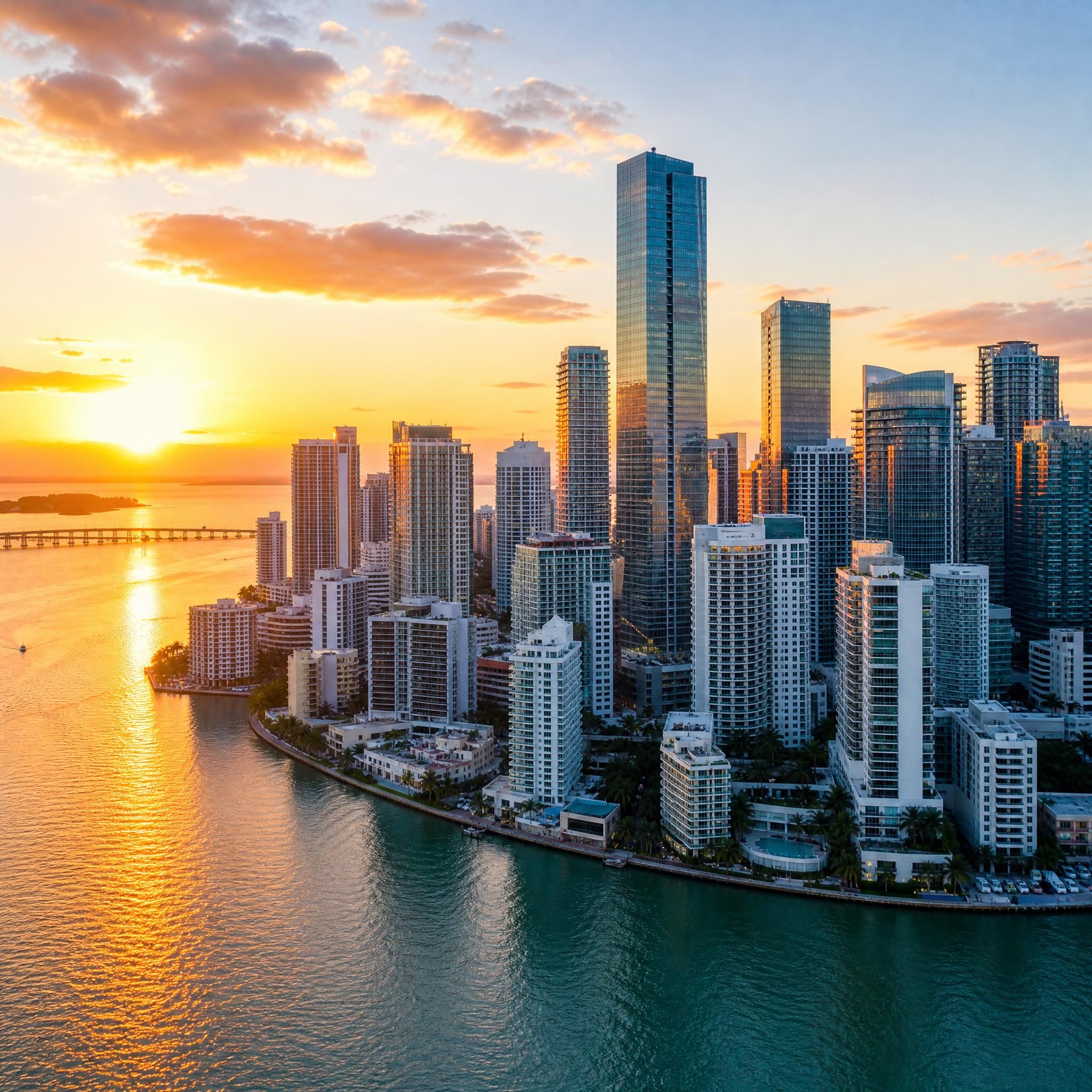
You've done your research. You know Miami is the market. You've seen the skyline renderings, toured a sales gallery or two, and felt the pull of that floor-to-ceiling ocean view. Now comes the part nobody warns you about: navigating Miami's new construction luxury market without leaving money on the table — or worse, signing the wrong contract.
This is not a general overview of why Miami is great. You already know that. This is your actionable playbook — a step-by-step guide to buying new construction luxury homes in Miami in 2026 with the precision, leverage, and confidence of a seasoned insider. From choosing the right neighborhood for your goals to decoding developer contracts, vetting HOA finances, and timing your entry for maximum appreciation, every section below is designed to give you a concrete edge.
Table of contents
- Step 1: Define Your Goals Before You Tour a Single Building
- Step 2: Choose the Right Neighborhood for YOUR Strategy
- Step 3: Master the Pre-Construction Buying Process
- Step 4: Vet the Developer Like a Pro
- Step 5: Decode the Financial Picture Before You Sign
- Step 6: Negotiate Like an Insider
- Step 7: Understand the True Cost of Ownership
- FAQ
- Key Statistics
Step 1: define your goals before you tour a single building
The single most expensive mistake luxury buyers make in Miami is falling in love with a residence before they've clarified their purpose. Miami's new construction landscape offers radically different products for radically different goals — and confusing them costs you.
Ask yourself these three non-negotiable questions:
- Primary use? Primary residence, vacation home, or investment property? Your answer determines everything: neighborhood, building type, rental restrictions, and exit strategy.
- Time horizon? Are you planning to hold 3–5 years or 10+? Pre-construction appreciation plays differently across those windows.
- Cash or financed? Many luxury buyers pay cash, but second-home buyers using financing should get pre-approval early to stay competitive — especially in sought-after luxury real estate tiers.
Once you have clarity on these three axes, you can evaluate buildings with surgical precision rather than emotional impulse. Investors prioritize rental yield and appreciation. End users prioritize location, lifestyle, and finishes. Buyers who read the full developer financial package, understand Florida SB 4D reserve law implications, and verify the deposit escrow structure before signing, close on terms they control.
Step 2: choose the right neighborhood for YOUR strategy
Miami's luxury neighborhoods are not interchangeable. Each has its own buyer profile, price trajectory, rental dynamics, and lifestyle DNA. Here's the strategic breakdown:
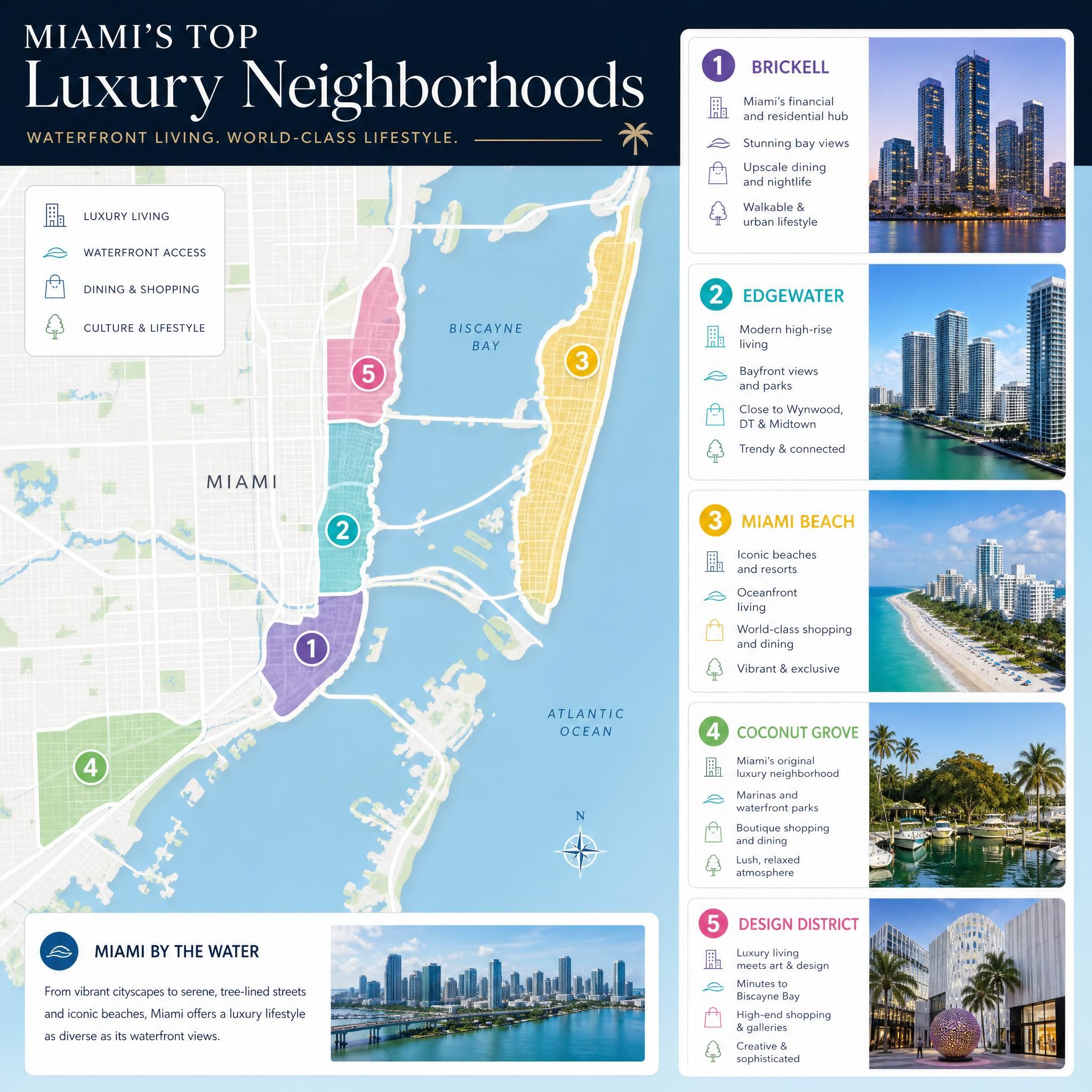
Brickell — urban sophistication + branded residences
Brickell is the epicenter of Miami's branded residence movement. With St. Regis, Cipriani, Baccarat, and multiple other luxury projects in various stages of development, the neighborhood has more branded inventory per square mile than any other market in the Western Hemisphere. Pricing ranges from $1,200 to $2,500 per square foot for new construction, with ultra-luxury product exceeding $2,800 per square foot at the penthouse level.
Best for: Full-time residents who want walkable urban living, investors targeting corporate/executive rentals, buyers who want the most brand cachet per dollar.
Edgewater — best value waterfront
Edgewater continues to represent the strongest value proposition relative to its waterfront positioning and proximity to the Design District. New projects like LILLI — a sinuous 53-story bayfront tower from OKO Group — are bringing architectural ambition to this neighborhood at a more accessible price point than Brickell.
Best for: Value-conscious luxury buyers who want true waterfront access, buyers targeting long-term appreciation as the neighborhood matures.
Miami beach — oceanfront prestige
Miami Beach speaks to a different form of luxury. Buyers here tend to prize light, air, privacy, walkability, and the emotional pull of water. The best units feel like private homes with hotel-grade ease. Roughly 12% of the new development pipeline is oceanfront, yet these projects — primarily in Miami Beach, Surfside, and Bal Harbour — account for more than 50% of total sales volume.
Best for: Seasonal buyers, those seeking true scarcity, ultra-high-net-worth buyers who want irreplaceable addresses.
Coconut grove — historic charm, modern luxury
Coconut Grove is South Florida's oldest neighborhood, now undergoing a luxury renaissance. New boutique developments are arriving with large floor plans, lush landscaping, and a community feel impossible to replicate in a high-rise tower.
Best for: Families, buyers relocating full-time who want a neighborhood feel, those seeking lower density than Brickell.
Design district / wynwood — cultural capital
New developments in the Miami Design District are emerging as a buyer's market guide, with projects like Kempinski Residences offering Rockwell Group-designed interiors in the heart of Miami's luxury cultural corridor.
Best for: Art collectors, design-forward buyers, those who value cultural proximity over pure beachfront access.
| Neighborhood | Price/SF Range | Best Use Case | Appreciation Potential |
|---|---|---|---|
| Brickell | $1,200 – $2,800+ | Primary / Investment | High (branded premium) |
| Edgewater | $900 – $1,600 | Investment / Lifestyle | Very High (emerging) |
| Miami Beach | $1,500 – $4,200+ | Vacation / Ultra-luxury | High (scarcity-driven) |
| Coconut Grove | $1,000 – $2,000 | Primary / Family | Moderate-High |
| Design District | $1,100 – $2,200 | Lifestyle / Art-forward | High (cultural premium) |
Step 3: master the pre-construction buying process
Buying pre-construction in Miami means purchasing a condo from the developer before it is built, locking in current pricing while the building is under construction. The process takes 2–4 years from reservation to move-in, requires deposits of 20–50% during construction, and has historically delivered 20–30% appreciation by the time the building is completed.
Here is the exact sequence you need to follow:
Phase 1 — Reservation ($25,000–$100,000 deposit)
Once you identify the right unit, you place a reservation deposit to take the unit off the market. This deposit is usually refundable during a short review period of 15–30 days. Your agent helps you select the best unit based on floor, exposure, view, and price.
Phase 2 — Contract Signing (additional 20% deposit)
You receive the full developer contract and condominium documents. In Florida, you have a 15-day rescission window — this is your most powerful protection. Use every one of those 15 days. Have a real estate attorney review the contract, not just your agent.
Phase 3 — Construction Milestone Deposits
Additional deposit tranches (typically 10%) are triggered at groundbreaking and construction milestones. Plan your liquidity accordingly — these calls can come faster than expected.
Phase 4 — Pre-Closing Walkthrough
Inspect every finish, fixture, and appliance against your contract specifications. Document everything in writing. Developers are most responsive to punch-list items before they receive final payment.
Phase 5 — Closing
According to Miami Association of Realtors Q1 2026 data, pre-construction reservation volume in Miami-Dade is running 14 percent above Q4 2025, which tightens negotiation leverage for late-arriving buyers. The implication: waiting for certainty means paying more and choosing from reduced inventory.
Step 4: vet the developer like a pro
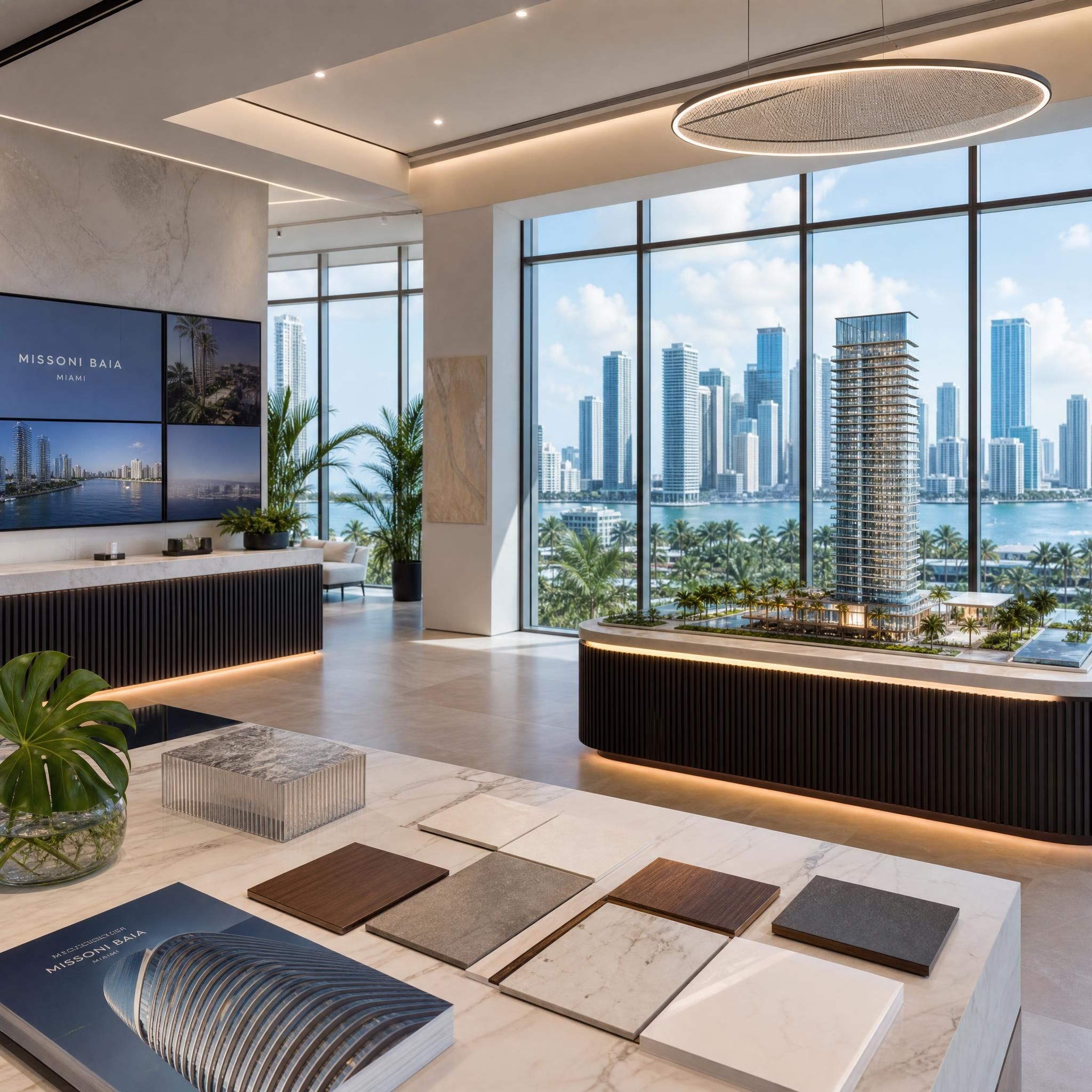
Not all developers are equal, and in a market flooded with ambitious projects, developer track record is one of the most critical filters you can apply. Here's your due diligence framework:
The 5 Developer Questions You Must Answer:
- Delivery history — Have their previous projects delivered on time and on budget? Request a list of completed buildings and visit them in person.
- Construction quality — Talk to residents of their completed projects, not just sales reps. Online forums and condo association records reveal what marketing materials hide.
- Financial strength — Stricter escrow protections now require buyer deposits to be held in FDIC-insured escrow accounts managed by independent third-party escrow agents. Developers cannot access deposit funds for construction purposes without meeting specific milestones verified by an independent inspector.
- Litigation history — Search Florida court records for any active or past litigation involving the developer entity.
- Capital stack — Is the project fully financed? A project with secured construction financing (like the $565M JLL-arranged loan for a Brickell ultra-luxury tower) is far lower risk than one still assembling its capital stack.
Red flags to walk away from:
- Vague delivery timelines with no milestone dates
- Escrow held by developer-affiliated entities
- No audited financials available
- Sales agents who discourage attorney review
Step 5: decode the financial picture before you sign
This is where sophisticated buyers separate themselves from aspirational ones. The purchase price is just the beginning.
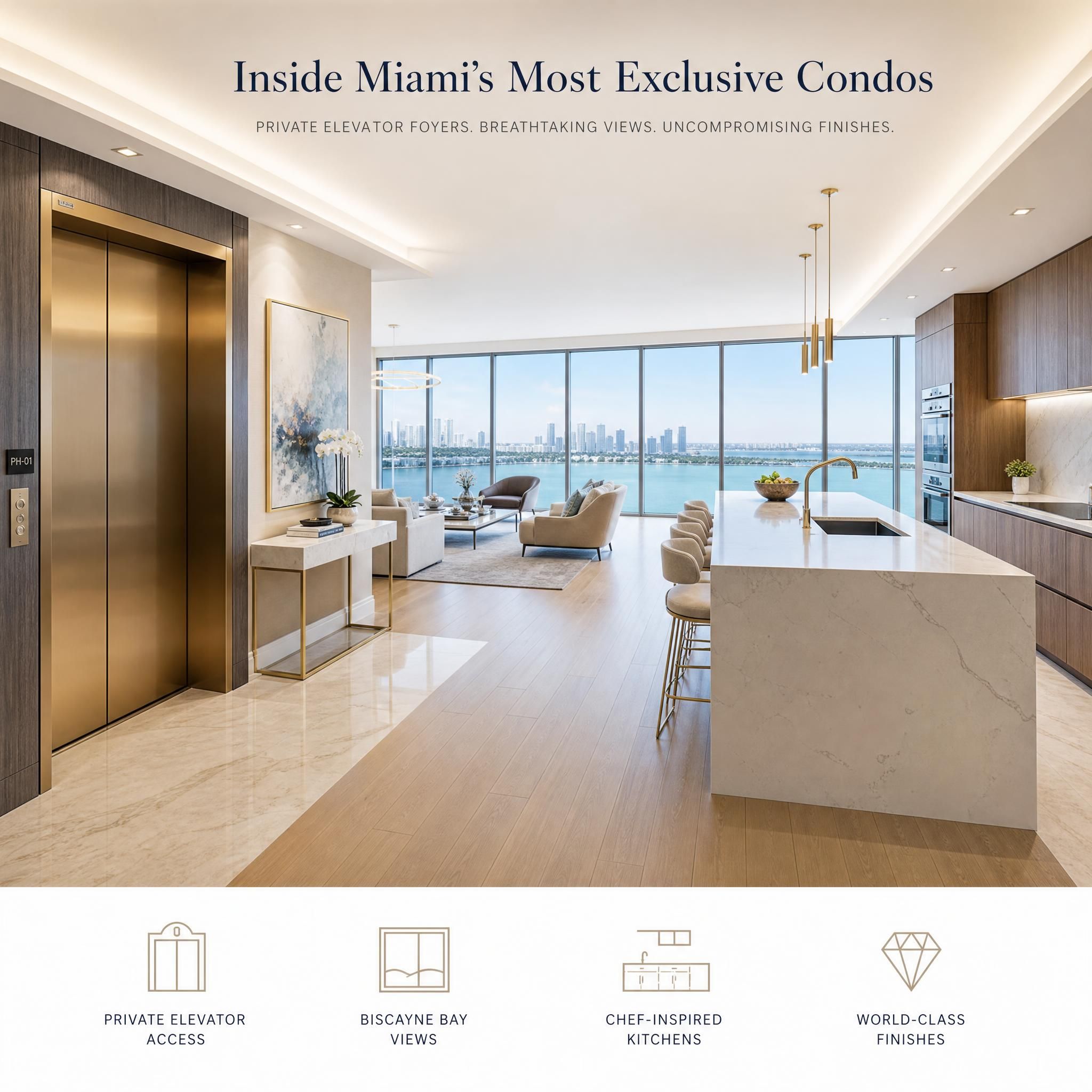
HOA fees: the hidden variable
HOA fees continue rising 3–5% annually. Budget conservatively. In Brickell, HOA fees range from $0.80 to $2.50 per square foot per month. For a 2,000 SF residence, that's $1,600–$5,000 per month — before property taxes and insurance.
Critical insight on branded buildings: HOA dues in branded buildings typically run 30–60% above non-branded buildings of equivalent size due to hotel-grade amenity infrastructure — pools, spas, restaurants, concierge staff. Know what you're paying for and whether you'll actually use it.
Reserve fund adequacy
During developer control, the developer sets the HOA budget and has an incentive to set dues artificially low during the sales period to reduce the carrying cost for buyers and improve sales velocity. Post-transition, the owner-controlled HOA may discover that the developer's initial reserve funding was inadequate, triggering a dues increase or special assessment.
Your action item: Request the developer's pro forma HOA budget and verify that reserve funding is at least 70% of required levels. Anything below this signals future special assessment risk.
The true carrying cost calculation
Run this math before every purchase:
| Cost Component | Monthly Estimate (2,000 SF luxury condo) |
|---|---|
| HOA Fees | $2,000 – $5,000 |
| Property Taxes | $700 – $1,200 |
| Insurance | $200 – $400 |
| Mortgage (if financed) | Varies |
| Total Monthly Carry | $2,900 – $6,600+ |
Carrying costs for high-rise luxury condos have increased 40–50% since 2022, driven by rising insurance costs and post-Surfside reserve requirements. Model your numbers at current costs, not 2022 benchmarks.
Rental income potential
If you're buying as an investment, verify the building's rental restrictions before you close. Latin American buyers are actively purchasing new Brickell condos specifically to make them rentals, and many buildings have minimum rental periods (30, 90, or 180 days) that dramatically affect short-term rental income potential.
Average monthly rents of $7,708 in Q1 2026 on an $880,000 purchase price suggest a 10.5% annual gross yield. After expenses, net yields typically land around 6.7%.
Step 6: negotiate like an insider
The myth that developer prices are non-negotiable is exactly that — a myth. Here's where real leverage lives:
Timing leverage: Enter early. Pre-construction buyers accept longer waits in exchange for maximum appreciation potential. Related Group's latest Brickell tower offers units at $1,100 per square foot now, but comparable resale units in their completed buildings trade at $1,450. That $350 spread represents substantial wealth creation for buyers willing to wait 24 months.
Unit selection leverage: Developers are most flexible on units with challenging views, awkward floor plans, or lower floors. If you don't need the penthouse, you can often extract significant concessions on mid-floor units.
What to negotiate (beyond price):
- Closing cost credits
- Upgraded finishes at developer cost
- Flexible deposit schedule
- Extended closing date options
- Parking space upgrades
- Storage unit inclusion
- Furniture package credits
Work with an agent who has direct developer relationships. Priority registration, access to pre-public inventory, and knowledge of which units have the most negotiation room are all relationship-dependent advantages that a connected agent brings to the table.
Step 7: understand the true cost of ownership
The most sophisticated buyers now treat operating expenses as part of the architecture of ownership, not an afterthought beneath the purchase price. Here are the ownership realities to internalize before closing:
Florida's Financial Advantages (Real and Significant):
- Zero state income tax — for high-income earners relocating from New York, California, or Massachusetts, this alone can represent hundreds of thousands of dollars annually
- No estate tax — significant for wealth transfer planning
- Homestead exemption — primary residents can reduce assessed value by up to $50,000
The Post-Surfside Regulatory Landscape:
Florida's SB 4-D law now mandates Structural Integrity Reserve Studies (SIRS) for buildings over three stories. Buyers should confirm whether the building has completed or scheduled its milestone inspection, review the latest SIRS and whether reserve funding aligns with it, and analyze the current budget and assessment history. This is non-negotiable due diligence for any purchase.
The Global Demand Floor:
Global buyers accounted for 52% of South Florida new-construction, pre-construction, and condo-conversion sales over the prior 22 months, with buyers from 73 countries. This international participation creates a demand floor that supports resale liquidity for well-positioned luxury inventory — a meaningful hedge against domestic market softness.
📊 +15.2% year-over-year – Miami Luxury Condo Closed Sales Q1 2026
📊 52% from 73 countries – Global buyers share of South Florida new construction sales
📊 20–30% by completion – Pre-construction luxury appreciation
"Miami's pre-construction reservation volume in Miami-Dade is running 14 percent above Q4 2025"
— Miami Association of Realtors Q1 2026
Frequently asked questions (FAQ)
How much deposit do i need to buy a new construction luxury condo in miami?
Most pre-construction luxury developments in Miami require a total deposit of 20–50% of the purchase price, paid in stages. The initial reservation deposit is typically $25,000–$100,000 (often refundable within 15–30 days), followed by additional tranches at contract signing, groundbreaking, and construction milestones. Branded ultra-luxury projects at the $3M+ level may require higher deposit percentages. Cash buyers are generally preferred and may receive preferential unit selection.
How long does it take from pre-construction purchase to move-in?
The typical timeline from reservation to move-in is 2–4 years, depending on where the project is in its development cycle when you buy. Projects already under construction at the time of purchase will deliver faster. Many 2026 deliveries — including Waldorf Astoria Residences, Bentley Residences Sunny Isles, and Viceroy Residences Brickell — are completing now, offering near-term occupancy for buyers who want to move quickly.
Can foreigners buy new construction luxury condos in miami?
Yes — and they do so at scale. Global buyers account for 52% of South Florida new construction sales, representing buyers from 73 countries. There are no restrictions on foreign nationals purchasing real estate in Florida. Foreign buyers should work with a real estate attorney familiar with FIRPTA (Foreign Investment in Real Property Tax Act) implications and should factor in currency exchange timing when planning deposit payments.
What is the difference between a branded and non-branded luxury condo in miami?
A branded residence is developed in partnership with a luxury hospitality brand (St. Regis, Nobu, Mandarin Oriental, Baccarat) and typically includes hotel-grade services — concierge, housekeeping, valet, spa, and food & beverage. Branded buildings command a 20–30% price premium over comparable non-branded product and carry higher HOA fees (30–60% above non-branded equivalents). They tend to hold value well and attract a global buyer pool, making them strong for resale liquidity.
What due diligence should i do before buying a miami luxury condo?
Your due diligence checklist should include: (1) Review the Structural Integrity Reserve Study (SIRS) and milestone inspection status; (2) Analyze the HOA budget, reserve funding levels, and assessment history; (3) Verify escrow protections and deposit structure; (4) Research the developer's delivery history and litigation record; (5) Confirm rental restrictions and warrantability for financing; (6) Review board meeting minutes for undisclosed repairs or disputes; (7) Engage a Florida-licensed real estate attorney during your 15-day rescission window.
Key statistics
📊 +15.2% year-over-year increase in Miami luxury condo closed sales in Q1 2026, with median sale price reaching $1,841,000 (Source: CondoBlackBook Q1 2026 Market Report)
🌎 52% of South Florida new construction sales are to international buyers from 73 countries (Source: MIAMI REALTORS International Report)
💰 20–30% average appreciation from pre-construction purchase to building completion in Miami's luxury segment (Source: LuxuryDade Q1 2026 Market Report)
🏙️ $1,200–$2,800+/SF — the current price range for branded new construction luxury condos in Brickell, Miami's most competitive luxury submarket (Source: Q1 2026 Miami Pre-Construction Market Report)
Conclusion: your miami new construction strategy starts now
The buyers who win in Miami's 2026 luxury new construction market are not the ones who move fastest or spend the most. They're the ones who move smartest — with clear goals, rigorous due diligence, an understanding of the true cost of ownership, and a trusted team of specialists who know which buildings, which developers, and which units represent genuine value.
Miami has earned its place as a global luxury capital. Miami is no longer an "emerging" luxury market. It has fully arrived as a global capital of wealth, innovation, and design. The new construction pipeline — from Nobu Residences at 619 Brickell to LILLI in Edgewater to Four Seasons Private Residences in Coconut Grove — represents some of the most architecturally ambitious and amenity-rich residential product ever built in the United States.
But opportunity without strategy is just expensive real estate tourism. Use this playbook. Define your goals. Vet your developer. Model your true carrying costs. Negotiate with leverage. And when you find the right building in the right neighborhood at the right stage of construction — move decisively.
Your Miami new construction luxury home isn't just a residence. It's a position in one of the world's most dynamic luxury markets. Make it count.
Ready to explore Miami's top new construction luxury developments? Schedule a private consultation with a luxury real estate specialist to access priority inventory, pre-public pricing, and curated building recommendations matched to your specific goals.


