
Buying a luxury new construction home in Miami in 2026 is simultaneously one of the most exciting — and most consequential — financial decisions you can make. The Miami new construction market in 2026 is simultaneously one of the most exciting and one of the most dangerous new construction markets, where the quantity of product, the quality of the marketing, and the intensity of sale pressure combine to create conditions where buyers without good information can make very expensive mistakes.
This guide cuts through the noise. Whether you're eyeing a branded residence in Brickell, a bayfront penthouse in Edgewater, or a boutique villa in Coconut Grove, the following actionable framework will help you move with confidence — from your first neighborhood shortlist to closing day. No developer spin. No fluff. Just a step-by-step playbook built for serious buyers navigating Miami's luxury new construction landscape right now.
Table of contents
- Step 1: Understand the 2026 Market Before You Shop
- Step 2: Match Your Neighborhood to Your Lifestyle Goals
- Step 3: Evaluate the Developer — Not Just the Renderings
- Step 4: Decode the Pre-Construction Contract
- Step 5: Understand the True Cost of Ownership
- Step 6: Negotiate Strategically in a Buyer-Favorable Market
- Step 7: Build Your Expert Team
- Investment Perspective: Making the Numbers Work
- Chiffres Clés
- Questions Fréquentes (FAQ)
Step 1: understand the 2026 market before you shop
Before you tour a single model unit, ground yourself in the data. The luxury segment ($1 million and above) in Miami stays vibrant, with luxury condo and single-family sales rising significantly year-over-year, driven by international buyers, lifestyle appeal, and Miami's growing status as a global business hub.
But the market has two speeds. In 2026, Miami is seeing one of the largest waves of new luxury condo deliveries in history, with more than 15,000 luxury condo units expected across 40+ developments, many with premium waterfront views or close access to water — meaning more choices for buyers, but top properties with true water views or private docks still sell at a premium.
Here's what that means practically:
- Luxury ($1M+) inventory currently sits at approximately 10.2 months of supply — a buyer's market by definition
- Miami's housing prices are increasingly influenced by wealth migration and global capital inflows, making the city's luxury segment more competitive and resilient
- The upcoming FIFA World Cup 2026 is expected to further amplify Miami's global profile and long-term demand
Your action item: Request a current absorption rate report from your agent for the specific neighborhood and price point you're targeting before making any offers. Don't rely on citywide averages.
📊 15,000+ units across 40+ developments – Miami Luxury Condo Deliveries 2026
Step 2: match your neighborhood to your lifestyle goals
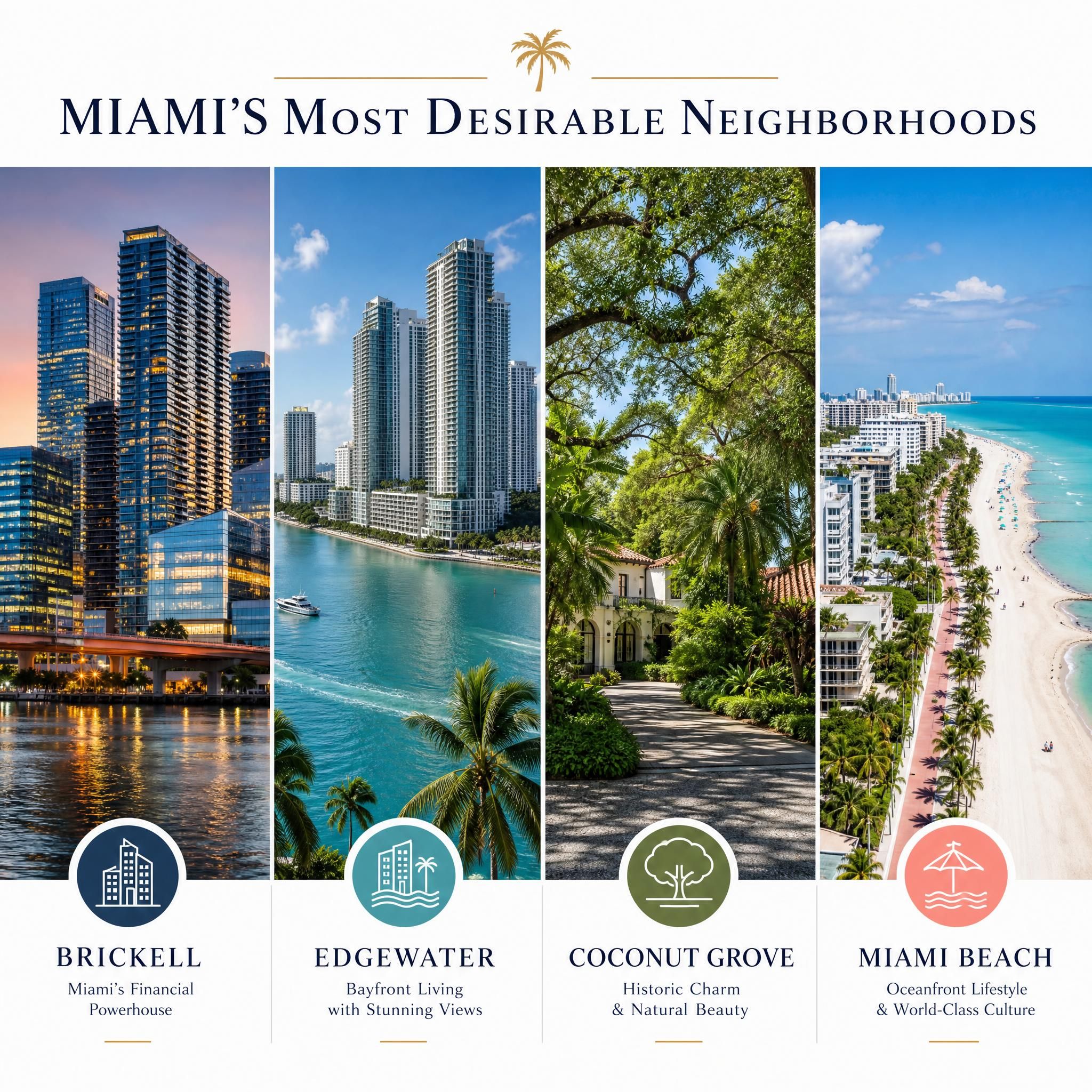
Miami's luxury neighborhoods are not interchangeable. Each has a distinct character, price point, and investment profile. Here's how to choose strategically:
Brickell — urban sophistication & financial core
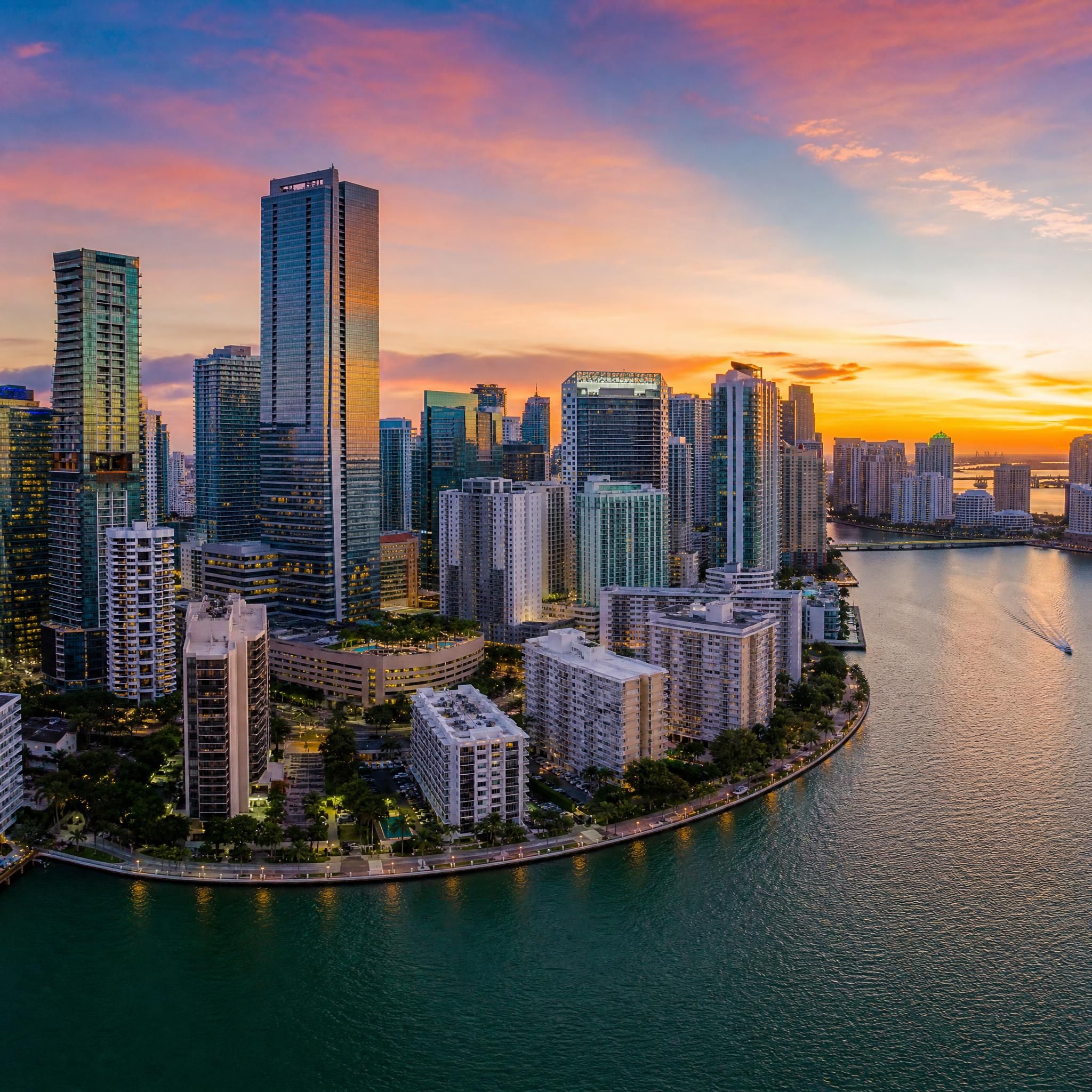
Brickell continues to outperform the broader Miami market due to three structural advantages: limited bayfront land, institutional-quality new development, and sustained corporate relocations from higher-tax states. Pre-construction entry starts around $500K (LOFTY Brickell), while ultra-luxury branded towers like the St. Regis Residences and 888 Brickell by Dolce & Gabbana reach $2,500–$3,000+/sq ft.
Best for: Finance professionals, corporate relocators, buyers prioritizing walkability (Walk Score: 90) and urban convenience.
Practical tip: Visit the building at different times of day — a unit that seems quiet at 10 AM might face a noisy restaurant or bar at 10 PM, as Brickell's density means sound travels in unexpected ways.
Edgewater — bayfront serenity with modern architecture
Edgewater has experienced rapid development in recent years, becoming one of Miami's fastest-growing residential neighborhoods, with luxury condominium towers along Biscayne Bay providing stunning waterfront views and modern amenities, attracting both domestic and international buyers.
Best for: Buyers who want waterfront lifestyle without South Beach density; strong rental demand for investors.
Practical tip: In Edgewater, terraces can be as valuable as interior square footage — always calculate price per square foot including outdoor living space, not just interior area.
Coconut grove — boutique luxury & privacy
Four Seasons Private Residences Coconut Grove delivers an ultra-luxury waterfront lifestyle defined by exclusivity, scale, and legendary service, with just 72 residences featuring private elevator access, soaring ceilings, unobstructed bay views, and fully integrated smart home systems.
Best for: Buyers seeking low-density living, privacy, and a nature-connected lifestyle close to the urban core.
Miami beach — oceanfront prestige
Across Miami Beach, conditions remain intensely segmented by beachfront access, building pedigree, and how deliberately lifestyle is curated through service — meaning location within Miami Beach matters enormously. North Beach is currently undergoing significant transformation with new infrastructure and a measurable shift toward buyers seeking the Miami Beach experience without South Beach congestion.
Wynwood / design district — cultural capital & STR opportunity
Wynwood has transformed into Miami's most culturally vibrant neighborhood, where STR-friendly buildings can generate 6–9% gross yield on well-run operations — among the highest in the city. Always verify current short-term rental regulations before committing.
Step 3: evaluate the developer — not just the renderings
This is where most buyers make their biggest mistakes. A stunning sales gallery and celebrity brand partnership do not guarantee a quality building or a strong exit market.
Your developer due diligence checklist:
✅ Walk completed buildings — Visit the developer's previous projects in person. Talk to residents, not just the sales team. Does the finished product match what was promised in the marketing?
✅ Assess the architect and design team — Globally recognized names are not a guarantee, but they are rarely attached to mediocre work. Names like OMA, KPF, SOM, Arquitectonica, and Robert A.M. Stern signal a level of execution worth noting.
✅ Analyze unit count vs. density — A high unit count means more competition within your own building at resale — when multiple units are listed simultaneously in a high-density tower, price discovery moves against sellers. Boutique buildings with 20–80 residences historically outperform at resale.
✅ Verify view protection — In a submarket where additional towers are being approved and built, the unobstructed views being sold today may look different in 5 to 7 years — and view protection is a critical component of future values in Miami. Request the zoning map for surrounding parcels.
✅ Prioritize direct water views — Direct bay views command 15–25% premiums over city views — and that premium holds on resale.
📊 $1,500–$2,500/sq ft vs. $1,000–$1,300/sq ft – Branded vs. Non-Branded Brickell Condos
Step 4: decode the pre-construction contract
When you are considering a pre-construction opportunity, you are not inspecting a finished home — you are underwriting a promise. The contract terms define your risk exposure. Here's what to scrutinize:
Deposit schedule & escrow
Total pre-closing deposits in Miami-area luxury projects often range from roughly 20 to 50 percent, paid in stages, with exact schedules being project-specific. Before signing, confirm:
- Are deposits held in independent escrow (not commingled with developer operating funds)?
- Do deposits earn interest during the construction period?
- What are the refund rules if the developer defaults or the project is significantly delayed?
Purchase agreement protections
Clarify the included finish package for cabinetry, appliances, flooring, and lighting — upgrades can be beautiful yet costly, and not all carry dollar-for-dollar resale value. Choose enhancements that align with function and long-term appeal, not just current trends.
View corridor & entitlement verification
Pay attention to the supply pipeline and permitting — a heavy pipeline can pressure pricing if absorption slows, while limited future supply can support appreciation. Verify the project's zoning and entitlements with the City of Miami directly.
Timeline expectations
Committing at the planning stage means you may sign a contract two to four years before delivery, funding the project with a sequence of deposits while architects, designers, and contractors bring the building to life. Build this timeline into your financial and lifestyle planning.
Step 5: understand the true cost of ownership
The purchase price is just the beginning. Sophisticated buyers calculate the full carry cost before committing.
HOA fees: the hidden variable
HOA fees for luxury pre-construction condos in Miami typically range from $0.80 to $2.50 per square foot per month, depending on the building's amenity package and brand affiliation. For a 1,500-square-foot two-bedroom unit, expect monthly HOA fees of roughly $1,200 to $3,750.
Branded residences tend to have higher HOA fees because they fund brand-standard services like butler service, concierge, and hotel-grade amenity maintenance — covering building insurance, common area maintenance, staffing, amenities, reserves, and sometimes water and basic cable.
| Neighborhood | Typical HOA Range (Monthly) | Notes |
|---|---|---|
| Brickell (Non-Branded) | $800–$1,500 | Varies by tower size |
| Brickell (Branded) | $2,000–$4,500+ | Includes hotel-grade services |
| Edgewater | ~$1,100 avg | Bay tower standard |
| Coconut Grove | ~$1,500 avg | Boutique luxury premium |
| Miami Beach (Ultra-Luxury) | $3,000–$6,000+ | Brand-affiliated towers |
Closing costs
Closing costs on a new construction condo in Miami typically range from 1.5% to 3% of the purchase price for the buyer, including title insurance, title search fees, recording fees, lender fees, and prorated property taxes. Unlike resale transactions, the developer typically pays for documentary stamps on the deed and the owner's title insurance policy in new construction deals, saving the buyer significant money.
Your action item: Build a 12-month carry cost model before signing: purchase price + HOA + property taxes + insurance + financing costs, offset by any rental income. This is your real number.
Step 6: negotiate strategically in a buyer-favorable market
The 2026 window offers the most negotiating leverage for Brickell buyers since 2019 — and this dynamic extends across most Miami luxury submarkets. Here's how to use it:
What you can negotiate in pre-construction:
- Upgrade packages — Developers often absorb upgrade costs (premium appliances, flooring upgrades) rather than reduce the headline price
- Parking spaces — Sometimes you can get an extra parking space thrown into the deal for little or no cost
- Closing cost contributions — Developers may offer to cover a portion of buyer closing costs, especially on slower-moving units
- HOA fee waivers — Some developers offer 6–12 months of prepaid HOA fees as an incentive
- Furniture packages — Fully furnished turnkey packages at developer cost are increasingly common
Timing your purchase:
The best pricing windows in pre-construction are typically:
- VIP/pre-launch phase — Lowest prices, but least certainty about the project
- Construction start — Confidence increases; prices rise 5–10%
- Topping off — Near-final pricing; maximum certainty
Critical rule: Developer representatives are professionally trained to convince you to buy their project over all others — having an experienced real estate agent on your side is essential if you have not purchased and negotiated a pre-construction purchase before.
Step 7: build your expert team
No sophisticated buyer navigates a $2M+ purchase alone. Your Miami luxury new construction team should include:
1. a specialist luxury buyer's agent
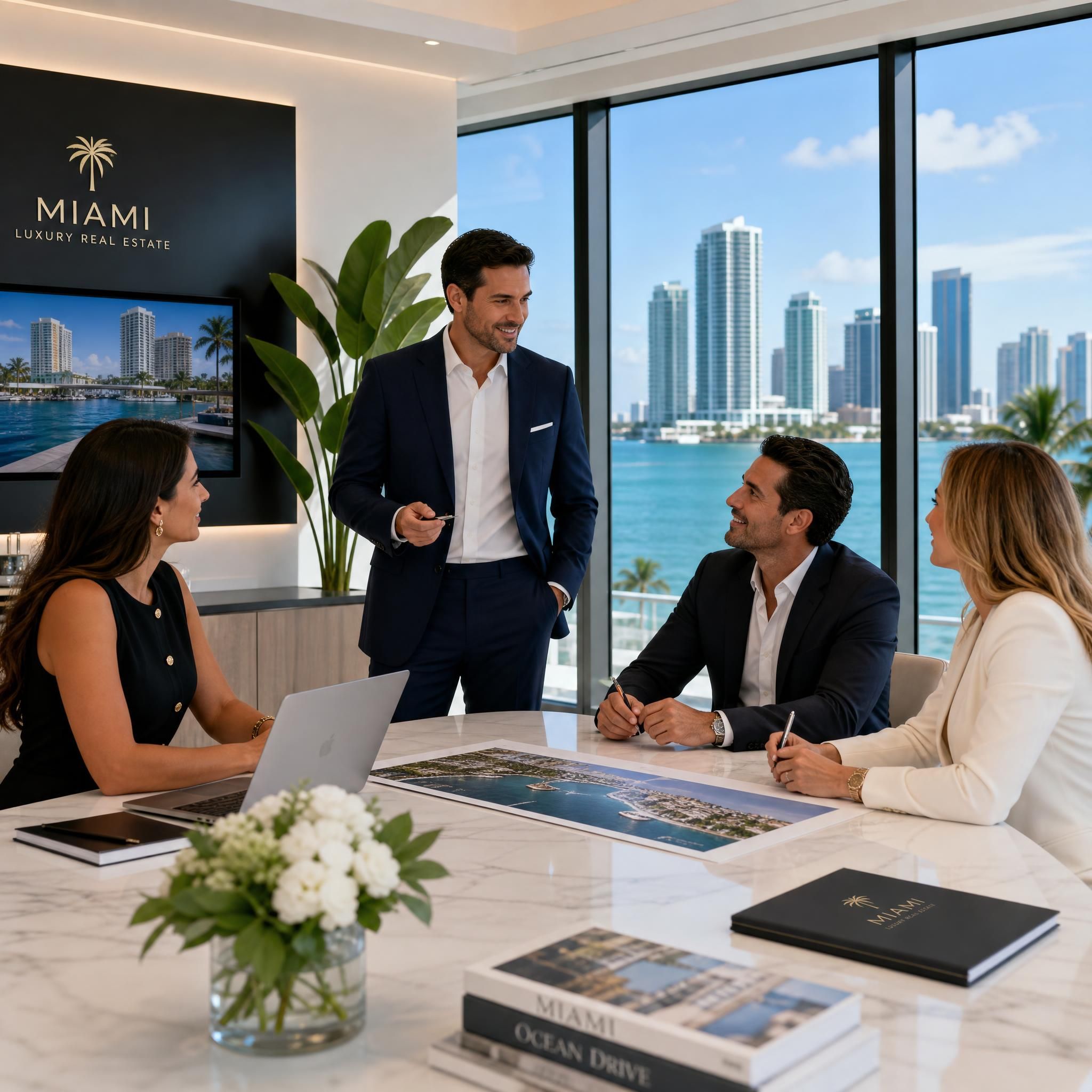
Choose an agent who exclusively works in the luxury new construction space and has no developer relationships that create conflicts of interest. A world-class broker will pre-tour every serious option, record detailed walk-through videos, shoot the lobby, corridors, parking and street, and highlight elements marketing materials carefully avoid — and will also curate the rest of your team. Importantly, it will not cost you anything, as the commission is paid by the developer.
2. a real estate attorney
Florida law requires specific disclosures in pre-construction sales. Your attorney should review the purchase agreement, escrow terms, and condo documents before you sign anything.
3. a miami-experienced CPA
Foreign nationals can obtain U.S. mortgages but often face higher down payments and additional documentation. Understand tax obligations on rental income and plan ahead for future sale rules, including FIRPTA withholding for non-U.S. sellers. Consider estate planning early if you will hold U.S. real estate directly.
4. a property inspector (for move-in ready units)
For buildings delivering in 2026, commission an independent inspection before your final walkthrough. Developers will conduct their own punch list — yours should be separate.
5. a lender pre-approved for luxury new construction
Not all lenders finance pre-construction. Secure a lender familiar with Miami's luxury condo market and construction loan timelines before you're under contract.
Investment perspective: making the numbers work
For buyers approaching this as an investment — or a lifestyle purchase with investment discipline — here's how the numbers look in 2026:
Brickell is Miami's financial core with exceptional rental demand from young finance and tech professionals, relocating executives, and short-to-medium-term residents. Cap rates in the Brickell/Downtown core currently sit around 4.7%, while emerging neighborhoods offer wider spreads.
Appreciation strategy: Rates are seen easing into 2027, single-family supply may tighten, and branded towers keep setting the tone — meaning well-positioned branded residences in supply-constrained locations have the strongest appreciation thesis.
Rental income strategy: For short-term rental flexibility, verify building policy upfront. Buildings like LOFTY Brickell, NoMad Residences Wynwood, and E11EVEN Residences explicitly permit short-term rentals — a significant income driver in a city that hosts major events year-round.
The tax advantage: Florida's zero state income tax remains a powerful structural tailwind for wealth migration and property demand. This is not a trend — it's a permanent feature that continues to attract high-net-worth buyers from New York, California, and internationally.
📊 Ultra-luxury +8.5% year-over-year – Brickell Luxury Segment Appreciation
Chiffres clés
📊 15,000+ luxury condo units delivering across 40+ Miami developments in 2026 — the largest wave in the city's history (Source: MGroup Compass, 2026)
💡 $1,650/sq ft average pre-construction price in Brickell as of Q1 2026, ranging from $500K entry to $3,000+/sq ft ultra-luxury (Source: Manhattan Miami Real Estate, 2026)
🏠 20–50% total deposit required in Miami luxury pre-construction purchases, paid in staged milestones before closing (Source: Lydia Eskenazi Real Estate, 2026)
🌊 15–25% premium commanded by direct bay or ocean views over city views — a premium that holds consistently at resale (Source: Manhattan Miami Real Estate, 2026)
Questions fréquentes (FAQ)
How much do i need upfront to buy a pre-construction luxury condo in miami?
Plan for 20–50% of the purchase price in staged deposits before closing, depending on the project. For a $2M condo, that means $400K–$1M in pre-closing capital commitments. Confirm whether deposits are held in independent escrow and whether they earn interest during construction. The remaining balance is typically financed or paid at closing when the certificate of occupancy is issued.
What's the difference between a branded and non-branded luxury residence in miami?
Branded residences (St. Regis, Four Seasons, Cipriani, Dolce & Gabbana) command a 50–100%+ price premium over comparable non-branded buildings, justified by hotel-caliber services, global brand recognition, and stronger resale demand from international buyers. Non-branded buildings offer more square footage per dollar and lower HOA fees. Your choice depends on whether you prioritize lifestyle services and brand cachet, or maximize value per square foot.
How do i protect myself if the developer doesn't deliver on time or defaults?
Ensure your purchase agreement includes: (1) deposits held in independent escrow — not the developer's operating account; (2) clearly defined refund rights if the project is canceled or materially delayed beyond a set threshold; (3) a delivery window with penalty clauses. Have a real estate attorney review these terms before signing. Florida's Condominium Act provides some statutory protections, but contract-level protections are equally important.
Is 2026 a good time to buy luxury new construction in miami, or should i wait?
The current market offers the most buyer-favorable conditions since 2019 — elevated inventory, longer days on market, and motivated developers offering incentives. However, the best units in the best buildings in supply-constrained locations (boutique bayfront, branded towers with low unit counts) still move quickly. The strategic window is now, particularly for buyers who can commit to pre-construction timelines and want access to prime unit selection.
What are the most important amenities to look for in a miami luxury new construction condo?
Beyond the standard pool and gym, prioritize: (1) smart home integration — look for fully integrated systems, not bolt-on apps; (2) wellness infrastructure — spas, cold plunge, sauna, and fitness studios are now baseline in top buildings; (3) concierge and service quality — test responsiveness before you buy; (4) private elevator access — essential for true privacy in a high-rise; (5) short-term rental policy — if income is part of your strategy, confirm this upfront, as policies vary dramatically by building.
Ready to take your next step? Schedule a private consultation with a Miami luxury new construction specialist to receive a curated shortlist of developments that match your lifestyle goals, budget, and investment criteria — and access opportunities before they reach the open market.


