
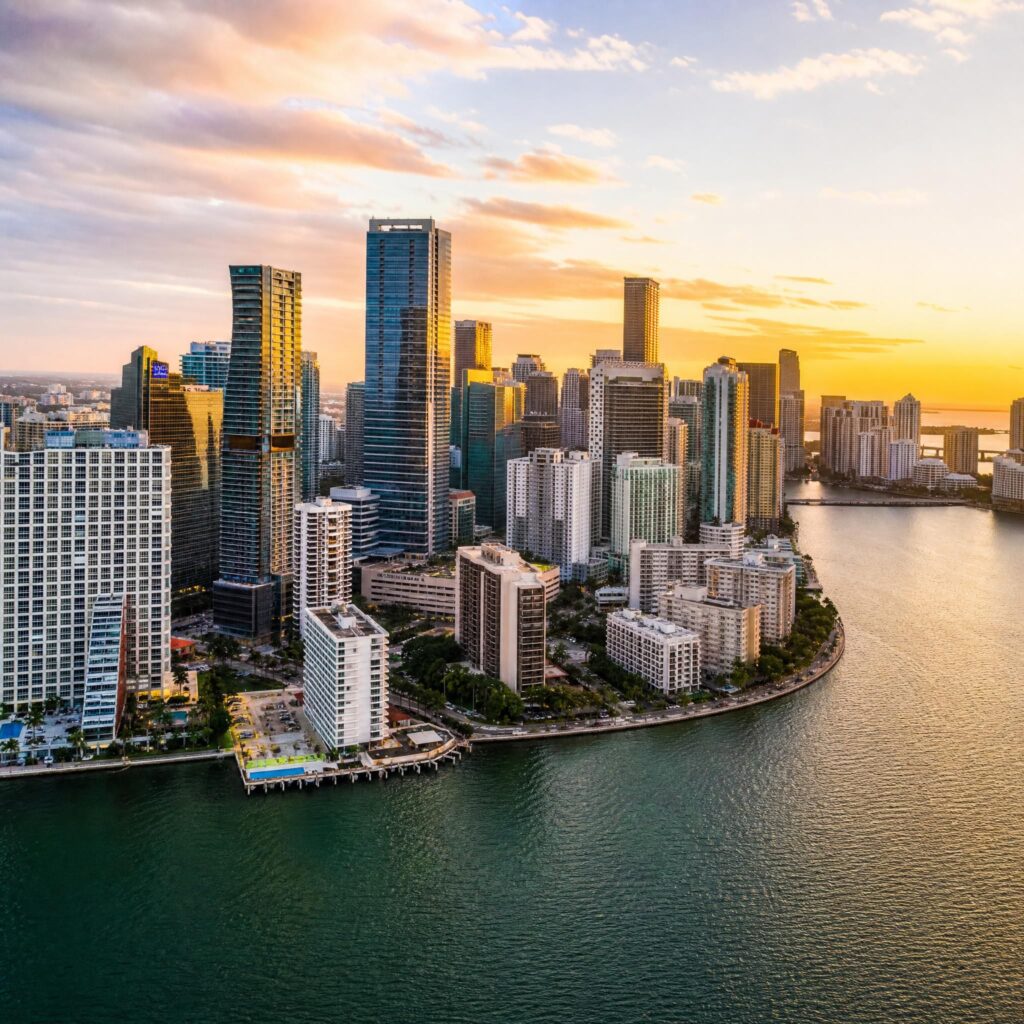
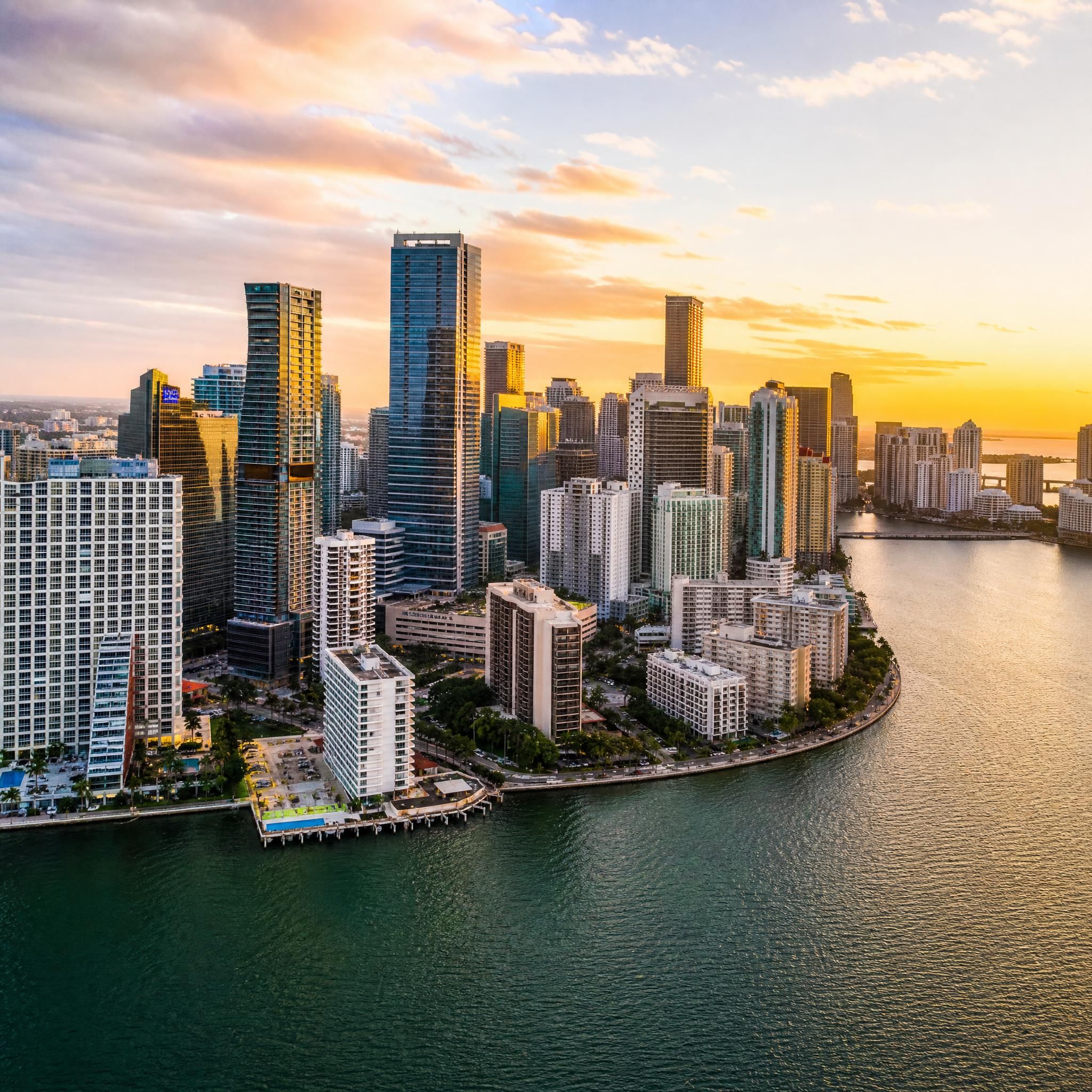
You've made the decision: Miami is where you want to be. The skyline is transforming at a breathtaking pace, luxury towers are rising from Brickell to Coconut Grove, and the window to secure prime inventory at today's prices is narrowing fast. But buying new construction luxury homes in Miami is nothing like purchasing a resale property — and the buyers who succeed are the ones who know the rules of the game before they step onto the field.
This guide cuts through the noise. Whether you're eyeing a branded Brickell condo, a Miami waterfront property with private dock access, or a serene Coconut Grove retreat, these seven actionable strategies will protect your investment, maximize your returns, and help you navigate Miami luxury real estate in 2026 with confidence.
Table of contents
- Why the Miami New Construction Market Demands a Different Playbook
- Strategy 1: Understand the Price Tiers Before You Tour
- Strategy 2: Vet the Developer — Not Just the Building
- Strategy 3: Master the Deposit Structure
- Strategy 4: Choose Your Neighborhood With Surgical Precision
- Strategy 5: Decode HOA Fees and Hidden Carrying Costs
- Strategy 6: Think Exit Before You Enter
- Strategy 7: Leverage International Demand to Your Advantage
- FAQ
- Key Statistics
Why the miami new construction market demands a different playbook
Miami's luxury real estate market has undergone a structural shift. The Miami metro officially surpassed New York by the end of 2025, boasting over 10,500 active million-dollar listings — a geographic realignment that reflects not only stronger inventory growth in Miami, but also a deepening of its luxury market overall.
In 2026, Miami is seeing one of the largest waves of new luxury condo deliveries in history, with more than 15,000 luxury condo units expected across 40+ developments, many with premium waterfront views or close access to water.
This wave of supply creates both opportunity and risk. The buyers who thrive are those who approach the process strategically — not emotionally. Here's exactly how to do it.
📊 52% of all new-construction sales – Miami New Construction Foreign Buyer Share
Strategy 1: understand the price tiers before you tour
Walking into a sales gallery without understanding Miami's luxury price tiers is like entering a poker game without knowing the rules. The market is segmented, and each tier behaves differently.
A common working frame in Miami is: Luxury at $1M+, High-end luxury at roughly $2M to $5M, Ultra-luxury at roughly $5M to $10M+ for condos, and Trophy or ultra-prime assets where scarcity overwhelms conventional comparables.
When it comes to luxury condos Miami new construction, location and branding drive dramatic price differences:
| Tier | Price Per Sq. Ft. | Example Segment |
|---|---|---|
| Non-branded luxury (Brickell) | $1,000–$1,300/SF | Standard high-rise finishes |
| Branded residences | $1,500–$2,500+/SF | Nobu, Mandarin Oriental, Mercedes-Benz |
| Penthouse (branded towers) | $3,000+/SF | Ultra-prime, trophy assets |
| Entry luxury condos (under $3M) | $600–$999/SF | Accessible luxury, high rental demand |
For buyers evaluating whether the branded premium is justified, the answer depends on priorities: if you value hotel-caliber services, brand recognition for resale, and a curated lifestyle experience, branded residences deliver genuine value. If you are purely focused on square footage per dollar, a non-branded building will stretch your budget further.
Actionable tip: Before touring any property, define your budget ceiling including HOA fees, property taxes, and insurance — not just the purchase price. Miami's carrying costs can add 20–35% to your monthly outlay.
Strategy 2: vet the developer — not just the building
The most common mistake luxury buyers make in Miami's pre-construction market is falling in love with the renderings without scrutinizing the developer behind them. In a city where construction cranes are everywhere, developer track records vary enormously.
Developers with proven histories in Miami include Related Group, Swire Properties, and Terra Group, who have established reputations for delivering on-time and on-spec.
Here is your developer due diligence checklist:
- Delivery history — How many Miami projects have they completed? Were they delivered on time?
- Financial backing — Is the project fully capitalized? Look for announced construction financing.
- Architectural pedigree — Who designed the building? World-class firms signal serious commitment.
- Brand partnerships — Hotel-branded residences (Nobu, Four Seasons, Mandarin Oriental) carry third-party accountability.
- Litigation history — Search for past lawsuits related to construction defects or deposit disputes.
A standout 2026 example: 619 Brickell (Nobu Residences Brickell) is a 74-story tower designed by internationally acclaimed Foster + Partners in collaboration with Sieger-Suarez Architects, developed by 13th Floor Investments and Key International — a partnership that brings both architectural credibility and proven Miami development experience to the project.

Strategy 3: master the deposit structure
Pre-construction deposits in Miami are unlike anything most buyers encounter in other markets. Understanding the structure — and protecting yourself within it — is non-negotiable.
Most luxury pre-construction towers in Miami ask buyers to place roughly 30–50% of the purchase price in deposits before closing, spread across reservation, contract, groundbreaking, top-off, and a final pre-closing installment. The remaining 50–70% is paid at closing, often with a mortgage or a mix of cash and financing.
In Florida, the first 10% of deposits on a pre-construction condominium purchase is typically held in a dedicated escrow account and cannot be released to the developer until certain conditions are met. Beyond that threshold, additional deposits may be available to fund construction if the contract clearly discloses how those funds will be used.
Practical deposit strategy by buyer type:
| Buyer Profile | Preferred Deposit Structure | Key Consideration |
|---|---|---|
| Cash investor | Front-loaded, early-phase entry | Maximum appreciation potential |
| Primary residence buyer | Balanced across phases | Aligns with relocation timeline |
| International buyer | Verify escrow protections | Currency risk + wire transfer planning |
| Leveraged buyer | Lighter early deposits | Preserves capital flexibility |
Critical question to ask every developer: "Are deposits held in an escrow account protected from construction cost overruns?" If the answer is vague, consult a Florida real estate attorney before signing.
📊 30–50% of purchase price before closing – Typical Miami Pre-Construction Deposit
Strategy 4: choose your neighborhood with surgical precision
Not all Miami luxury neighborhoods perform equally — and your choice of location will define your lifestyle, your rental yield, and your resale trajectory. Here's how the top neighborhoods stack up for Miami luxury real estate 2026 buyers.
Brickell — urban sophistication & investment powerhouse
Brickell continues to dominate as the top choice for global investors, known for its live-work-play environment offering a vibrant urban lifestyle that appeals to both investors and residents alike. Branded towers are commanding $1,500–$2,500+/SF, with projects like Nobu Residences, Mandarin Oriental Brickell, and Cipriani Residences reshaping the skyline.
Best for: International investors, corporate relocators, buyers wanting walkable luxury.
Coconut grove — historic charm meets new luxury
Coconut Grove is seeing significant new luxury developments in South Florida's oldest neighborhood, including the Four Seasons Coconut Grove, which has generated significant buzz as a contender for Miami's best new condo. Typical HOA fees here run around $1,500/month — reflecting the boutique, high-service nature of the buildings.
Best for: Families, primary residence buyers, those seeking a quieter pace with access to nature.
Edgewater — waterfront value with bayfront views
Edgewater has experienced rapid development in recent years, becoming one of Miami's fastest-growing residential neighborhoods, with luxury condominium towers along Biscayne Bay providing stunning waterfront views and modern amenities, attracting both domestic and international buyers.
Best for: Value-conscious luxury buyers, investors seeking rental yield, buyers priced out of Brickell.
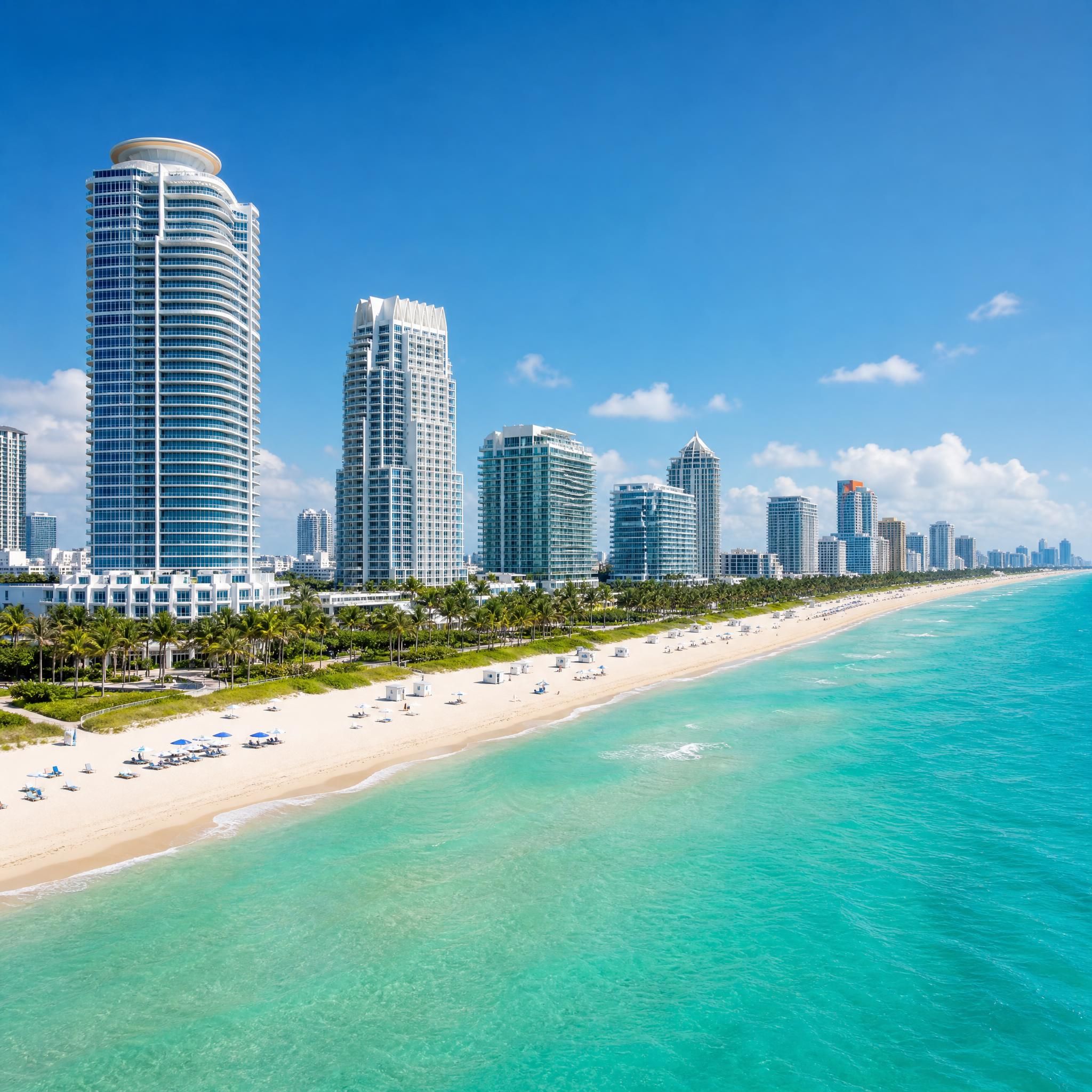
Miami beach — oceanfront glamour at a premium
Bayfront Miami Beach properties are fetching megamillion prices, with the market demonstrating remarkable resilience — a Miami Beach mansion recently sold for $27M in an all-cash deal after last trading for $16.1M in 2024, illustrating the dramatic appreciation potential of Miami waterfront properties.
Best for: Lifestyle buyers, second-home purchasers, ultra-high-net-worth individuals.
Strategy 5: decode HOA fees and hidden carrying costs
HOA fees are where many luxury buyers get blindsided. In Miami's new construction market, the monthly HOA number on a brochure is just the beginning.
HOA dues are only the opening line of Miami condo ownership costs — reserves, SIRS (Structural Integrity Reserve Study requirements), insurance, and recertification can reshape value significantly, particularly in older coastal towers.
For new construction luxury condos, the risk profile differs from older buildings, but fees are often higher due to extensive amenity packages. Here's what to budget:
| Cost Component | Typical Range | Notes |
|---|---|---|
| HOA / Maintenance Fee | $800–$5,000+/month | Varies by building size & amenities |
| Property Insurance | $3,000–$15,000+/year | Higher for waterfront/oceanfront |
| Property Tax | ~2% of assessed value/year | Homestead exemption available for primary |
| Special Assessments | Unpredictable | Less risk in new construction |
| Parking / Storage | $50,000–$150,000+ | Often sold separately in luxury towers |
Pro tip: Request the building's reserve fund study and operating budget before closing. A well-funded reserve means lower risk of surprise special assessments down the road.
Strategy 6: think exit before you enter
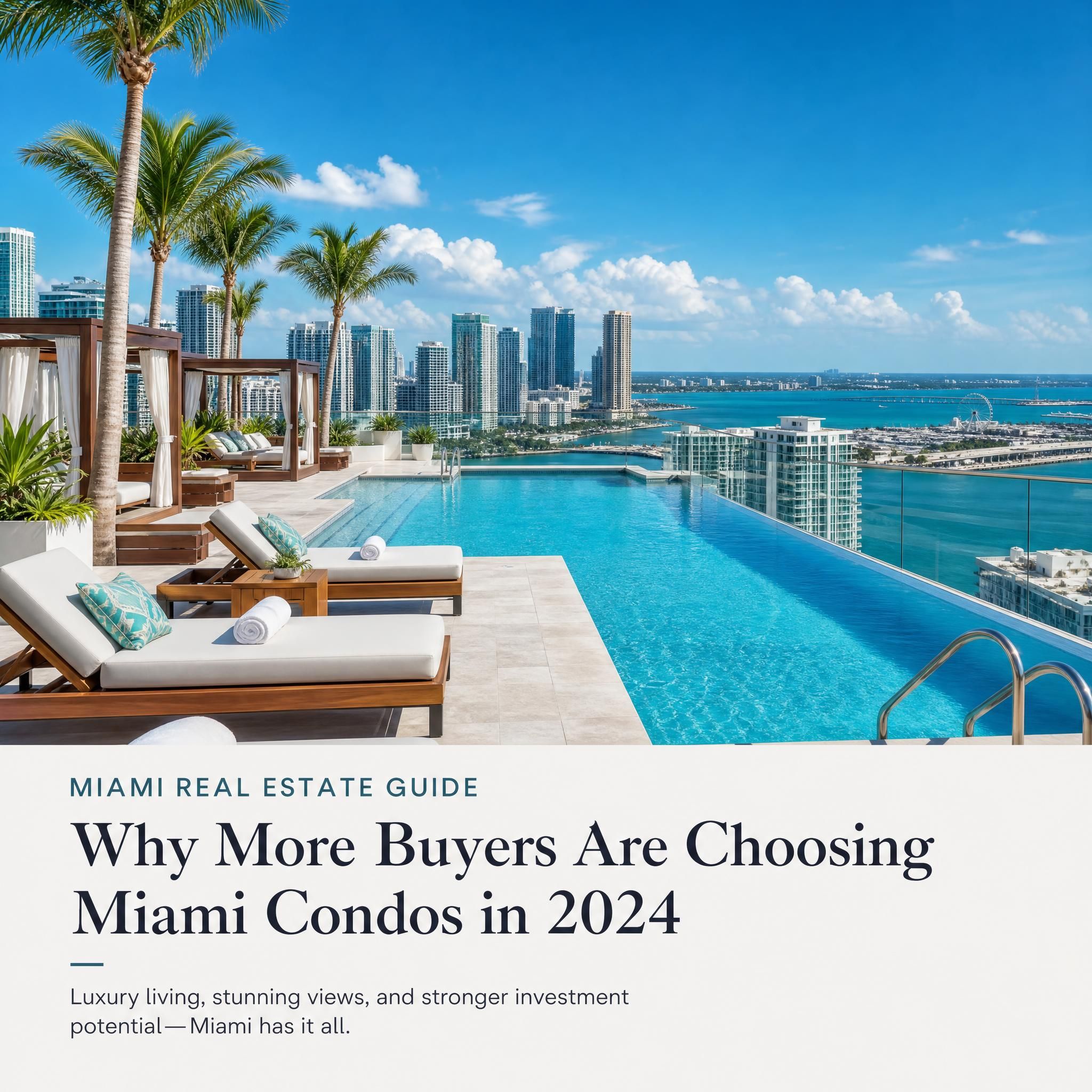
One of the most overlooked strategies in Miami's luxury new construction market is planning your exit before you commit. This discipline separates sophisticated investors from emotional buyers.
When evaluating a new construction condo, key factors to consider include: unit mix and building density, the quality of the buying pool, the developer's track record, and the uniqueness of the location. Historically, the best-performing buildings in Miami share a constant: geographically unique locations, large lots, prime areas, and unobstructed views.
Ask yourself these questions before signing:
- What does the comp ecosystem look like when I want to sell? Research recent sales in the same building and comparable towers within a half-mile radius.
- Is this location scarce or saturated? Areas with significant new construction supply create genuine resale competition — you are not buying scarcity in an oversupplied submarket.
- What's the unit mix? Larger units with premium layouts tend to attract primary residence buyers — a more stable buyer pool than investors seeking rental income.
- What's the 5–7 year forward value? Model appreciation based on current price per SF vs. comparable delivered buildings, not just developer projections.
The four-to-five year rule: If your timeline is uncertain, always evaluate the resale capacity of the building. Miami's pre-construction cycle typically runs 3–5 years from contract to delivery — and market conditions will shift during that window.
Strategy 7: leverage international demand to your advantage
Understanding who else is buying in your target building is a powerful strategic advantage — both for negotiation and for resale positioning.
Foreign buyers account for a significant 52% of all new-construction sales in South Florida, driven largely by Latin American investors who represent 86% of all foreign transactions in the region.
In the first three months of 2026, Miami was the top U.S. destination for overall global shoppers, drawing 10.3% of online views from abroad — with New York City in second place at 4.7%.
Colombia remains the #1 foreign buyer market for the third consecutive year at 15% of all foreign buyers and 23% of new-construction purchases, with Argentina firmly in second place at 12%.
What this means for your buying strategy:
- Buildings with strong international buyer pools tend to have more cash transactions, which signals financial strength in the buyer pool and reduces default risk during construction.
- Waterfront views and social amenities are the top priorities for international buyers — making these features particularly valuable for resale.
- Turnkey, fully furnished units command a premium in the international buyer market — factor this into your finish-level decisions during pre-construction customization.
- Rental income potential is a primary motivator for many international buyers, which means buildings in walkable, amenity-rich neighborhoods like Brickell maintain strong long-term rental demand.
📊 $4.4 billion in 2025, up 42% year-over-year – South Florida Foreign Buyer Investment
Questions fréquentes (FAQ)
What is the typical deposit required to buy a pre-construction luxury condo in miami?
Most luxury pre-construction projects in Miami require 30–50% of the total purchase price in staged deposits before closing. These are typically spread across several milestones: reservation, contract execution, groundbreaking, top-off, and a final pre-closing installment. Florida law requires that the first 10% be held in a protected escrow account. Always review the specific offering documents for each project, as structures vary by developer and market conditions.
How long does it take to close on a new construction luxury condo in miami?
Pre-construction timelines in Miami typically run 3–5 years from initial contract to delivery, depending on the project's stage when you purchase. Buyers should budget an additional 6–12 months beyond the developer's stated delivery date to account for construction delays, which are common in large-scale luxury projects. Move-in-ready new construction (already completed buildings) can close in 30–60 days, similar to a resale transaction.
Are new construction luxury condos in miami a good investment in 2026?
Yes — when selected carefully. Miami's luxury market has demonstrated consistent appreciation, with the metro surpassing New York in active million-dollar listings by end of 2025. New construction offers advantages including modern systems, builder warranties, customization opportunities, and no deferred maintenance. However, success depends heavily on developer track record, neighborhood selection, unit type, and exit strategy. Oversupplied submarkets can create resale headwinds even in a strong overall market.
What are the most important factors when evaluating a miami luxury developer?
The five most critical factors are: (1) completed project history in Miami, (2) confirmed construction financing, (3) architectural firm quality, (4) brand partnerships and third-party accountability, and (5) any history of litigation related to construction defects or buyer disputes. Developers like Related Group, Swire Properties, and Terra Group have established strong track records. For branded residences (Nobu, Four Seasons, Mandarin Oriental), the hospitality brand itself provides an additional layer of accountability.
How do HOA fees work in miami luxury condos, and what should i budget?
HOA fees in Miami luxury new construction typically range from $800 to $5,000+ per month depending on the building's size, amenity package, and location. In Brickell, waterfront luxury condos over $1M average approximately $0.78 per square foot per month. In Coconut Grove boutique buildings, expect around $1,500/month. Beyond the monthly HOA, budget for property insurance (significantly higher for coastal properties post-2021 legislation), property taxes (~2% of assessed value annually), and potential special assessments for capital improvements.
Chiffres clés
📊 52% of all new-construction sales in South Florida are purchased by international buyers — making Miami one of the most globally connected luxury markets in the world. (Source: MIAMI Realtors / Capital Analytics Associates, 2026)
💡 15,000+ new luxury condo units are expected to deliver across 40+ Miami developments in 2026, the largest wave of luxury inventory in the city's history. (Source: M Group Compass, 2026)
🏆 10,513 active million-dollar listings in the Miami metro — surpassing New York City for the first time in history by end of 2025. (Source: Realtor.com Luxury Housing Outlook, 2026)
💰 $4.4 billion invested by foreign buyers in South Florida residential real estate in 2025 — a 42% jump from the prior year, with momentum continuing into 2026. (Source: Tom Day Properties / MIAMI Realtors, 2026)
Conclusion: your competitive edge in miami's luxury market
The buyers who win in Miami's luxury new construction market aren't the ones with the biggest budgets — they're the ones with the best strategy. In a market where over 15,000 new luxury units are hitting the market, where international capital is flowing in at record pace, and where the gap between a great building and a mediocre one can mean millions in resale value, preparation is everything.
Vet your developer with the rigor of a business acquisition. Understand every line of your deposit structure. Choose your neighborhood based on data, not just aesthetics. Model your exit before you sign the contract. And position your purchase to capture the wave of international demand that continues to define Miami luxury real estate in 2026.
The Miami dream is real — and for those who approach it with the right tools, it's also one of the most rewarding real estate investments available anywhere in the world today.
Ready to take the next step? Schedule a private consultation with our luxury real estate specialists to access curated listings of Miami's newest developments — including priority access to pre-construction opportunities before they hit the open market.
"Foreign buyers account for 52% of all new-construction sales in South Florida, driven by Latin American investors representing 86% of all foreign transactions"
— Capital Analytics Associates


