
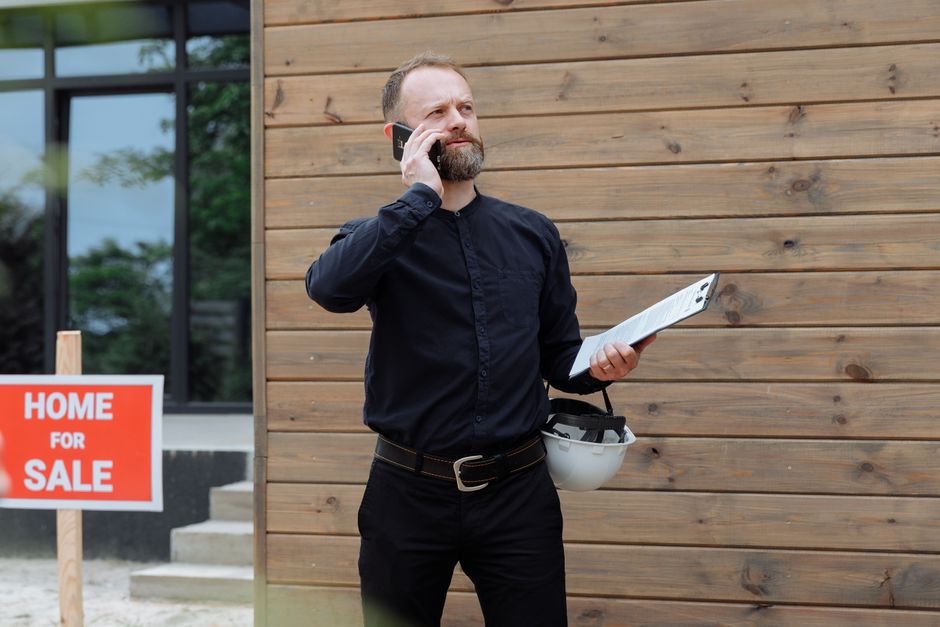
When you hire a real estate agent to sell your house, you’re not just getting someone to list it online. You’re getting a strategist, a marketer, and a negotiator who understands your local market inside and out. A good agent can be the difference between selling your home in weeks versus months—or worse, not selling it at all.
Let’s break down exactly what a real estate agent does when selling your house, and how to find one who actually knows South Florida’s neighborhoods like the back of their hand.
Related: Best Commercial Real Estate Agent 2026: Top 5 Ranked
Related: Commercial Real Estate in Florida: Complete Buyer’s Guide
Related: Commercial Real Estate for Sale in South Florida: Your 2026 Buyer’s Guide
Related: What Does a Real Estate Broker Do? Your Florida Guide
What Does a Real Estate Agent Actually Do When Selling Your House?
A real estate agent selling a house wears a lot of hats. They’re analyzing your market, pricing your property competitively, staging it for photos, handling showings, marketing to buyers, and negotiating on your behalf. It’s way more complex than just putting a sign in your yard.
Here’s the real work:
- Market Analysis: Your agent studies recent sales in your neighborhood to determine what buyers are actually willing to pay right now. Not what you hope to get. What the current market supports.
- Competitive Pricing: This is critical. Overpricing kills interest. Underpricing leaves money on the table. A skilled agent balances psychology and numbers to set the price that attracts serious buyers while maximizing your profit.
- Professional Marketing: High-quality photos, drone footage, virtual tours, and compelling property descriptions are table stakes in 2026. Your agent should present your home’s lifestyle benefits, not just list features.
- Showing Management: Scheduling buyer showings, communicating feedback, and keeping your home ready for last-minute appointments.
- Negotiation: When offers come in, your agent advocates for your interests. They know how to push back on low-ball offers without being unreasonable.
- Coordination: Inspections, appraisals, title work, closing documents—your agent keeps all the moving pieces coordinated so nothing falls through the cracks.
Why Neighborhood Knowledge Matters More Than You Think
Not all real estate agents are created equal. The difference between a generic agent and one who truly knows Miami Beach, Coral Gables, or Wynwood is huge. Hyper-local expertise matters because your agent needs to answer buyer questions that go way beyond square footage and bedrooms.
Buyers ask things like: What’s the neighborhood vibe? Which elementary schools feed into good middle schools? Are there walkable restaurants nearby? What’s the flood risk? Is this area appreciating or depreciating? How’s the rental market if I decide to rent this out later?
An agent selling a house without deep neighborhood knowledge will give generic answers. A real South Florida expert, someone like those you’ll find at Florida Real Estate Specialist, will have lived-in insights about community character, market trends specific to each micro-market, and insider knowledge about coming developments that affect property values.

Accurate Pricing Is Your Make-or-Break Factor
Let’s be honest: accurate pricing is probably the single most important thing your agent does. Get it wrong, and you’re sunk.
If you overprice by 5-10%, buyers will skip your listing because they see better options at lower prices. Your house sits on the market. Days on market tick up. Buyers get nervous (“Why hasn’t this sold yet?”). You end up dropping the price anyway—but now you’ve lost momentum and your window of opportunity.
If you underprice, you sold too cheap. You left real money on the table. Your agent’s job is to use comparable sales data (actual recent sales in your area), current market conditions, and understanding of what buyers want to set a price that moves your house quickly while maximizing profit.
Your agent should show you a detailed comparable market analysis (CMA) with sold prices, pending listings, and active inventory. If they’re just throwing out a number without data backing it, find someone else.
Timing and Preparation Before You List
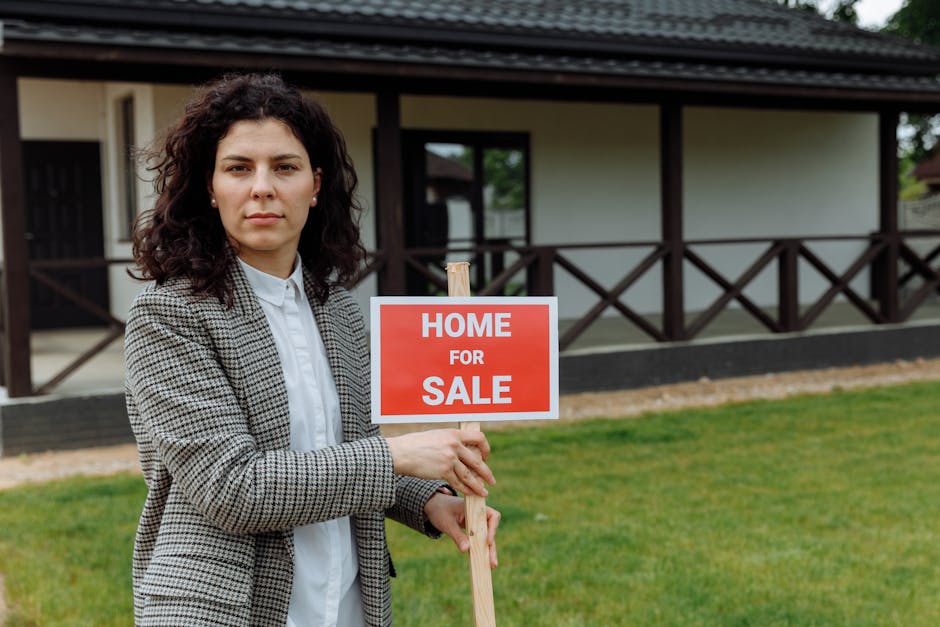
Here’s something most sellers don’t realize: the real estate agent’s job starts before your house goes on the market.
Smart sellers (and smart agents) handle maintenance issues early. Fix that leaky faucet, patch the drywall, trim overgrown bushes, and repaint dingy walls before photos are taken. These fixes should happen in the winter/early spring so you’re ready to list when the spring market heats up.
According to recent market data, April 12-18 is identified as an optimal selling window in 2026. That means your agent should have your house market-ready by late March at the latest. No scrambling. No last-minute repairs discovered during inspections. Buyers move fast in spring, and you want to be positioned to capture that momentum.
Professional listing presentation is non-negotiable. Your agent should invest in quality photos, maybe drone shots if your home has compelling outdoor space, and a property description that makes buyers feel the lifestyle, not just list specs. “4BR, 2BA home” is boring. “Modern Miami family home with chef’s kitchen, resort-style pool, and walkable proximity to Wynwood’s galleries and craft cocktail scene” sells dreams.
Trust and Communication Set Good Agents Apart
You need an agent you can actually trust. Not someone who disappears after listing your house or avoids your calls when you have questions. The best agents—the ones who consistently help their clients win—maintain open communication and responsiveness.
Your agent should:
Buying or selling?
- Call or text you with feedback after every showing
- Explain their strategy clearly before making moves
- Be honest when your price is too high (even if it’s uncomfortable)
- Negotiate hard on your behalf without being unreasonable
- Show mastery of numbers: comparable sales, market trends, closing costs, tax implications
Working with a professional real estate agent who backs their expertise with real market data and local credibility will save you stress and money. Period.
The Marketing Strategy That Moves Homes
Your agent doesn’t just put your listing on the MLS (Multiple Listing Service). A real estate agent selling a house in 2026 runs a full marketing operation.
That means social media promotion, email campaigns to other agents’ buyer networks, open houses if your market allows, and strategic advertising to reach serious buyers. Some agents use targeted ads to reach specific buyer profiles—move-up families, downsizers, investors, luxury buyers—depending on your home type.
Your agent should also know how to highlight your home’s unique selling points to stand out in a crowded market. If your home is in an up-and-coming neighborhood, they’ll emphasize appreciation potential. If it’s in an established, stable area, they’ll stress community and quality of life. If you have a rental property or investment opportunity, agents familiar with short-term rental strategies will market that angle effectively.
Handling Offers and Negotiation

When offers start rolling in (and they should, if your agent did their job), this is where real skill shows up. Your agent’s negotiating ability can mean tens of thousands of dollars in your pocket.
A great agent knows when to hold firm on price, when to ask for better terms (like a longer closing period or the buyer waiving inspections), and how to read between the lines of an offer. Are the buyers serious or are they fishing? Is the appraisal likely to support the offer price? What happens if they fail their inspection—will they renegotiate or walk?
Your agent should present multiple offers clearly, explain the pros and cons of each, and let you make the final decision. But they should also give you honest counsel about which offer is most likely to close smoothly.
Why You Shouldn’t Sell Your House Alone
You could try to sell your house without an agent. Save the commission, right? In reality, you’ll probably lose more money than you save.
Here’s why: agents have access to serious buyers. They know other agents’ buyer networks. They understand pricing psychology and market trends at a deeper level. They’re skilled negotiators. They handle the legal and logistical complexity. And they handle it every single week, not as a one-time project.
FSBOs (For Sale By Owner) often overprice because they’re emotionally attached to their home. Or they underprice because they don’t understand market dynamics. They spend hundreds of hours on marketing that reaches fraction of the audience a professional agent reaches. They miss crucial negotiating opportunities.
If you’re serious about selling your house in Florida, partner with someone who knows the market. Find an agent with deep roots in your community—someone who can speak to neighborhood character, upcoming development, school quality, and genuine buyer motivation.
Finding the Right Agent for Your South Florida Home
When you’re looking for a real estate agent to sell your house, ask for specifics. How many homes did they sell in your neighborhood last year? Can they show you recent sales and what those homes sold for versus list price? Do they have experience with your home type (single family, condo, investment property)?
Interview at least three agents. Ask about their marketing strategy. Ask if they’ve handled homes similar to yours. Ask what they’d price your home at and why. Then compare their answers.
Red flags: agents who promise you an inflated price to win your business, agents who don’t listen to your concerns, agents who are vague about their strategy, or agents who pressure you to sign a long-term listing agreement.
South Florida has unique market dynamics—flood zones, hurricane preparedness, condo association complexity, investor interest, international buyer activity. You need an agent who understands these nuances deeply. That’s exactly what you’ll get when you work with Florida Real Estate Specialist, where expertise backed by 15 years of local real estate experience makes the difference between a good sale and an excellent one.
Key Steps to Prepare for Success
Before you list with an agent, do this:
- Get your home inspected independently so there are no surprises
- Handle major repairs early (before listing season)
- Declutter and depersonalize your space
- Know your home’s actual condition and any issues upfront
- Have your documents ready: deed, HOA docs, permits, warranties
- Be realistic about your timeline and price expectations
Your agent will guide you through the rest. Their job is to get your house sold for the best price in the shortest reasonable time. Your job is to be ready, be honest about your property, and trust their expertise.
What’s the average commission a real estate agent charges to sell your house?
Standard real estate commissions in Florida are typically 5-6% of the sale price, split between the listing agent and the buyer’s agent. So on a $500,000 home, that’s $25,000-30,000 total. Commissions are sometimes negotiable, especially for higher-priced properties. Always discuss this upfront before signing a listing agreement.
How long does it typically take a real estate agent to sell a house?
In a healthy market with proper pricing and marketing, most homes sell within 30-60 days. Some sell in weeks. Others take months if they’re priced too high, in a less desirable location, or need significant repairs. Your agent should give you a realistic timeline based on comparable sales in your area and current market conditions.
Can a real estate agent guarantee they’ll sell your house?
No legitimate agent can guarantee a sale. What they can do is guarantee professional marketing, honest pricing, skilled negotiation, and responsive communication. Guarantees are a red flag—it means they’re overpromising to win your business.
Should you hire an exclusive agent or a discount brokerage to sell your house?
That depends on your home, your neighborhood, and your priorities. Full-service agents invest time in marketing, negotiating, and coordination. Discount brokerages charge lower commissions but provide minimal service. For higher-priced homes or complex transactions, full-service usually delivers better results. For straightforward sales in hot markets, discount brokerages may work. Interview agents and brokerages to compare their approach and what they’ll deliver for your situation.
Buying or selling?


