
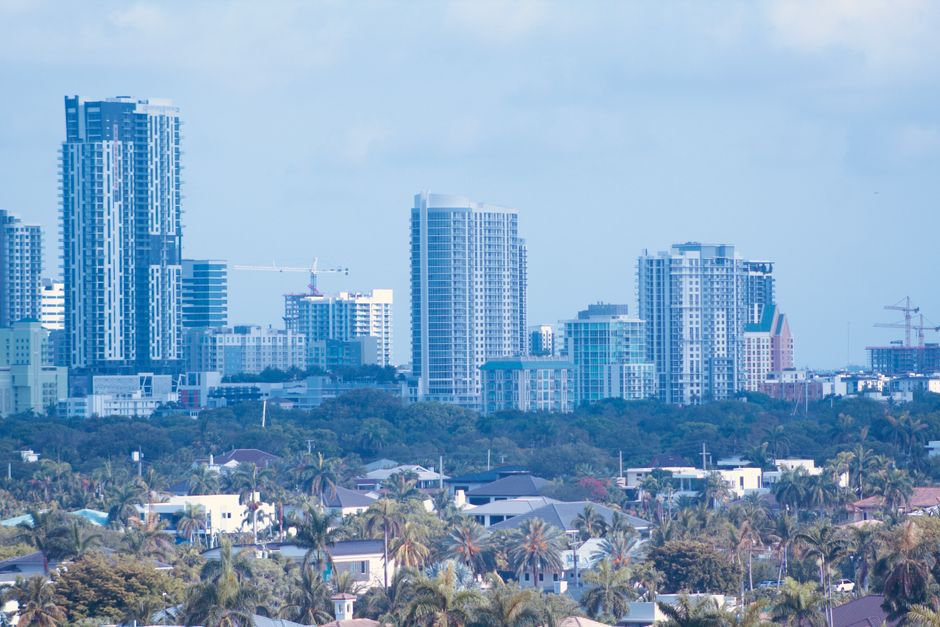
Pre-construction Miami real estate is booming, and 2026 is shaping up to be a pivotal year for new development across South Florida. But not all pre-construction projects are created equal. Some neighborhoods are exploding with opportunity, while others are oversaturated or carrying higher risk profiles.
The truth is, pre-construction investing isn’t inherently risky or safe. It depends entirely on the specific project, the developer’s track record, and the neighborhood fundamentals. That’s where honest guidance matters.
I’ve spent 15 years in Miami real estate, and I’ve watched neighborhoods transform as new construction reshapes entire corridors. Here’s my breakdown of the five best pre-construction opportunities in Miami right now, ranked by development momentum, price stability, and long-term appreciation potential.
Related: Best Miami New Construction 2026: Top 5 Developers Ranked
Related: Best Real Estate Services 2026: Top 5 Ranked & Compared
Related: Best Edgewater Miami Real Estate 2026: Top Agents & Markets Ranked
Related: Best Commercial Real Estate Agent 2026: Top 5 Ranked
Related: Best Real Estate Near Me 2026: Top 5 Platforms & Agents Ranked
Related: Best Miami Luxury Condos with Ocean Views 2026: Top 5 Ranked
Related: Best Miami Penthouses with Ocean View 2026: Top 5 Ranked
Related: Best Ultra Luxury Penthouse Miami 2026: Top 5 Properties Ranked
Related: Best Miami Luxury Living 2026: Top 5 Neighborhoods & Resources Ranked
Related: Best Pet-Friendly Condos Miami 2026: Top 5 Ranked
Related: Miami Real Estate Pre-Construction Opportunities in 2026
Why Pre-Construction Matters in 2026
Pre-construction purchasing is fundamentally different from buying resale. You’re not just buying a property; you’re buying a developer’s vision, timeline, and financial stability. With mortgage rates continuing to drop, buyers who locked in contracts 12-24 months ago are sitting on significant advantages. New buyers should understand this dynamic clearly.
The most important question isn’t “Is pre-construction safe?” It’s “Is this specific developer, in this specific neighborhood, at this specific price point, the right move for my investment timeline?” Florida Real Estate Specialist specializes in answering that exact question for buyers across Miami, with real data and zero-BS recommendations.

Pre-Construction Neighborhoods Ranked (2026)
| Neighborhood | Price Range | Rating |
|---|---|---|
| Brickell | $900K – $1.5M+ | ★★★★★ |
| Parkland/Weston | $1M – $1.15M | ★★★★★ |
| Fort Lauderdale Waterfront | $950K – $1.4M | ★★★★☆ |
| Downtown Miami | $800K – $2M | ★★★★☆ |
| Aventura | $900K – $1.8M | ★★★☆☆ |
#1: Brickell (Best Overall Pre-Construction Market)
Price Range: $900K–$1.5M+
Brickell is experiencing the most ambitious development cycle in its history, with major projects slated through 2030. This isn’t hype—it’s structural transformation. The neighborhood is attracting institutional capital, major hospitality brands, and A-tier developers who don’t bet on weak markets.
Pros:
- Walkable, mixed-use urban environment with restaurants, retail, and nightlife already established
- Strong developer roster (Berkadia, Integra, Crescent, Nakheel)—all proven track records
- Waterfront and near-waterfront access creating premium pricing tiers
- Ecosystem effect: new construction attracts residents, which attracts services, which appreciates property values
Cons:
- Higher entry price points mean larger capital commitment and longer hold times to profit
- Market saturation risk if too many projects complete simultaneously (though timing is staggered)
Bottom Line: Brickell is the safest pre-construction bet in Miami right now. It’s urban, it’s liquid, and it’s backed by developer pedigree. If you’re comfortable with $1M+ commitments and a 5-7 year horizon, this is where you want exposure.
#2: Parkland & Weston (Best Value + Fundamentals)
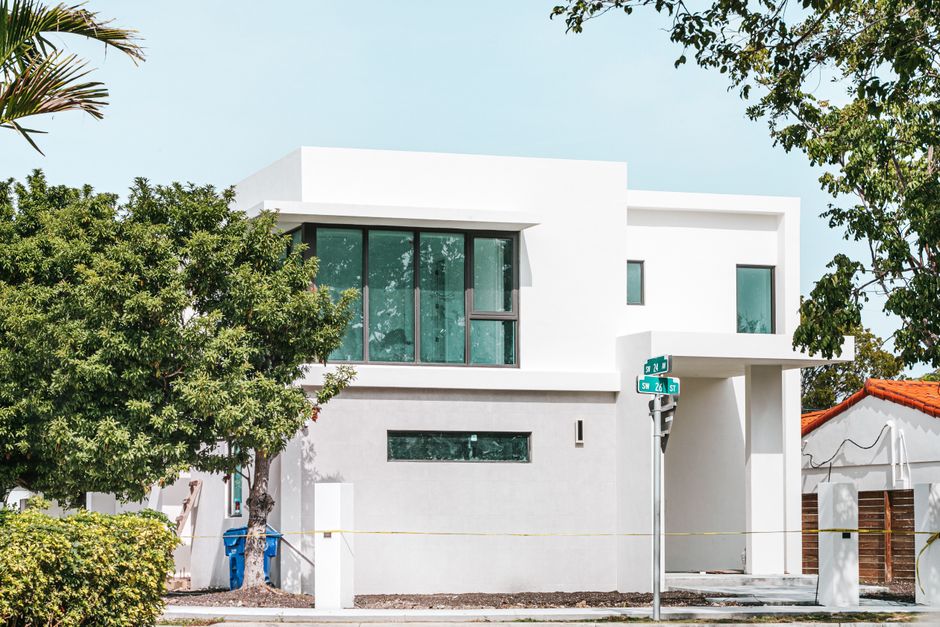
Price Range: $1M–$1.15M
Parkland and Weston represent the Broward County sweet spot: suburban stability with urban appreciation potential. Families are fleeing congestion, and these towns are absorbing that migration intelligently. New construction here is family-focused, master-planned, and tied to excellent schools.
Pros:
- Steady demographic tailwinds (families, young professionals relocating from Miami Beach and Wynwood)
- Affordable entry price relative to Miami proper
- Master-planned communities with strong HOA oversight and amenities
- Less speculative energy, more owner-occupancy, which stabilizes appreciation
Cons:
Buying or selling?
- Less liquidity than central Miami (takes longer to sell if you need to exit)
- Appreciation is steadier but slower than urban core plays
Bottom Line: This is where real estate investors optimistic about the future are positioning family portfolios. Strong fundamentals, lower volatility, reasonable entry price. Long-term, this outperforms on risk-adjusted returns.
#3: Fort Lauderdale Waterfront (Coral Ridge, Victoria Park, Rio Vista)
Price Range: $950K–$1.4M
Fort Lauderdale’s waterfront corridors are undergoing intelligent infill development. These aren’t massive tower projects; they’re thoughtful residential and mixed-use infill that respects existing neighborhood character while increasing density. That’s a recipe for sustainable appreciation.
Pros:
- Direct waterfront and yacht club access (limited supply, high appeal)
- Established neighborhood infrastructure and dining/retail ecosystem
- Steady institutional interest from out-of-state capital
Cons:
- Competition from resale inventory in these neighborhoods is strong
- Waterfront projects command premium pricing that requires longer hold periods to justify
Bottom Line: Good secondary market play if Brickell feels oversaturated. Less explosive appreciation, but reliable. Best for buyers who prioritize lifestyle over aggressive IRR.
#4: Downtown Miami (Most Speculative, Highest Upside)
Price Range: $800K–$2M
Downtown Miami pre-construction is the highest-risk, highest-reward play on this list. The neighborhood is still mid-transformation. New projects here are betting big on mixed-use urban density and cultural revival. Some will win massive; others will disappoint.
Pros:
- Widest price range and unit-type variety (micro-units to penthouses)
- Upside potential if neighborhood cultural narrative accelerates
- Access to growing restaurant and arts scene
Cons:
- Highest execution risk—dependent on developer delivery and neighborhood amenity development
- Less established resident base compared to Miami Beach or Brickell
- Liquidity gaps between projects and price points
Bottom Line: Only for investors with 7+ year horizons and conviction that Downtown Miami’s cultural story holds. Exciting, but risky. Requires deep dive on specific developer and project financials.
#5: Aventura (Market Overview)
Price Range: $900K–$1.8M
Aventura is thriving as a suburban alternative, but pre-construction opportunities here are more limited and fragmented compared to the neighborhoods above. Strong community fundamentals, but fewer major development pipelines and less developer diversity.
Pros:
- Established, affluent, family-friendly demographic
- Premium mall and retail ecosystem
Cons:
- Fewer active pre-construction projects compared to Parkland/Weston
- Higher price points with slower historical appreciation than similar-tier Broward communities
Bottom Line: Solid neighborhood, limited pre-construction inventory. Worth monitoring, but not a primary focus unless you’re locked into Aventura lifestyle.
How to Evaluate Pre-Construction Risk
I mentioned earlier that pre-construction risk is a framework, not a binary. Here’s how to assess it properly:
- Developer Track Record: How many projects has this developer completed? On time, on budget? Any litigation history? Look for 5+ completed projects in Florida specifically.
- Presales Percentage: What’s the project’s presale level? Below 50% presales at launch is yellow flag. Above 70% is strong signal.
- Escrow Arrangement: Is buyer money held in escrow, or in the developer’s operating account? Escrow = safer. Operating account = riskier.
- Financial Stability: Is the developer self-funded, or dependent on construction financing? Self-funded developers have more resilience if interest rates spike mid-project.
- Neighborhood Fundamentals: Is the neighborhood appreciating on its own, independent of new construction? That’s your safety net if the project underperforms.
The Guidance Gap in Pre-Construction
Most agents will show you what to buy. The best agents also tell you what to avoid and why. That’s the real value.
If you’re seriously considering pre-construction in Miami, you need someone who understands not just the current deals, but the developer ecosystem, the escrow frameworks, and the neighborhood trajectories that actually predict long-term outcomes. Florida Real Estate Specialist has built that expertise across thousands of transactions, and it’s the difference between a good investment and a regretted one.
Where to Start Your Search
The pre-construction market moves fast. New projects launch quarterly, and prime units get absorbed quickly. If you’re serious about pre-construction, you need real-time access to inventory and developer information that doesn’t make it to public listing sites yet.
Complete listings are available for residential projects across all stages—pre-construction, under construction, and recently completed. But the strategy matters more than the list. What’s your timeline? Your investment thesis? Your risk tolerance? Which neighborhoods align with your goals?
Those answers determine whether pre-construction is the right move for you, and which specific projects deserve your capital. Florida Real Estate Specialist can walk you through that analysis directly. Call to discuss a specific project or neighborhood.
FAQs
Is pre-construction a safer investment than resale?
Not necessarily. Pre-construction offers price certainty and the ability to design your unit, but carries construction, developer, and timeline risk. Resale offers liquid market pricing and immediate possession. Each has tradeoffs. The answer depends on your timeline, capital availability, and comfort with uncertainty. A strong developer in a strong neighborhood can be safer than resale in a declining area.
What’s the typical pre-construction timeline in Miami?
Most Miami pre-construction projects take 3-5 years from presale to occupancy. Larger luxury towers can stretch 5-7 years. You should only buy pre-construction if you can hold the property for at least 2-3 years after occupancy without financial stress. Otherwise, resale might be smarter.
How much down payment do I need for pre-construction?
Down payments vary by project and developer, but typically range from 10% to 25% at contract signing, with additional payments due at construction milestones. Some developers require full financing approval before release. Always clarify the payment schedule in writing before signing.
Can I back out of a pre-construction contract?
It depends on your contract language and how far along construction is. Early-stage contracts often allow cancellation with penalty (typically 5-10% of purchase price). Once construction starts, exit becomes difficult and expensive. Never sign without understanding your exit clauses and penalties explicitly.
Buying or selling?


