
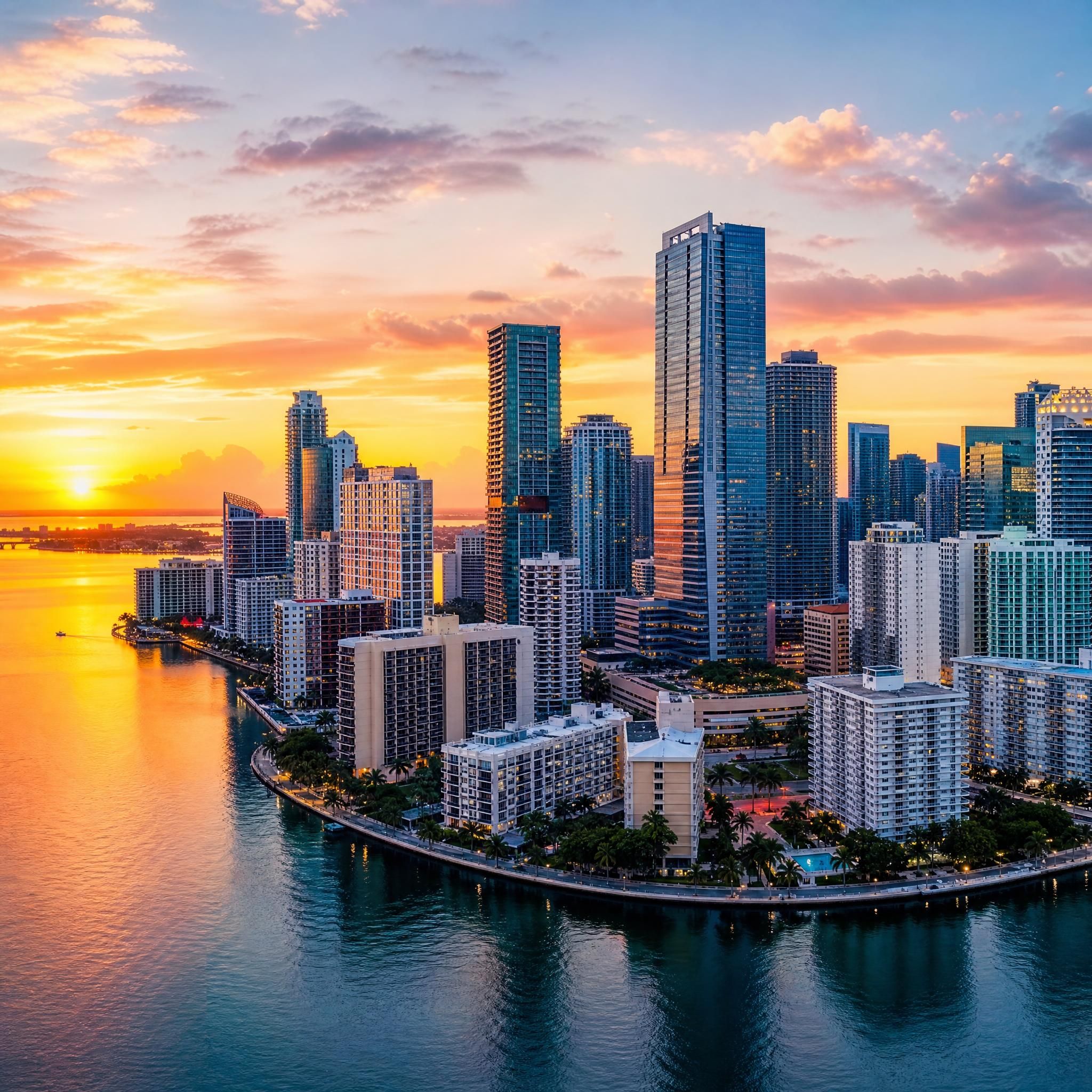
What does it actually look like when a buyer wins in Miami's luxury new construction market? Not the glossy brochure version — the real version, with dollars, decisions, timelines, and outcomes. In 2026, Miami's luxury real estate story is no longer being written by analysts alone. It's being written by the buyers, investors, and visionaries who moved decisively, chose the right neighborhoods, and secured properties that are already outperforming every expectation.
From a Google co-founder quietly assembling a $173 million Coconut Grove compound, to Latin American investors turning Brickell pre-construction units into cash-flowing rental portfolios, to a new wave of wellness-focused buyers staking claims on Edgewater's last bayfront parcels — the success stories are real, they are recent, and they carry powerful lessons for anyone considering a move into new construction luxury homes in Miami.
This is not a market overview. This is a field report from the front lines of the most competitive luxury new construction market in the United States.
Table of contents
- The Billionaire Blueprint: Larry Page and the Coconut Grove Signal
- The Latin American Investor Playbook: Brickell as a Rental Engine
- The Edgewater Early Mover: How Pre-Construction Timing Creates Wealth
- The Wellness Buyer's Case: Lilli and the New Luxury Standard
- The Four Seasons Effect: When a Brand Validates a Neighborhood
- What These Success Stories Have in Common
- Key Statistics
- Frequently Asked Questions
The billionaire blueprint: larry page and the coconut grove signal
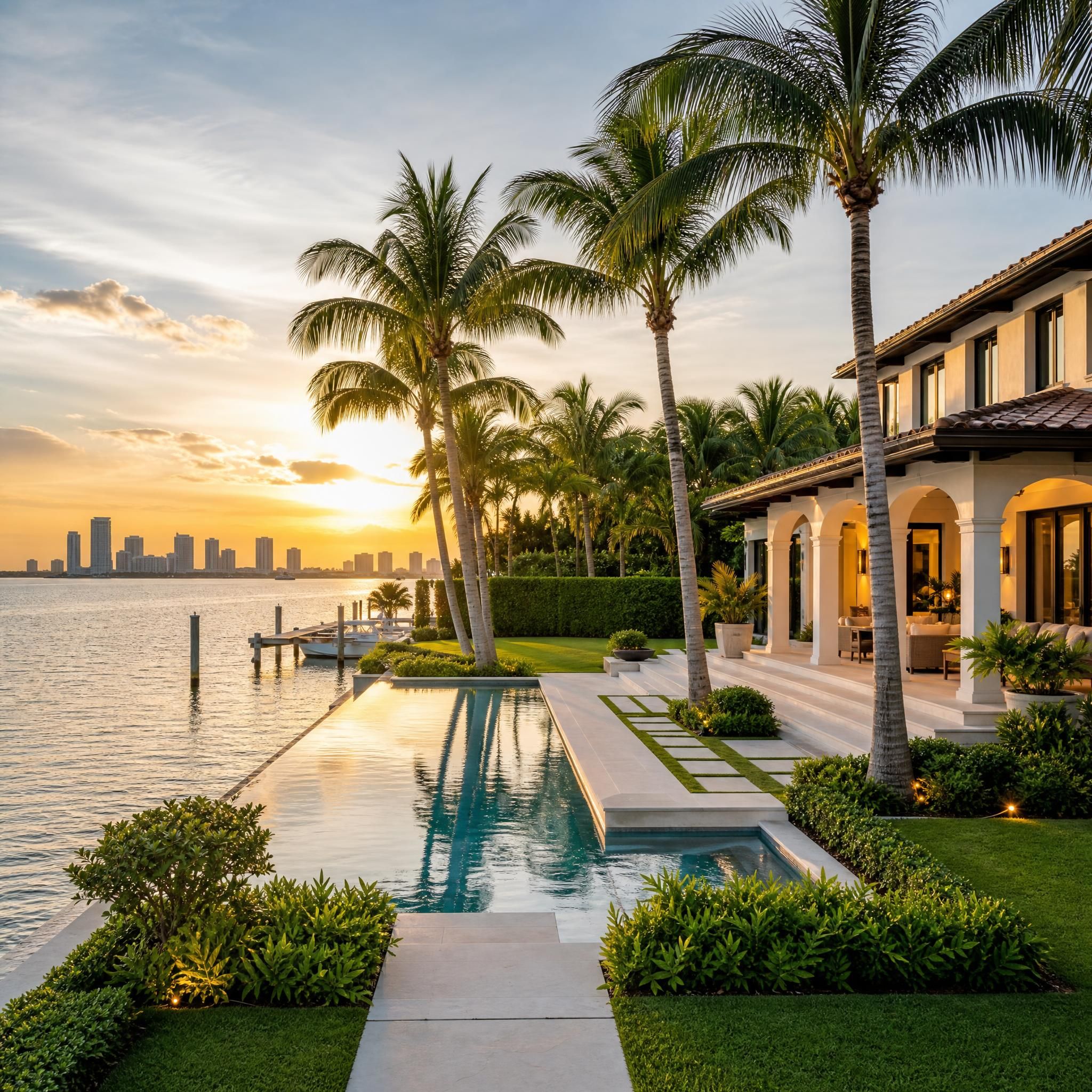
When the world's second-wealthiest person makes a real estate move, it is not impulsive — it is calculated. In December 2025, Google co-founder Larry Page made headlines by purchasing not one but two luxury waterfront estates in Coconut Grove for a combined total of approximately $173.4 million. The Biscayne Bay compound in Coconut Grove covers 4.5 acres in one of Miami's most exclusive enclaves.
Page's move was not a lifestyle whim. His purchases reflect a broader shift among ultra-high-net-worth individuals relocating from California to Florida, driven by favorable tax policies, a pro-business environment, and an unmatched waterfront lifestyle. The acquisition also came amid a billionaire exodus from California ahead of a proposed ballot measure that would level a one-time wealth tax of 5% on individuals worth more than $1 billion.
The signal sent to the broader market was unmistakable. For Coconut Grove homeowners, high-profile purchases like Page's validate rising values and strengthen long-term appreciation potential — the presence of billionaire buyers elevates the neighborhood's profile and establishes new pricing benchmarks.
For luxury buyers watching from the sidelines, the lesson is direct: when institutional-level capital targets a neighborhood, early movers capture the most upside. According to local luxury listing agent Lourdes Alatriste of Douglas Elliman, "Over the past several weeks, I've been fielding a noticeable uptick in calls from high-net-worth individuals based in California who are actively exploring South Florida, particularly Coconut Grove."
The Coconut Grove story is not just about one buyer. In 2026, demand for new condos in Coconut Grove continues to accelerate, fueled by top-rated schools, a pedestrian-friendly village center, and proximity to waterfront parks and marinas. This shift has sparked a surge in new construction Coconut Grove 2026 developments, each raising the bar for architecture, amenities, and lifestyle-driven design.
The takeaway: Coconut Grove is no longer a secondary Miami market. Billionaire-level validation, combined with boutique new construction supply and irreplaceable waterfront land, has made it one of the most compelling entry points for Miami luxury real estate 2026.
The latin american investor playbook: brickell as a rental engine
No success story in Miami's luxury new construction market is more consistently replicable — or more instructive — than the Latin American investor model in Brickell.
Miami remains the No. 1 city in the United States for foreign homebuyers, and given the area's deep, long-standing ties to Latin American immigration and culture, it's no surprise that most of those buyers come from south of the border. But the mechanics of how these buyers succeed deserve a closer look.
Argentine investors, for example, show a strong preference for luxury condominiums in prime locations such as Brickell, Miami Beach, and Coral Gables — typically favoring new construction projects that offer modern amenities, professional property management, and the potential for rental income when the properties are not in personal use. The ability to generate U.S. dollar-denominated rental income has become particularly attractive to Argentine investors dealing with currency devaluation concerns in their home market.
The numbers behind this strategy are compelling. Brickell's rental market is supported by a deep pool of corporate tenants, young professionals, and short-term visitors, with average cap rates for well-located units ranging from 4–6%, competitive with other major U.S. urban markets. More specifically, Brickell high-rise luxury units command average monthly rents of $6,000–$15,000 with occupancy rates of 80–90% and gross yields of 4.0–5.0%.
The strategy is simple and proven: buy pre-construction in Brickell at initial release pricing, hold through the construction period (typically 3–4 years), then either lease to corporate tenants or sell at delivery-premium pricing. Pre-construction contracts in Miami were running 12–18% above initial release pricing throughout 2025 and into Q1 2026, with pre-construction becoming the marginal price-setter at the top of the market.
📊 4–6% annual cap rate – Brickell Luxury Condo Rental Yield
Recent Brickell launches reinforce this momentum. PMG launched sales for a next phase of Brickell condos with office suites in April 2026, while JLL secured over $565 million in construction financing for an ultra-luxury condominium tower in Miami — a deal that signals institutional confidence in the submarket's long-term fundamentals.
The Citadel effect amplifies all of this. The $2.5 billion Citadel headquarters under construction in Brickell guarantees long-term institutional demand for the surrounding residential market, creating a tenant pipeline that sophisticated investors are already underwriting into their pro formas.
The takeaway: For investors seeking both appreciation and income, Brickell luxury condos in new construction offer one of the most battle-tested playbooks in Miami real estate — and the 2026 pipeline is still open.
The edgewater early mover: how pre-construction timing creates wealth
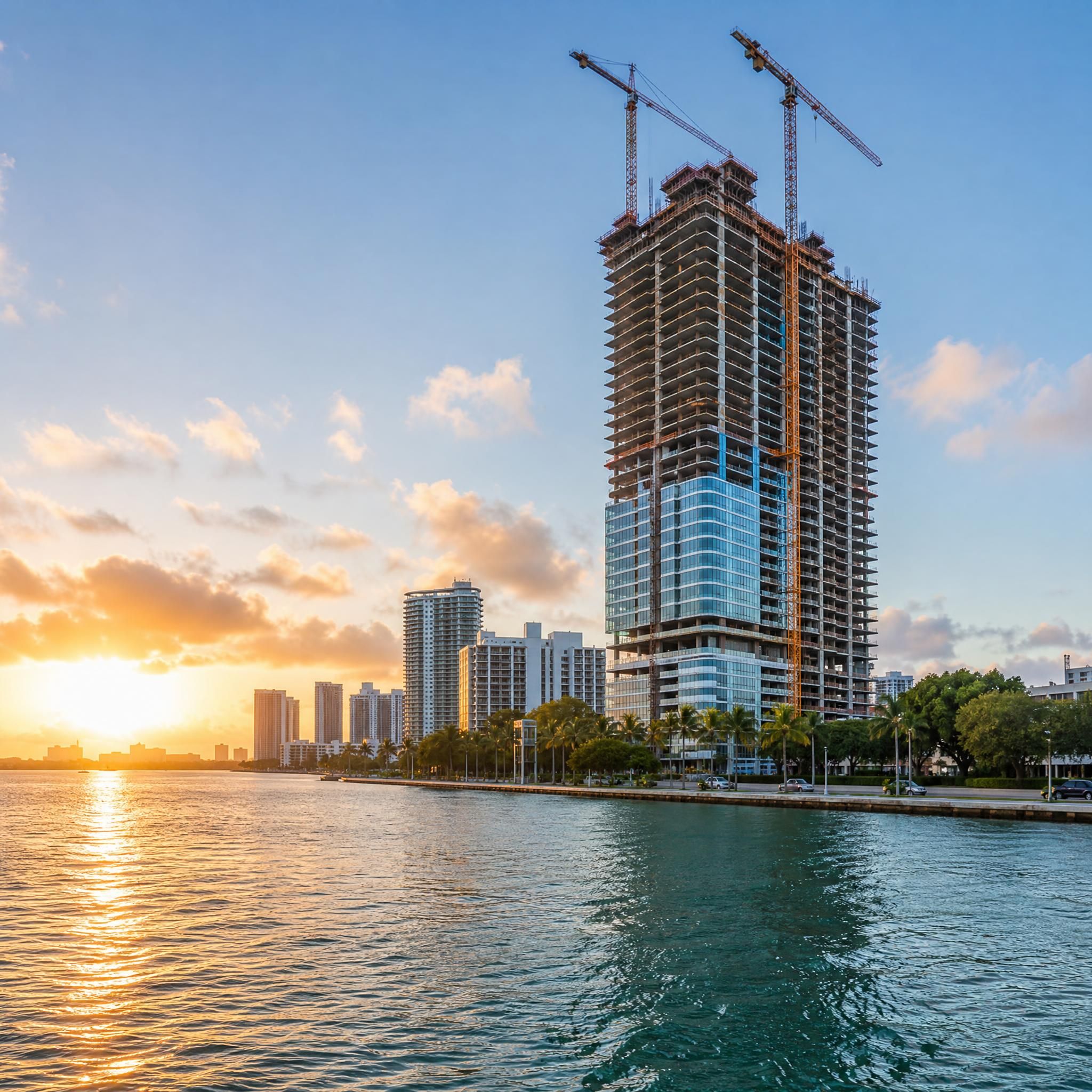
The most dramatic wealth creation in Miami's luxury new construction market often belongs to those who enter a neighborhood before it reaches full institutional recognition. Edgewater is that neighborhood in 2026 — and the early movers are already seeing the results.
Over the past year, Edgewater has seen property values rise by around 14%, reflecting growing demand and a new wave of high-end residential developments. Edgewater is increasingly a product market, with real choice across building profiles and view corridors — and the data confirms that buyers who entered at pre-construction pricing are sitting on significant unrealized gains.
The macro story is being written in real time. South Florida's top deals in June 2026 included an Edgewater development site trading for $43 million — a transaction that underscores how aggressively developers are competing for the last remaining bayfront land in this neighborhood.
Consider the Aria Reserve case: buyers who secured contracts in the South Tower at initial release pricing in 2021–2022 are now holding units in a completed building that stands as one of the tallest twin towers on any U.S. coastline. The Aria Reserve North Tower topped off in August 2025 with expected completion in 2026, joining its sister tower to deliver one of Miami's most landmark waterfront addresses.
Edgewater pre-construction is now pricing at $800–$1,100 per square foot — the fastest-evolving submarket in mainland Miami, with pre-construction at the top end pricing well above resale as buyers underwriting on backward-looking comparables misjudge the launch market.
📊 +14% year-over-year 2025–2026 – Edgewater Miami Price Appreciation
The window for early-mover advantage is narrowing. LILLI Miami Edgewater — a new 53-story tower by OKO Group at 717 Northeast 27th Street — is described as one of the last chances to own in a new condominium on Biscayne Bay, positioned among the final major undeveloped bayfront parcels in the neighborhood. The 636-foot-tall tower is planned to contain 117 condominium residences overlooking Biscayne Bay, with prices starting at $1.65 million.
The takeaway: The buyers who will write the next generation of Edgewater success stories are entering now, at pre-construction pricing, on the last available bayfront sites. Scarcity is the most powerful appreciation driver in luxury real estate — and Edgewater's bayfront supply is nearly exhausted.
The wellness buyer's case: lilli and the new luxury standard
A new buyer profile is emerging in Miami's luxury new construction market, one that is reshaping what developers build and what success stories look like. The wellness-focused buyer is not simply purchasing square footage and a zip code — they are investing in a curated lifestyle system. And the returns, both financial and personal, are proving exceptional.
The LILLI tower reflects a broader shift happening across Miami's luxury market, where buyers are increasingly prioritizing architectural significance and design team pedigree, privacy, and a focus on wellness. At Lilli, amenities are organized around four "living pillars" — movement, recovery, nourishment, and connection — and include a waterfront garden, infrared saunas, cold plunge pools, a treatment room, a movement studio, and a rooftop saltwater pool, along with a dedicated lifestyle and wellness director.
The architect behind Lilli is not a regional firm. The project is designed by Adrian Smith + Gordon Gill Architecture, the designers behind some of the world's most ambitious skyscrapers, including Dubai's Jeddah Tower — a pedigree that commands a global buyer audience and provides a long-term brand moat for property values.
This wellness-architecture convergence is not a niche trend. It is the leading edge of where luxury new construction is heading across all of Miami's top neighborhoods. Buyers who recognize this shift early — and secure units in buildings where wellness infrastructure is built into the DNA of the project, not bolted on as an afterthought — are positioning themselves for both lifestyle satisfaction and outsized appreciation.
The buyer profile succeeding in this segment tends to be a primary resident: a high-net-worth individual aged 40–60, often relocating from New York, Los Angeles, or internationally, who values longevity-focused amenities as much as city views. For this buyer, the ROI is measured not just in price-per-square-foot appreciation, but in quality of life delivered every single day.
The takeaway: Wellness-anchored new construction in Miami is commanding premium pricing at launch and holding it at resale. Buyers who align their purchase with buildings that have genuine wellness infrastructure — not just a gym and a pool — are securing properties with durable demand from a growing global buyer segment.
The four seasons effect: when a brand validates a neighborhood
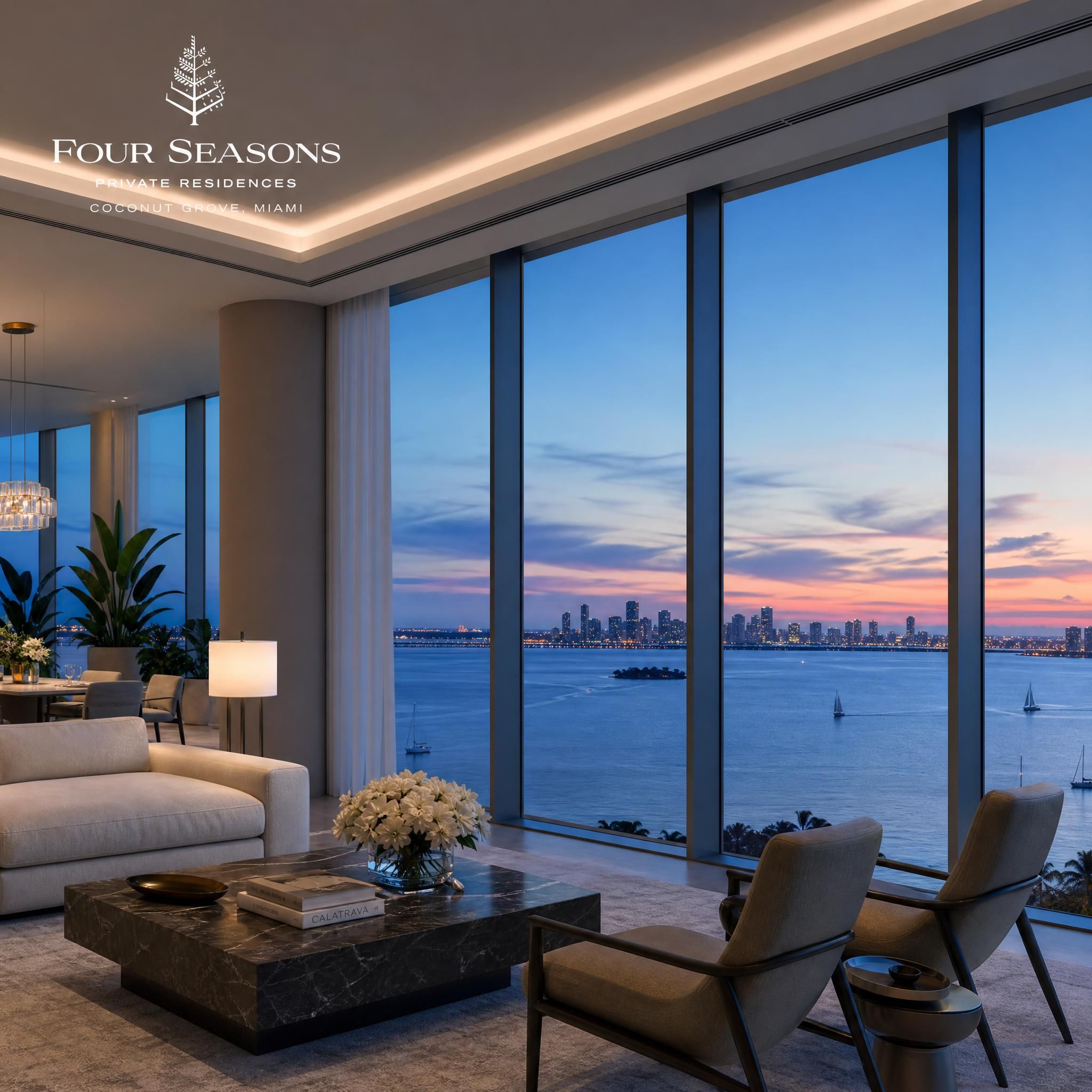
One of the most reliable success formulas in Miami's luxury condos new construction market is what industry insiders call the "brand halo" — the phenomenon where a globally recognized hospitality brand entering a neighborhood as a residential developer validates pricing, accelerates absorption, and creates a long-term appreciation floor.
The Four Seasons Private Residences Coconut Grove is the defining case study for this effect in 2026. The development will soar 20 stories above the lush tree canopies with unobstructed views overlooking Biscayne Bay, offering only 70 masterfully curated residences tailored to the exceptional in every way, along with 5-star services and amenities. Residences range from $8.5 million to $30 million, with features including private elevator access, 10.6-foot ceilings, Crestron home automation, Italian travertine flooring, and Molteni kitchens designed by Michele Bonan.
The scarcity mathematics are compelling. Seventy units. One of Miami's most coveted neighborhoods. A brand with global recognition and a five-star service standard embedded into daily residential life. Coconut Grove luxury real estate now trades at $1,000–$1,350 per square foot, with boutique low-density and waterfront branded product establishing the Grove as a genuine mainland trophy submarket.
Buyers who secured Four Seasons Coconut Grove contracts at initial release are not just buying a home — they are buying into a brand covenant that protects their asset's value in any market cycle. When the broader market softens, branded residences with institutional operator backing historically outperform unbranded product by 15–25% on resale metrics.
The broader branded residence boom reinforces this pattern. The marquee projects with limited remaining inventory in Q2 2026 include St. Regis Residences Brickell, Waldorf Astoria Residences Miami, and Bentley Residences Sunny Isles Beach — each commanding significant premiums over comparable unbranded product in the same submarkets.
📊 15–25% above unbranded comparable product – Miami Branded Residence Premium
The takeaway: Branded luxury new construction in Miami is not just a lifestyle choice — it is a risk management strategy. The Four Seasons, St. Regis, and Waldorf Astoria brands function as permanent demand anchors, ensuring a global buyer pool for resale regardless of broader market conditions.
What these success stories have in common
Across every case study in this article — from Larry Page's $173 million Coconut Grove compound to the Argentine investor's Brickell rental portfolio, from Edgewater's early movers to the Four Seasons brand buyers — five patterns emerge consistently:
| Success Factor | What It Looks Like in Practice | Why It Matters |
|---|---|---|
| Early Entry | Pre-construction contracts at initial release pricing | 12–18% premium captured before delivery |
| Scarcity Awareness | Targeting last bayfront parcels, boutique buildings | Limited supply = durable appreciation floor |
| Brand / Operator Pedigree | Four Seasons, OKO Group, Related Group | Global buyer pool protects resale value |
| Neighborhood Trajectory | Edgewater, Coconut Grove at inflection point | Riding institutional validation wave |
| Clear Use Strategy | Primary residence, rental engine, or store-of-value | Aligns financing, tax, and holding period |
International buyers accounted for 49% of new South Florida construction, pre-construction, and condo conversion sales over the 18 months ending in July 2025 — the highest share of any major U.S. metropolitan market. The buyers driving Miami's luxury new construction success stories are not passive. They are informed, decisive, and working with specialists who understand the nuances of each submarket.
Miami condos have appreciated 102% over the past decade (2015–2025), and future gains will be more selective — rewarding buyers in the right buildings in the right neighborhoods. The era of a rising tide lifting all boats is over. The era of precision buying has begun.
Conclusion: your miami success story starts with the right move
The buyers featured in these stories did not get lucky. They got informed, got specific, and moved at the right moment. Larry Page saw Coconut Grove before the market fully priced in its trophy status. Latin American investors recognized Brickell's corporate rental demand before it became consensus knowledge. Edgewater early movers understood that bayfront scarcity was a one-way ratchet. Wellness-focused buyers identified the lifestyle infrastructure shift before it became a premium line item in every new development's marketing deck.
The Miami luxury real estate market in 2026 rewards those who recognize quality, understand the nuances of different neighborhoods, and appreciate that the best luxury properties offer not just financial returns but an irreplaceable lifestyle in one of America's most dynamic and desirable cities.
The next success story in Miami's luxury new construction market is being written right now — in pre-construction contracts, in developer negotiations, in neighborhood-level due diligence that separates informed buyers from the crowd.
Ready to write yours?
- 📋 Schedule a private consultation to explore new construction opportunities across Brickell, Coconut Grove, Edgewater, and Miami Beach
- 🏙️ View our curated collection of pre-construction luxury homes in Miami currently accepting reservations
- 📊 Download our exclusive Miami Luxury Market Report for Q2 2026 data, neighborhood comparisons, and developer track records
- 🔑 Speak with our luxury real estate specialists to identify the right entry point for your investment horizon and lifestyle goals
Chiffres clés
📊 $173.4M — Larry Page's combined Coconut Grove acquisition in December 2025, the most expensive U.S. home sale of the month (Source: Redfin / NY Post, January 2026)
💡 49% — Share of South Florida new construction sales attributed to international buyers over 18 months ending July 2025 — the highest of any U.S. metro (Source: MIAMI Realtors New Construction Global Sales Report)
🏙️ +18% — Average luxury condo price appreciation in mainland Miami year-over-year in Q1 2026, with pre-construction contracts trading 12–18% above initial release pricing (Source: Manhattan Miami Condo Market Report 2026)
🌊 +14% — Property value increase in Edgewater over the past year, driven by new luxury waterfront developments and rapidly depleting bayfront supply (Source: Viviana Monari Real Estate Analysis, 2026)
Frequently asked questions
What makes miami new construction luxury homes a better investment than resale in 2026?
New construction luxury homes in Miami offer several advantages over resale in 2026: you lock in pricing before delivery (typically 12–18% below market value at completion), you receive full warranty protection and modern building systems compliant with post-Surfside structural requirements, and you avoid the special assessment risk that is currently affecting older condominium buildings. Legacy mid-tier condos built before 2010 carry significant risk from Structural Integrity Reserve Study mandates, rising HOA fees, and oversupply — while ultra-luxury pre-construction assets are completely insulated from these pressures. For buyers focused on both lifestyle quality and financial returns, new construction is the clear choice in the current market.
Which miami neighborhood offers the best new construction luxury value in 2026?
It depends on your buyer profile. Brickell offers the strongest combination of rental demand and appreciation potential for investors; Miami Beach provides the highest prestige and is ideal for vacation rentals and international buyers; Edgewater offers the best value-growth balance with waterfront views and new development; and Coconut Grove commands boutique low-density and waterfront branded product as a genuine mainland trophy submarket. For buyers seeking the highest upside on remaining pre-construction availability, Edgewater and Coconut Grove represent the most compelling 2026 opportunities.
How do latin american buyers typically structure their miami luxury condo investments?
Latin American buyers, particularly Argentines, favor new construction projects that offer modern amenities, professional property management, and the potential for rental income when properties are not in personal use — with the ability to generate U.S. dollar-denominated rental income being particularly attractive to investors dealing with currency devaluation concerns in their home markets. Most structure their purchases as buy-and-hold investments, leasing to corporate tenants in Brickell at cap rates of 4–6% annually while benefiting from long-term appreciation.
What should i look for when evaluating a miami luxury new construction developer?
Focus on four key criteria: track record of on-time delivery, financial strength (construction financing secured and in place), architectural and brand partnerships, and absorption velocity (what percentage of units are pre-sold). Delivery timelines in South Florida new construction are typically estimates that can shift due to financing, permitting, labor, or materials timing — treat dates as targets rather than guarantees, and focus on the contract structure and the developer's execution record. Developers like Related Group, OKO Group, and CMC Group have demonstrated consistent execution and command premium pricing precisely because of their track records.
Is miami's luxury waterfront real estate market sustainable at current price levels?
The case for Miami luxury real estate remains compelling: tax advantages unique among major U.S. metropolitan areas, international gateway positioning connecting the Americas and Europe, limited supply in ultra-prime waterfront locations, and lifestyle appeal matched by few global cities. The market's sustainability is underpinned by structural supply constraints — Brickell is bounded by water on two sides and I-95 on a third, Edgewater's bayfront parcels are nearly exhausted, and Coconut Grove's estate-scale waterfront land is essentially irreplaceable. These are not cyclical tailwinds. They are permanent structural advantages.


