
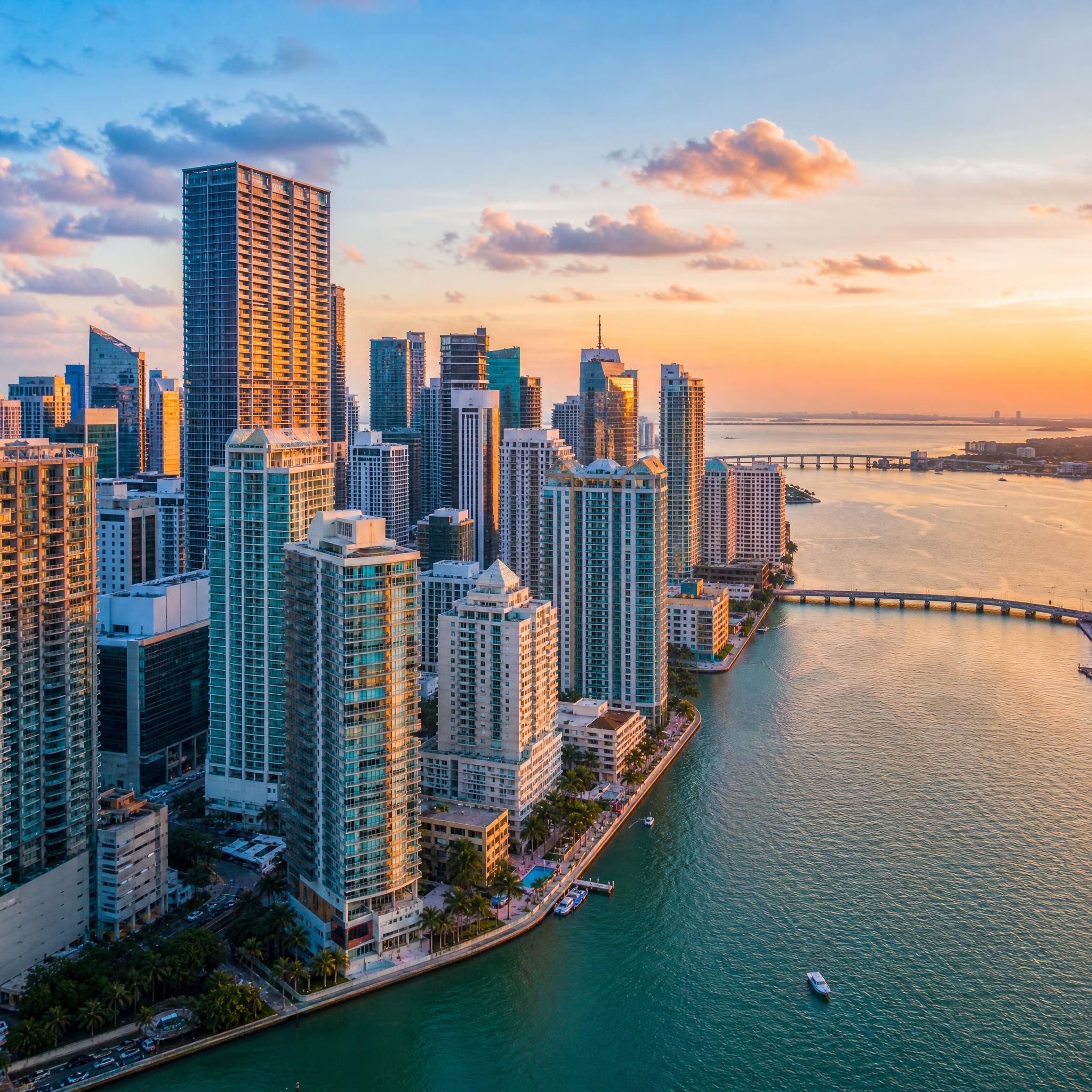
Miami's luxury new construction market doesn't wait for the unprepared. In 2026, the city's skyline is being redrawn by a generation of branded towers — Dolce & Gabbana in Brickell, Four Seasons in Coconut Grove, Waldorf Astoria in Downtown — and the buyers who move strategically are locking in the best units, the best pricing, and the best long-term positions. Those who hesitate are watching their preferred floor plans disappear.
But buying a new construction luxury condo in Miami is fundamentally different from buying a resale property. The contracts are longer, the timelines stretch over years, the deposit structures are unlike anything in traditional real estate, and the stakes — often $1 million to $10 million or more — demand a disciplined, informed approach.
This guide cuts through the marketing hype and gives you the exact actionable strategies, insider tips, and due-diligence frameworks that sophisticated buyers use to navigate Miami's luxury new construction market with confidence in 2026.
Table of contents
- Why Miami New Construction Demands a Different Playbook
- Strategy 1: Get on the Priority Registration List Early
- Strategy 2: Vet the Developer — Not Just the Brand
- Strategy 3: Decode the Deposit Structure Before You Sign
- Strategy 4: Master the HOA Fee Reality Check
- Strategy 5: Choose Your Neighborhood With Precision
- Strategy 6: Use Florida's Buyer Protections to Your Advantage
- Strategy 7: Build the Right Advisory Team
- Key Statistics
- FAQ
Why miami new construction demands a different playbook
Miami's luxury real estate market remains a magnet for wealthy buyers from around the world. In 2025, South Florida posted the second-most $10M+ home sales in its history, with about one luxury transaction per day, signaling continued appetite at the highest price points.
Fueling that demand is a remarkable international buyer base. 52% of new construction home purchases in Miami are made by international buyers, spanning 73 countries — making it the #1 U.S. market for foreign homebuyers. Roughly 86% of foreign purchases are by Latin American buyers, with the top source countries being Colombia, Mexico, and Argentina.
For domestic relocators, the appeal is equally powerful: no state income tax, year-round outdoor living, and a world-class cultural scene that rivals any global city. But none of these lifestyle advantages matter if you approach the purchase without understanding how Miami's new construction ecosystem actually works.
The difference between a buyer who captures value and one who overpays — or worse, gets trapped in an unfavorable contract — comes down to preparation, process, and the seven strategies below.
Strategy 1: get on the priority registration list early
In Miami's luxury new construction market, the best units are never publicly available. They are allocated during private pre-launch events to buyers who registered weeks or months in advance.
The buyers who capture the greatest value in new construction in Miami recognize that waiting for perfect clarity means accepting higher prices or reduced inventory selection.
Here's how the registration process works in practice:
- Submit your interest early — Contact the developer's sales team or a buyer's agent with direct developer relationships and request to be added to the VIP list.
- Attend the private preview — When the project approaches launch, the developer invites registered buyers to private presentations where floor plans, pricing, and deposit structures get revealed before public announcement.
- Move decisively on your preferred unit — Corner units, high floors, and bay-facing residences are claimed within hours of a private launch event.
Common pre-construction incentives in Miami include reduced deposit schedules (20–30% vs. traditional 50%), closing cost contributions where the developer pays 1–2% of the purchase price, complimentary upgrade packages covering flooring, appliances, and smart home tech, and waived HOA fees for the first 6–12 months.
A developer contributing 1–2% of the purchase price on a $1.5 million unit delivers $15,000 to $30,000 in real savings. These incentives are almost exclusively available to early registrants — not to buyers who discover a project after it goes public.
Strategy 2: vet the developer — not just the brand
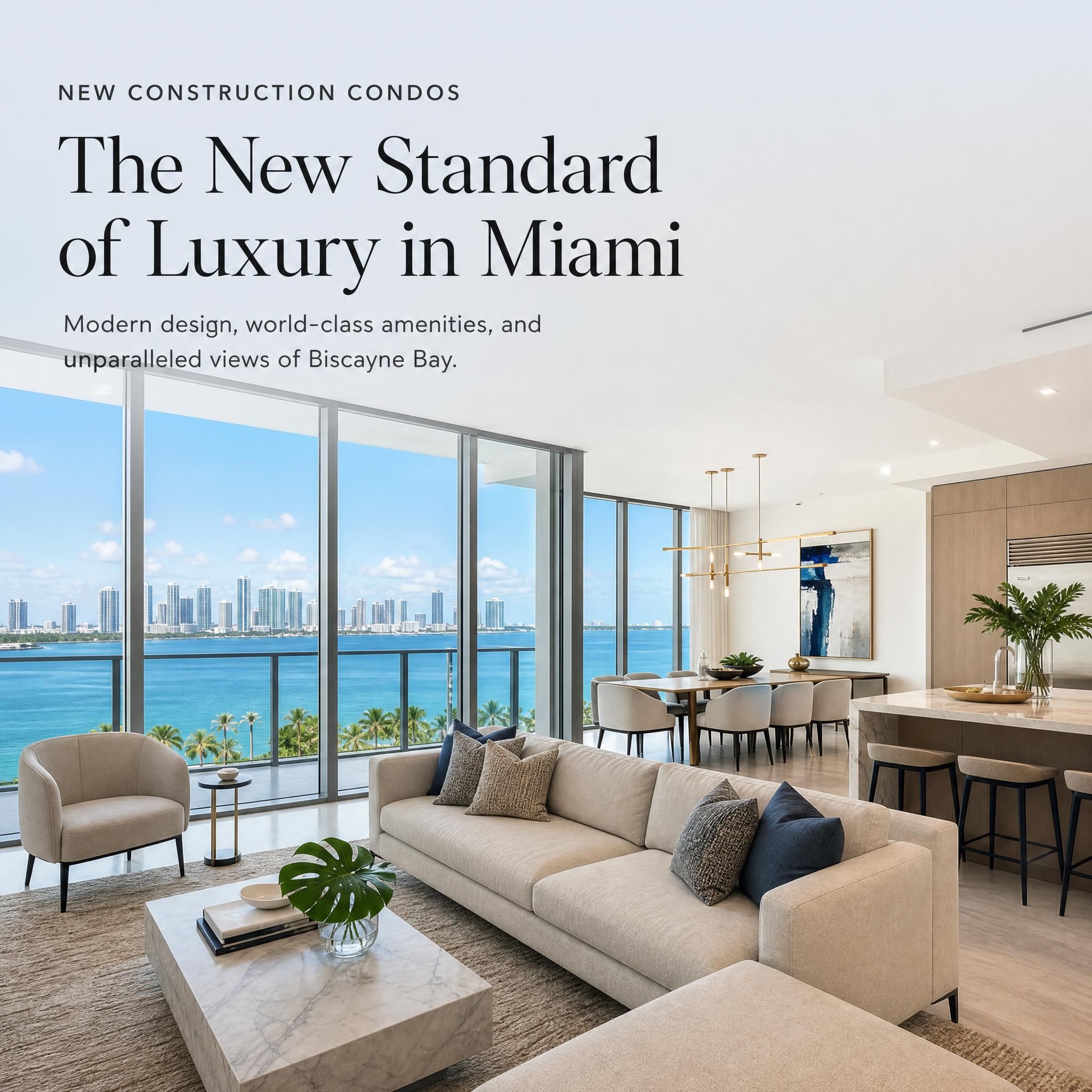
The most dangerous mistake in Miami new construction is confusing a compelling brand with a reliable developer. A famous name on a building's exterior does not guarantee on-time delivery, quality construction, or post-closing support.
In Brickell, buyers should prioritize projects from developers with a proven history of delivering on-time and on-spec. Related Group, Swire Properties, and Terra Group have established reputations in Miami.
When evaluating any developer, apply this due-diligence checklist:
✅ Track Record Questions to Ask:
- What other towers has this legal developer entity (not just the brand partner) delivered in Miami?
- Did those buildings hold resale value? Are comparable units trading above pre-construction prices?
- Were there significant construction delays or post-delivery defect issues?
- Is there any unresolved litigation or material liens tied to the developer or site?
The brand on a rendering is not always the same as the entity behind the project. You should confirm the exact legal developer, review what similar towers that group has already delivered, and look at whether those buildings held value in resale.
✅ Project-Specific Red Flags:
- Vague language about deposits, deadlines, or developer obligations; deposits not held in independent escrow; a large unsold inventory with no defined marketing plan; and missing or incomplete condo documents during broad marketing.
- Unresolved permitting issues or lack of construction financing secured
✅ Green Lights:
- Construction financing already closed (a sign of serious execution readiness — for example, Four Seasons Private Residences Coconut Grove secured a $323.8 million construction loan, signaling strong developer commitment)
- Strong pre-sales percentage (typically 60–70%+ before groundbreaking)
- Demonstrated delivery history with comparable luxury projects
Strategy 3: decode the deposit structure before you sign
Miami's pre-construction deposit structure is one of the most misunderstood aspects of the buying process — and one of the most financially consequential.
Miami's skyline is entering another defining chapter with a new generation of branded towers rising from Brickell to the beaches. Reserving a residence in these buildings is not a simple resale-style contract with one closing payment — it is a sequenced financial commitment combined with highly structured rules on whether you can assign your contract.
Typical deposit schedule for ultra-luxury projects in 2026:
| Milestone | Deposit Due | Cumulative |
|---|---|---|
| Reservation | 1–5% (refundable) | 1–5% |
| Contract Signing | 10–20% | ~20% |
| Groundbreaking | 10% | ~30% |
| Top-Off (structural) | 10% | ~40% |
| Closing / Delivery | Remaining balance | 100% |
Reserve early in a flagship tower such as Waldorf Astoria Residences Downtown Miami, St. Regis Residences Brickell, The Residences at 1428 Brickell, or The Perigon Miami Beach and you will almost certainly be offered a deposit calendar that follows this structure — a modest reservation payment holds your chosen line, then 10 to 20 percent is due at contract, followed by additional 10 percent installments at milestones such as groundbreaking, a specified floor count, or structural top-off, with the remaining balance due only at closing.
Key negotiation leverage points:
- Deposit schedule flexibility (some developers accept 30–40% total vs. the standard 50%)
- Assignment rights — can you sell your contract before the building delivers?
- Price lock guarantees protecting against construction cost increases
- Force majeure language — understand how broadly "unforeseen delays" are defined
Construction delays are common. Budget an extra 6–12 months beyond the stated delivery date. This is not pessimism — it is standard planning for Miami luxury new construction.
Strategy 4: master the HOA fee reality check
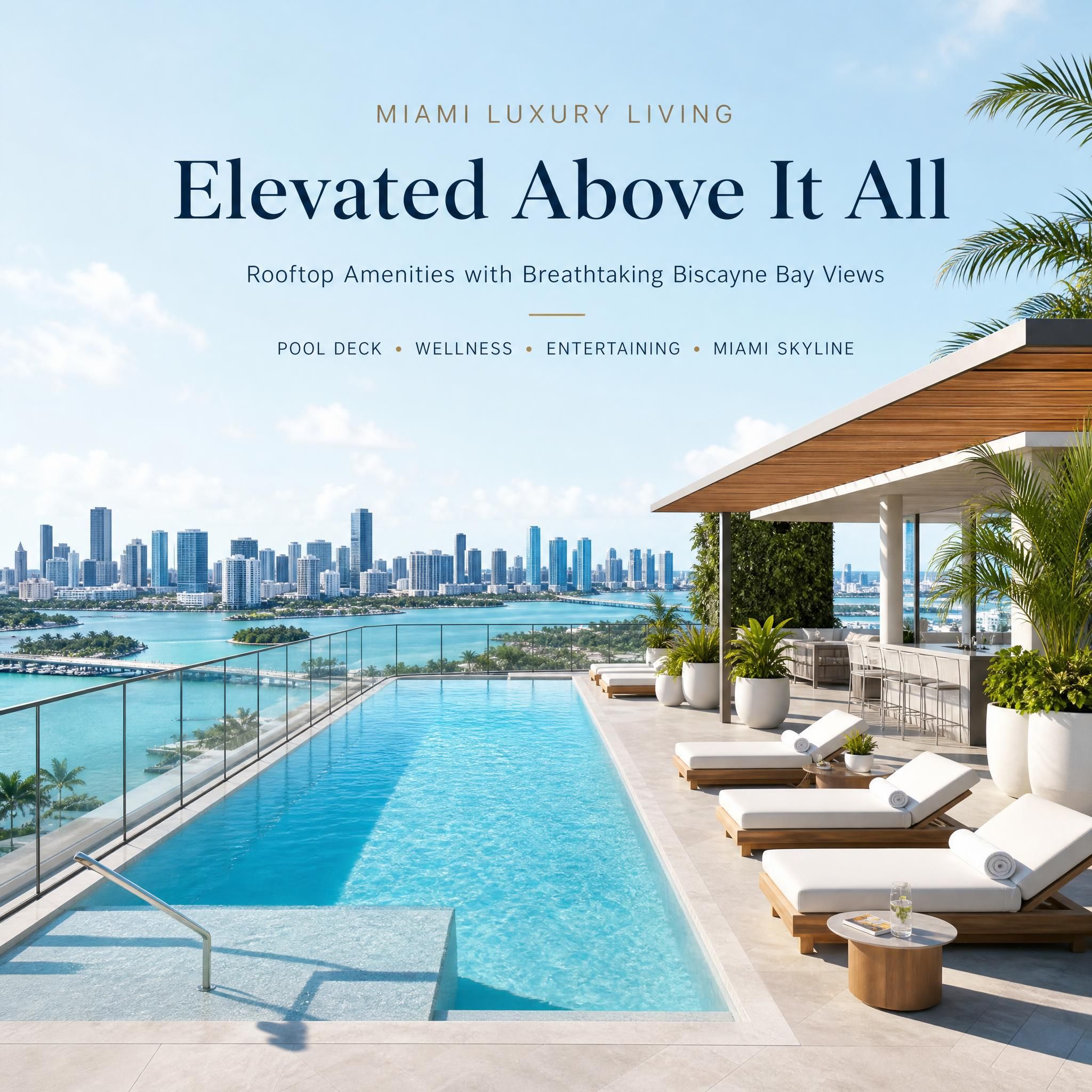
HOA fees are the hidden variable that can dramatically alter your total cost of ownership — and developers have a well-documented tendency to underestimate them in initial projections.
HOA fees for luxury pre-construction condos in Miami typically range from $0.80 to $2.50 per square foot per month, depending on the building's amenity package and brand affiliation. For a 1,500-square-foot two-bedroom unit, expect monthly HOA fees of roughly $1,200 to $3,750.
Branded residences tend to have higher HOA fees because they fund brand-standard services like butler service, concierge, and hotel-grade amenity maintenance.
How to stress-test HOA projections:
- Request the draft operating budget — Not just a summary, but the full line-item budget with staffing, insurance, maintenance, and reserve contributions
- Compare against delivered comparable buildings — What are the actual HOA fees at similar branded residences that have been operating for 2+ years?
- Understand reserve funding — Underfunded reserves are a major risk; ask for the reserve study or pro forma
- Model your all-in monthly cost — For a $3M condo with a $2,500/month HOA, your carrying cost before any mortgage exceeds $30,000 per year
HOA fees for new construction buildings are initially set by the developer and may adjust after the condo association transitions to resident control. This transition — typically 1–3 years after delivery — is when fees often increase as the building's true operating costs become clear.
Pro tip: Transparency on operating costs is a form of buyer protection in itself. The developer's projected first-year budget outlines expected staffing, maintenance, and amenity expenses as well as the level of reserves to be funded. Reviewing that budget with a critical eye — and even having it evaluated by a property management professional — can give you a clear sense of whether the lifestyle being marketed is financially sustainable.
Strategy 5: choose your neighborhood with precision
Miami is not a monolithic luxury market. Each neighborhood has a distinct price trajectory, buyer profile, and lifestyle identity. Matching your purchase to the right submarket is as important as choosing the right building.
| Neighborhood | Price Range (New Construction) | Key Appeal | Best For |
|---|---|---|---|
| Brickell | $500K–$3,000+/sq ft | Urban sophistication, finance hub | Professionals, investors |
| Miami Beach | $2M–$30M+ | Oceanfront glamour, global cachet | Lifestyle buyers, international |
| Edgewater | $800K–$3M+ | Biscayne Bay views, emerging market | Value-focused luxury buyers |
| Coconut Grove | $2M–$10M+ | Waterfront serenity, boutique scale | Privacy seekers, families |
| Design District | $1.5M–$5M+ | Cultural epicenter, artistic energy | Design-forward buyers |
Brickell is undergoing its most ambitious development cycle in history. Between 2026 and 2030, more than a dozen major projects will reshape the neighborhood's skyline and redefine the upper limits of luxury in Miami, including 888 Brickell by Dolce & Gabbana, St. Regis Brickell, and Cipriani Residences. The average pre-construction price per square foot across Brickell is approximately $1,650/sq ft as of Q1 2026.
Edgewater is generating significant institutional interest. An Edgewater development site recently traded for $43 million, reflecting developer confidence in the neighborhood's trajectory. Edgewater has experienced rapid development in recent years, becoming one of Miami's fastest-growing residential neighborhoods, with luxury condominium towers along Biscayne Bay providing stunning waterfront views and modern amenities attracting both domestic and international buyers.
Coconut Grove is setting new benchmarks. Non-penthouse residences at Four Seasons Private Residences Coconut Grove have reportedly eclipsed $4,000 per square foot, positioning the project as the highest price-per-square-foot condominium development on the Miami mainland — a benchmark historically reserved for ultra-luxury oceanfront properties.
Strategy 6: use florida's buyer protections to your advantage
Florida has some of the strongest pre-construction buyer protection laws in the United States — but only buyers who know them can leverage them.
The 15-Day Review Right (Your Most Powerful Tool):
Once you sign a binding contract and receive the full condominium offering package, Florida law gives you 15 days to review the documents and cancel for any reason while receiving a full refund of your deposit. This is your no-pressure period to study the declaration, the budget, the association rules, and all disclosures with your advisor team. If anything does not align with what you were promised, you can walk away within that window.
Use every hour of these 15 days. Have your attorney review:
- The full purchase agreement and all addenda
- Floor plans with dimensions and building specifications
- Declaration of condominium, bylaws, and articles of incorporation
- Public offering statement and all developer disclosures
- Pro forma operating budget and reserve study
- Construction schedule, permitting status, and projected Certificate of Occupancy
- Evidence of construction financing and escrow protections
Escrow Protections:
Controlling liquidity over a multi-year construction timeline, preserving exit options if life or markets change, and ensuring that every dollar you wire is protected by law as well as by the developer's reputation are the key financial pillars of a sound pre-construction purchase. Florida law requires all pre-construction deposits to be held in escrow — confirm the escrow agent is independent and the funds are fully protected.
Post-Delivery Warranty Rights:
New construction is supported by a layered system of warranties, from manufacturers' warranties on appliances and equipment to developer and statutory warranties on the building structure itself. Reputable developers treat the pre-closing walk-through process seriously and maintain dedicated customer service teams to resolve warranted issues after move-in.
Strategy 7: build the right advisory team

No single strategy matters more than this one. The complexity of Miami's luxury new construction market means that the quality of your advisory team directly determines the quality of your outcome.
The Essential Four:
1. A Specialist Buyer's Agent (Not the Developer's Sales Rep)
The developer's on-site sales team represents the developer's interests — not yours. Working with an agent who maintains direct developer relationships provides decisive advantage in accessing priority registration, securing preferred floor plans, and navigating the pre-construction purchase process. Critically, in Miami new construction, the developer pays the buyer's agent — so this expertise costs you nothing.
2. A Florida Real Estate Attorney
This is non-negotiable for purchases above $1 million. Trusted advisors to involve include a Florida real estate attorney to review the contract, disclosures, and any special developer rights; a title and closing agent to confirm title status, escrow procedures, and recording; and an independent appraiser to validate as-completed value.
3. A Mortgage Broker Specializing in Luxury New Construction
Standard lenders often struggle with pre-construction financing. Many lenders offer more flexible loans, and some have limited review programs that focus primarily on whether there's any litigation. Additionally, new construction condos may have special financing options available. For international buyers, foreign national mortgage programs are available with 30–50% down payments.
4. A Tax Advisor Familiar with Florida and International Real Estate
For international buyers especially, FIRPTA implications (15% withholding on sale proceeds for foreign nationals) require advance planning. A qualified tax advisor can help structure your purchase — whether in your personal name, a U.S.-formed LLC, or another entity — to optimize your tax position from day one.
Chiffres clés
📊 52% of new construction home purchases in Miami are made by international buyers, spanning 73 countries — making Miami the #1 U.S. market for foreign homebuyers. (Capital Analytics Associates, 2026)
💡 $4,000+/sq ft — The record-setting price per square foot at Four Seasons Private Residences Coconut Grove, the highest ever recorded for a Miami mainland condo development. (Miami Condo Investments, 2026)
🏙️ $1,650/sq ft — Average pre-construction price per square foot across Brickell as of Q1 2026, with ultra-luxury branded residences reaching $2,500–$3,000+/sq ft. (Manhattan Miami, 2026)
🔑 15 days — The statutory review period under Florida law during which a pre-construction buyer can cancel for any reason and receive a full refund of their deposit. (Florida Condominium Act, Chapter 718)
📊 52% of new construction purchases – Miami International Buyer Share
📊 $1,650/sq ft (Q1 2026) – Brickell Average Pre-Construction Price
📊 $4,000+/sq ft — highest on Miami mainland – Four Seasons Coconut Grove Pricing
Questions fréquentes (FAQ)
How much deposit do i need for a new construction luxury condo in miami?
Pre-construction luxury condos in Miami typically require total deposits of 40 to 50 percent of the purchase price, paid in stages at contract signing, groundbreaking, top-off, and structural completion, with the remaining balance due at closing. Some projects — particularly those targeting early buyers — offer reduced deposit schedules of 20–30%. Always confirm the full deposit timeline before signing, as your capital will be committed for the entire construction period, which typically runs 3–5 years.
Can international buyers purchase new construction condos in miami?
Yes, without restriction. There are no restrictions on foreign nationals purchasing real estate in Florida. You do not need to be a U.S. citizen or permanent resident to buy property. The purchase can be made in your personal name, through a U.S.-formed LLC, or through a foreign entity. The key consideration is FIRPTA — a 15% withholding on the gross sales price when a foreign national sells U.S. real estate — which can be reduced or eliminated with proper tax planning before purchase.
How long does it take to receive a new construction luxury condo in miami?
Established developers with deep local experience often navigate the permitting and departmental review process within 12 to 18 months. In contrast, newer projects or those requiring complex zoning variances may spend three to four years in pre-construction. From groundbreaking to delivery, construction typically takes an additional 2–3 years. Budget for the stated timeline plus 6–12 months for delays, which are common even among experienced developers.
What are typical HOA fees for luxury new construction condos in miami?
HOA fees for luxury pre-construction condos in Miami typically range from $0.80 to $2.50 per square foot per month, depending on the building's amenity package and brand affiliation. For a 1,500-square-foot two-bedroom unit, expect monthly HOA fees of roughly $1,200 to $3,750. Branded residences (Four Seasons, St. Regis, Dolce & Gabbana) sit at the higher end of this range due to hotel-grade service staffing.
What is the 15-day cancellation right in florida?
Once you sign a binding contract and receive the full condominium offering package, Florida law gives you 15 days to review the documents and cancel for any reason while receiving a full refund of your deposit. This is your most powerful buyer protection tool. Use it to have a Florida real estate attorney conduct a full review of all contract documents, the operating budget, the condo declaration, and all developer disclosures before your cancellation window expires.
Conclusion: execute with precision, win with preparation
Miami's luxury new construction market in 2026 is a world-class opportunity — and a world-class test of buyer discipline. The towers rising across Brickell, Edgewater, Coconut Grove, and Miami Beach represent some of the most architecturally ambitious, amenity-rich residential projects ever built in the United States. The demand is global, the inventory is finite, and the best units go to buyers who are prepared.
The seven strategies in this guide — registering early, vetting developers rigorously, understanding deposit structures, stress-testing HOA projections, choosing neighborhoods with precision, leveraging Florida's buyer protections, and building the right advisory team — are the difference between a purchase you'll celebrate and one you'll regret.
Miami's trajectory — sustained population growth, continued international buyer interest, limited waterfront inventory, and ongoing infrastructure investment — supports confidence in new development purchases as sound long-term positions.
Your next step is to move from strategy to action. Schedule a private consultation with a luxury new construction specialist who has direct developer relationships, get on the priority registration lists for the projects that align with your lifestyle and investment goals, and retain your legal and financial advisory team before you need them — not after you've already signed.
The Miami skyline is being built right now. The question is whether your name is on one of those residences.
Schedule your private tour of Miami's newest luxury developments → View our curated collection of new construction properties → Speak with our luxury real estate specialists today
"52% of new construction home purchases in Miami are made by international buyers spanning 73 countries"
— Capital Analytics Associates


