
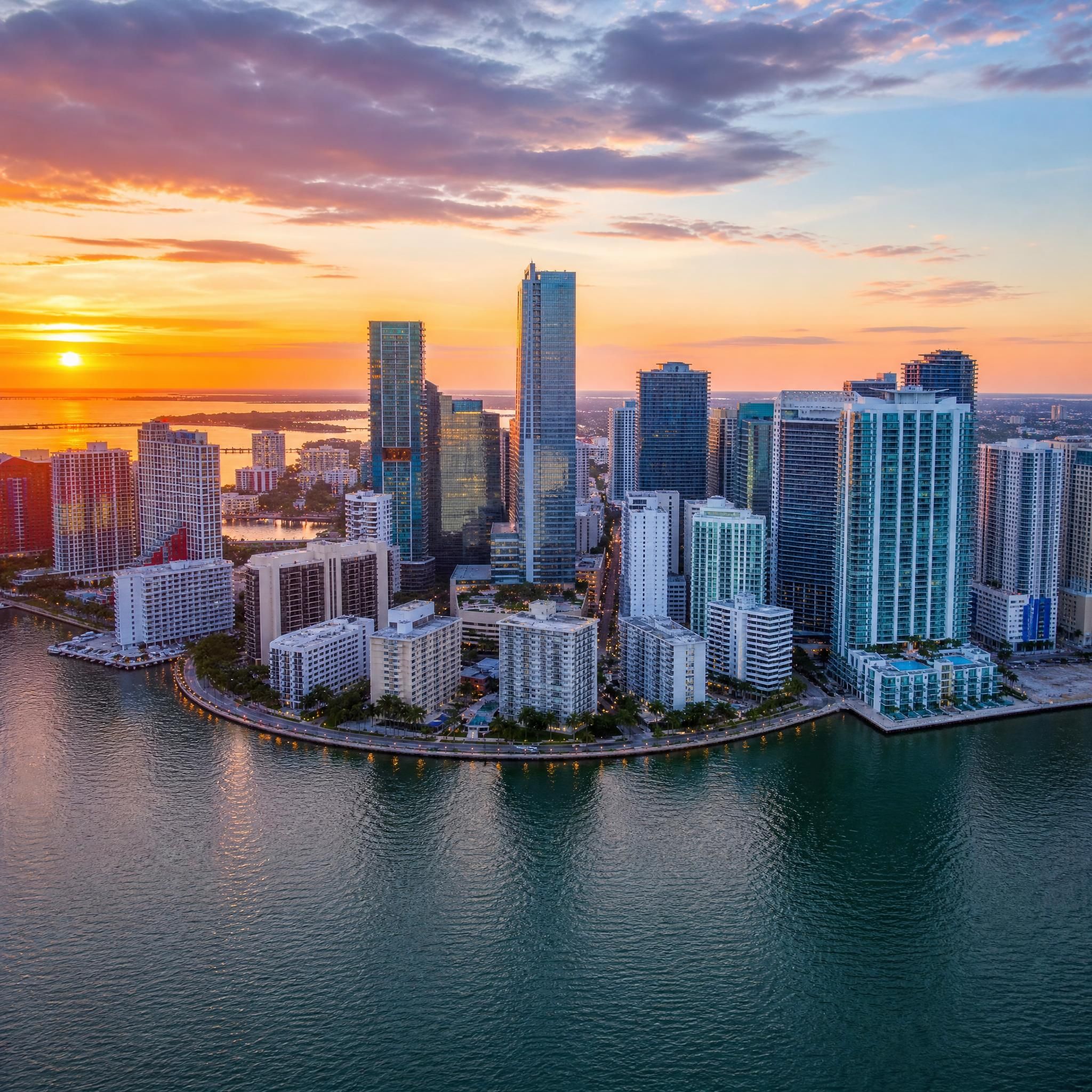
Miami's luxury real estate landscape has never been more dynamic — or more complex. The Miami metro officially surpassed New York by the end of 2025, boasting 10,513 active million-dollar listings compared to New York's 9,216. With a record wave of branded towers, pre-construction launches, and international capital flooding the market, the opportunity is undeniable. But so are the pitfalls for the uninformed buyer.
This is not a general overview of Miami's luxury market. This is your tactical playbook — a step-by-step guide packed with actionable strategies for navigating, negotiating, and closing on a new construction luxury home in Miami in 2026. Whether you're eyeing a Brickell high-rise or a Coconut Grove waterfront residence, the insider moves you make before you sign will determine whether you secure a trophy asset or an expensive lesson.
Table of contents
- Step 1: Understand the 2026 Market Landscape Before You Shop
- Step 2: Choose Your Neighborhood Strategically
- Step 3: Vet the Developer — Non-Negotiable Due Diligence
- Step 4: Decode the Deposit Structure and Protect Your Capital
- Step 5: Master the Contract — The 15-Day Window Is Your Shield
- Step 6: Underwrite the True Cost of Ownership
- Step 7: Negotiate Like an Insider
- Step 8: Build Your Expert Team
- Key Statistics
- FAQ
Step 1: understand the 2026 market landscape before you shop
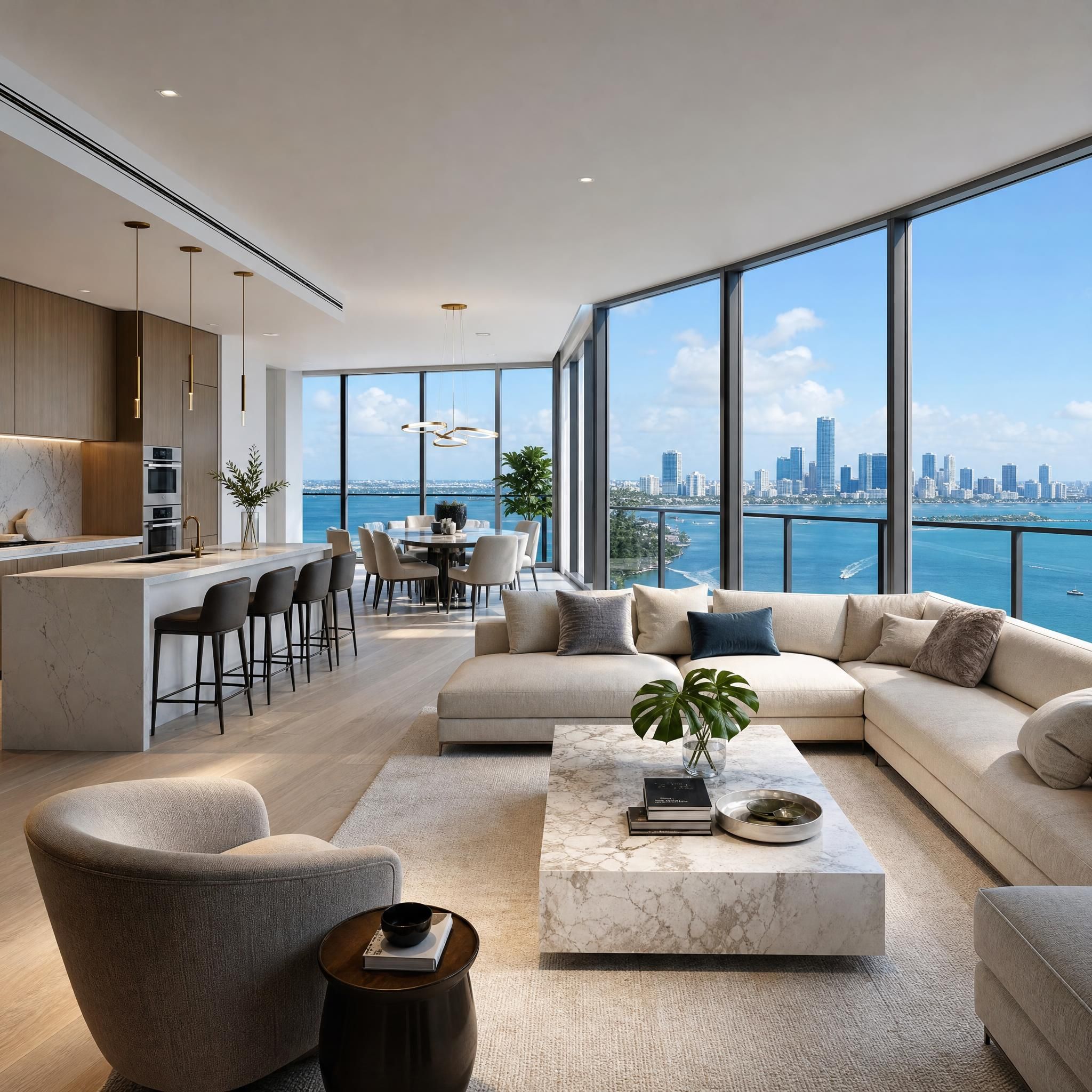
Before you tour a single sales gallery, you need to understand the terrain. The 2026 Miami luxury new construction market is bifurcated — and the strategy that works in one segment fails in another.
In Q1 2026, Miami luxury condo sales surged 25.9% year-over-year, with the market closing at a median price of $1,381/sq. ft. in the ultra-luxury tier. Brickell hit a record-high $950/sq. ft., while Fisher Island posted a 19% year-over-year increase in price per square foot.
Here's what this means practically:
-
Marquee branded towers are selling fast. For buyers targeting marquee projects — St. Regis Brickell, Waldorf Astoria Downtown, Bentley Residences Sunny Isles Beach — the inventory window is genuinely closing. St. Regis is approximately 90% sold, and Waldorf Astoria's most desirable floor and view combinations are absorbed.
-
International demand is a structural driver. Global buyers accounted for 52% of South Florida new-construction, pre-construction, and condo-conversion sales over the prior 22 months, with buyers from 73 countries. This international participation supports demand and resale liquidity for well-positioned luxury inventory.
-
Inventory remains elevated overall, giving buyers leverage in the broader market. Inventory levels ended Q1 2026 at 19 months and above the balanced market range of 9–12 months, offering buyers more favorable negotiation dynamics.
Actionable Takeaway: Identify your segment first. If you want a specific marquee building, move quickly. If you're flexible on brand, the broader market gives you room to negotiate.
Step 2: choose your neighborhood strategically
Not all Miami luxury neighborhoods perform the same. Here's a data-driven breakdown of where smart buyers are looking in 2026:
| Neighborhood | Price Range ($/sq. ft.) | Best For | Key 2026 Projects |
|---|---|---|---|
| Brickell | $950–$1,800+ | Urban sophistication, corporate proximity | 888 Brickell by D&G, St. Regis, Cipriani |
| Miami Beach | $1,500–$5,000+ | Oceanfront glamour, global prestige | Aman Miami Beach, The Perigon, Ritz-Carlton Residences |
| Edgewater | $800–$1,400 | Waterfront value, emerging luxury | Aria Reserve, Villa Miami, The Edition Residences |
| Coconut Grove | $1,100–$2,500+ | Boutique charm, family appeal | Four Seasons Private Residences, OPUS |
| Sunny Isles Beach | $1,200–$3,500+ | Branded ultra-luxury, beachfront | Bentley Residences, Rivage |
Brickell is experiencing the most ambitious development cycle in its history, with 4,500+ new luxury condo units across more than a dozen developments and multiple branded-residence towers establishing it as a global luxury destination.
Coconut Grove and Coral Gables recorded the highest year-over-year price gain at 9.2% in Q1 2026, with only 11 months of inventory — the lowest among Miami's major sub-markets — solidifying its position as one of Miami's most dynamic luxury enclaves.
Actionable Takeaway: If appreciation is your primary goal, Coconut Grove and Brickell's ultra-luxury tier show the strongest fundamentals. If lifestyle and oceanfront living are the priority, Miami Beach commands a scarcity premium that historically holds value.
Step 3: vet the developer — non-negotiable due diligence
This is the step most buyers rush — and the one that costs the most when skipped. In Miami's new construction market, the developer's track record is as important as the unit itself.
The developer checklist
✅ Completed Projects: How many towers has the developer delivered in Miami? Have they delivered on time? Visit completed buildings in person — speak to residents, not just the sales team.
✅ Financial Backing: JLL secured over $565M in construction financing for an ultra-luxury condominium tower in Miami — institutional-grade financing signals a developer with the credibility and capital to complete. Ask specifically: Is the construction loan in place? What is the lender's track record?
✅ General Contractor Quality: Buyers should ask about the history of the developer, what they've done before, legalities, permit processes, and financing situations beyond just the completion date. A developer under financial pressure may pressure contractors to cut corners.
✅ Litigation History: Search Florida court records for the developer entity and principals. Patterns of owner lawsuits, lien disputes, or association litigation are red flags.
✅ Brand Partners: Branded residences (Four Seasons, Ritz-Carlton, Aman) attach a hospitality operator to the building. They charge higher HOA fees ($3–6 per square foot per month) but deliver hotel-grade service, stronger resale liquidity, and more predictable pricing during downturns.
Actionable Takeaway: Request the developer's portfolio, financing term sheet (or proof of construction loan), and GC references before signing anything. A reputable developer will provide these without hesitation.
Step 4: decode the deposit structure and protect your capital
Miami's pre-construction deposit requirements are unlike anything buyers from New York, Los Angeles, or international markets typically encounter. Understanding the structure before you commit is critical.
How miami pre-construction deposits work in 2026
Deposit structures across the active luxury pre-construction pipeline in Q2 2026 generally follow one of two models: the standard Miami model requires 50% of the purchase price paid across four to five construction milestones, with the remaining 50% due at closing. For a $5 million acquisition, this means $2.5 million in deposits over the construction period.
A more accessible model used by some developers requires 10% at contract signing, 10% at groundbreaking, 10% at a mid-construction milestone, with the balance (60–70%) paid at closing.
Florida's legal protections for your deposits
Here's the good news: all deposits must be held in escrow by a licensed Florida escrow agent — developer access to these funds before building completion is restricted by law.
Additionally, Florida law requires developers to provide a full set of condominium documents at or before contract signing. You then have 15 days from receipt to review and cancel for any reason with a full refund.
Assignment rights: plan your exit strategy
If there is any chance you will prefer to transfer your contract before closing, resolve assignment rights before you sign. Some luxury developers prohibit assignments entirely to preserve an end-user community. Others allow transfers with developer consent and a fee, or only after certain sales thresholds are met.
Actionable Takeaway: Model your full deposit cash flow across the construction timeline before reserving. A $3M unit at a 50% deposit structure requires $1.5M in staged payments before closing. Confirm your liquidity can support this without disrupting other investments.
Step 5: master the contract — the 15-day window is your shield
The 15-day rescission period under Florida law is your most powerful tool as a buyer — and most buyers waste it.
What to do during your 15-day review
Key contract clauses to scrutinize include: Force Majeure provisions (can the developer delay delivery indefinitely?), material change protections (what happens if the developer changes finishes or unit sizes?), and the escrow structure (are your deposits protected in a Florida-licensed escrow account?).
Additional clauses to review with your attorney:
- Price lock provisions: These protect you against increases during construction but rarely protect against market declines — you remain obligated to your original price even if comparable units sell for less at delivery.
- Substitution rights: Can the developer swap out finishes, appliances, or specifications? What approval rights do you retain?
- Delivery timeline and penalties: What happens if the developer misses the delivery date? Are there liquidated damages, or is the timeline essentially open-ended?
- HOA budget projections: Are the initial HOA fees realistic, or are they artificially low to attract buyers with higher fees to follow?
Actionable Takeaway: Hire a Florida real estate attorney who specializes in condo contracts — not a general practice attorney. The fee ($1,500–$3,000) is negligible relative to a $2M+ purchase and the protection it provides.
Step 6: underwrite the true cost of ownership
The purchase price is only the beginning. Miami luxury condo buyers who focus exclusively on acquisition cost routinely underestimate their total annual carrying costs.
The full cost of ownership model
HOA fees in Miami luxury buildings range from $1.50 per square foot per month at boutique condos to $6+ per square foot at flagship branded residences. A 2,000-square-foot unit at a Four Seasons or Aman building can carry $10,000–$12,000 monthly in HOA.
Add property taxes (~2% of value annually), insurance, and any special assessments, and carrying costs can approach 3–4% of property value per year.
The HOA due diligence checklist
Before closing on any Miami luxury condo — new construction or resale — run this checklist:
- ✅ Request the reserve study: Is the building fully funded?
- ✅ Review milestone inspection report (required under Florida's post-Surfside legislation)
- ✅ Check for pending or recently completed special assessments
- ✅ Verify HOA insurance coverage and recent premium increases
- ✅ Confirm building's wind mitigation features
- ✅ Review board meeting minutes for disputes, deferred maintenance, or management issues
- ✅ Ask about upcoming capital projects
A reserve fund below 25% funded in a building that is more than 20 years old is a serious concern, especially now that Florida law requires full funding for specific components. A pattern in the meeting minutes of contentious board meetings, owner lawsuits against the association, or management company turnover suggests governance problems that tend to get worse over time.
Actionable Takeaway: Build a 12-month pro forma that includes HOA fees, property taxes, insurance, and a contingency for special assessments. If the carrying cost exceeds your comfort threshold, negotiate — or walk away.
Step 7: negotiate like an insider
Many buyers assume that luxury new construction prices are fixed. They're not — especially in 2026's elevated-inventory environment.
What's negotiable in miami new construction
Complimentary upgrade packages offering premium flooring, upgraded appliances, and smart home integration might represent $40,000 to $75,000 in retail value. Smart buyers compare base finishes across competing buildings to understand whether the "free" upgrades truly add value.
The typical Miami luxury condo carries $800 to $1,500 in monthly HOA fees, so a 12-month waiver delivers $9,600 to $18,000 in value.
Negotiation levers to explore:
| What to Negotiate | Potential Value | When It Works |
|---|---|---|
| Upgrade packages (flooring, appliances, smart home) | $40K–$75K | Early in sales cycle |
| HOA fee waiver (6–12 months) | $10K–$18K | Slower-selling projects |
| Parking space inclusion or upgrade | $50K–$150K | Mid-to-late sales cycle |
| Storage unit inclusion | $25K–$75K | Flexible developers |
| Deposit structure adjustment | Capital efficiency | Repeat buyers / large units |
| Closing cost contributions | $20K–$50K | Buyer's market conditions |
Actionable Takeaway: Never negotiate directly with a developer's sales gallery team — they represent the developer's interests, not yours. Buyers who go directly to the developer miss objective analysis, comparative options, and often pay more. Your buyer's agent typically costs you nothing in pre-construction deals — the developer has already built the commission into their pricing.
Step 8: build your expert team
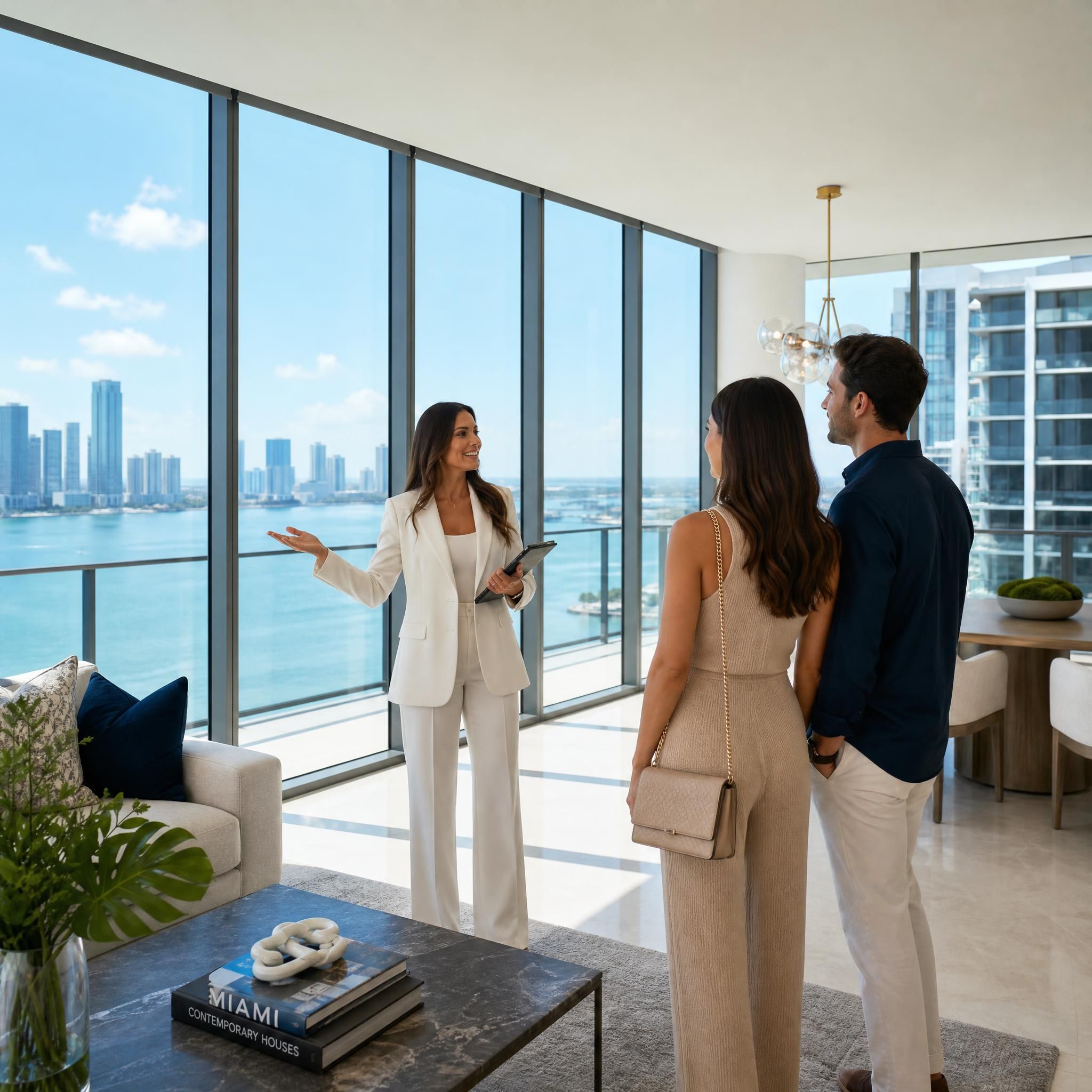
The complexity of Miami's new construction luxury market demands a specialized team. Here's who you need and what each role does:
1. Luxury New Construction Buyer's Agent
Your most important hire. Choose an agent with direct experience in pre-construction transactions, established relationships with Miami developers, and a track record of closed deals in your target buildings. They should have access to priority inventory before public launch and know which developers are flexible on terms.
2. Florida Real Estate Attorney
Non-negotiable for contract review. Specifically hire an attorney who handles condo transactions and knows Florida's Condominium Act. They review your purchase agreement, protect you during the 15-day rescission window, and flag unfavorable clauses before you're committed.
3. Miami-Based CPA or Tax Advisor
Florida's no-state-income-tax advantage is real, but the tax implications of luxury real estate ownership — especially for international buyers subject to FIRPTA withholding, or domestic buyers with complex entity structures — require expert guidance. Structure your purchase correctly from day one.
4. Insurance Specialist (Florida-Licensed)
Florida's insurance market has tightened significantly. Insurance availability and cost can materially affect both affordability and lender requirements — price flood and wind insurance early in the contract period, not at closing.
5. Private Banker or Mortgage Broker (If Financing)
Miami's luxury market skews heavily toward cash buyers — 37.1% of Miami transactions in mid-2025 were all-cash, well above the national average, largely due to international buyers and relocators from more expensive markets. If you're financing, get pre-approval before you begin shopping and confirm your lender has experience with Miami luxury condos, which often have unique warrantability requirements.
Chiffres clés
📊 10,513 active listings — surpassing New York's 9,216 – Miami Million-Dollar Listings
📊 25.9% — Year-over-year surge in Miami luxury condo sales volume in Q1 2026 (Source: CondoBlackBook Q1 2026 Market Report)
💡 52% — Share of South Florida new-construction sales purchased by international buyers from 73 countries (Source: MIAMI REALTORS International Report)
🏗️ 15,000+ — New luxury condo units expected across 40+ Miami developments in 2026 (Source: M Group Compass)
💰 $950/sq. ft. — Brickell's record-high luxury condo price per square foot in Q1 2026 (Source: CondoBlackBook)
📊 40–50% of purchase price in staged payments – Pre-Construction Deposit Requirements
Questions fréquentes (FAQ)
How much deposit do i need to buy a new construction luxury condo in miami?
Most ultra-luxury towers ask for a total deposit between 40 and 50% of the purchase price, spread across reservation, contract signing, groundbreaking, structural milestones such as top-off, and sometimes a later pre-closing installment, with the remaining balance due at closing. Some more accessible projects offer a 10/10/10/70 structure. Always model your full deposit cash flow before committing.
Can i cancel a miami pre-construction condo contract after signing?
Yes — within a specific window. Florida law requires developers to provide a full set of condominium documents at or before contract signing, and you have 15 days from receipt to review and cancel for any reason with a full refund. After this rescission period, cancellation terms depend on your specific contract.
What are typical HOA fees for miami luxury condos?
HOA fees range from $1.50 per square foot per month at boutique condos to $6+ per square foot at flagship branded residences. A 2,000-square-foot unit at a Four Seasons or Aman building can carry $10,000–$12,000 monthly in HOA. Always request the current budget and reserve study before closing.
Is it better to buy pre-construction or move-in ready in miami in 2026?
It depends on your timeline and goals. Pre-construction offers price lock, customization, and potential appreciation before delivery — but requires capital commitment over 2–4 years and carries construction risk. Move-in-ready properties allow you to inspect what you're buying, occupy immediately, and negotiate in today's elevated-inventory environment. With 19 months of overall luxury condo inventory in Q1 2026, buyers have favorable negotiation dynamics in the resale market.
Do i need a buyer's agent for new construction in miami?
Absolutely. Developer salespeople work for the developer, not you. Buyers who go directly miss objective analysis, comparative options, and often pay more. Your buyer's agent typically costs you nothing in pre-construction deals — the developer has already built the commission into their pricing.
Conclusion: the prepared buyer wins in miami's 2026 luxury market
Miami's new construction luxury market in 2026 is exceptional — and exceptionally nuanced. The city has cemented its status as a global luxury real estate capital, with record-breaking developments, unprecedented international demand, and a pipeline of branded towers that rival any market in the world. But the buyers who thrive here are not the ones dazzled by showroom finishes and rooftop pools. They are the ones who do the work.
Vet the developer. Understand your deposit obligations. Use your 15-day rescission window. Build a team of specialists who have done this before. Negotiate beyond the sticker price. And above all, underwrite the true cost of ownership before you fall in love with a view.
Your Miami luxury home is one of the most significant financial decisions you'll make. Make it with the precision and discipline it deserves.
Ready to take the next step? Schedule a private consultation with a Miami luxury new construction specialist to receive a curated shortlist of developments that match your criteria, timeline, and investment goals — before the best inventory is gone.
"Brickell continues to outperform the broader Miami market due to limited bayfront land, institutional-quality new development, and sustained corporate relocations"
— Manhattan Miami Real Estate


