
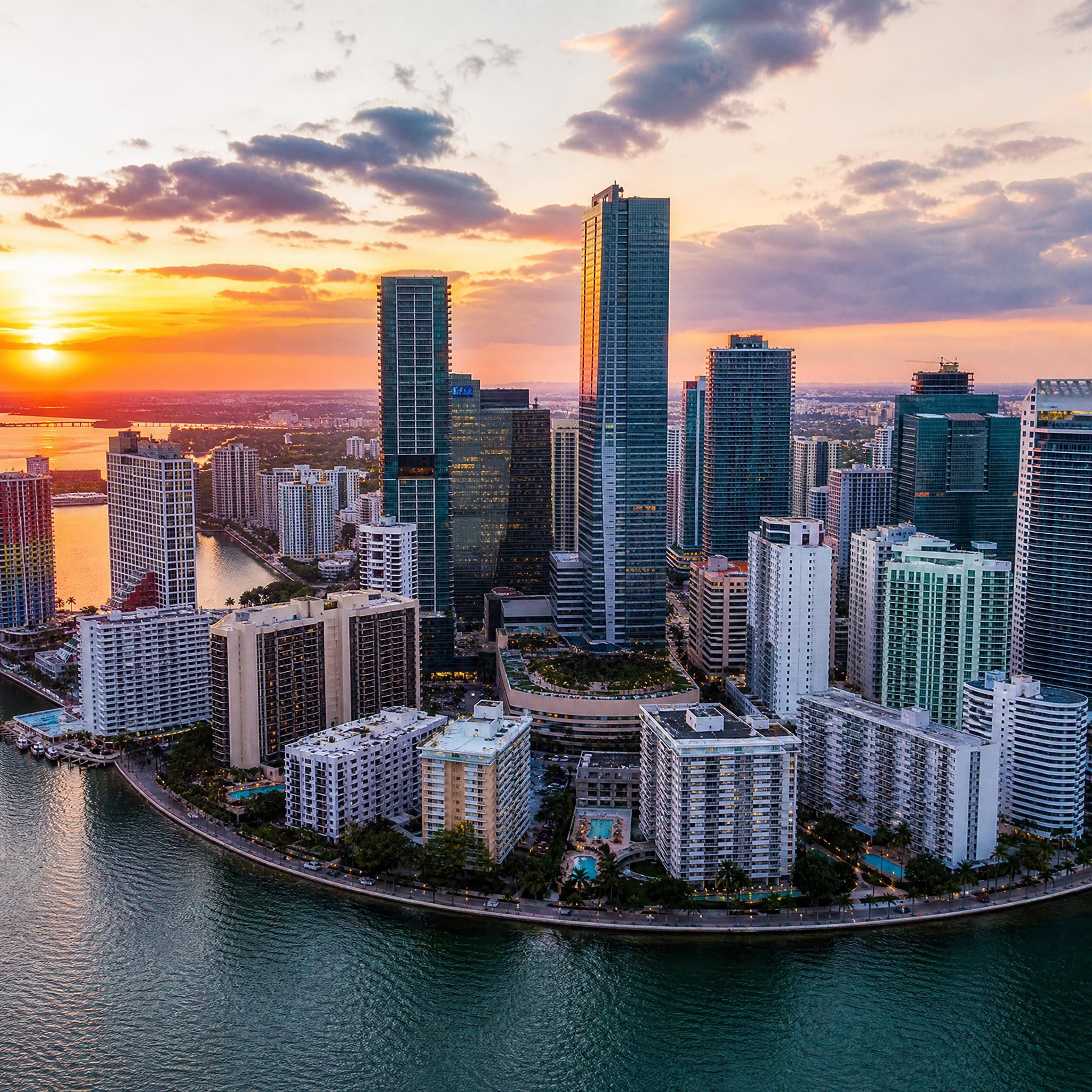
You've decided Miami is the move. The question isn't whether to buy a new construction luxury home here — Miami has firmly established itself as a leading luxury hub, with more than 1 in 5 listings priced above $1 million. The question is how to do it right. Pre-construction luxury condos in Brickell are trading at $2,500–$3,000+ per square foot. Branded residences are selling out before a single foundation is poured. And with the Miami metro officially surpassing New York by the end of 2025, boasting 10,513 active million-dollar listings, the stakes have never been higher — and neither has the opportunity.
This guide cuts through the developer marketing and gives you the exact, step-by-step strategies to confidently navigate Miami's new construction luxury market in 2026. Whether you're eyeing a Brickell luxury condo, a waterfront Edgewater tower, or a branded residence in Coconut Grove, these seven strategies will protect your capital and maximize your outcome.
Table of contents
- The 2026 Market Reality: What Every Buyer Must Know
- Strategy 1: Master the Neighborhood Matrix
- Strategy 2: Vet Your Developer Like a Pro
- Strategy 3: Decode the Deposit Structure
- Strategy 4: Evaluate the Building — Not Just the Unit
- Strategy 5: Negotiate Smarter in a Buyer-Friendly Window
- Strategy 6: Structure Your Purchase for Tax and Investment Efficiency
- Strategy 7: Work with a Specialist, Not a Generalist
- FAQ
- Key Statistics
The 2026 market reality: what every buyer must know {#the-2026-market-reality}
Before deploying any strategy, you need an honest read of the market. Here's what the data actually says.
The luxury market — the high-end segment at $1 million and above — stays vibrant, with luxury condo and single-family sales rising significantly year-over-year, driven by international buyers, lifestyle appeal, and Miami's growing status as a global business hub. However, conditions are nuanced: the Brickell condo market in Q1 2026 has approximately 17 months of supply and 113 days average on market, representing the most buyer-friendly conditions since 2019.
This is critical intelligence. You are entering a market where ultra-luxury branded residences are selling out rapidly while mid-tier inventory sits — meaning your strategy must be precision-targeted, not broad.
66 active luxury developments compose Miami's pre-construction pipeline, representing more than $5 billion in combined inventory across Brickell, Edgewater, Miami Beach, Fisher Island, Bal Harbour, Sunny Isles, Coconut Grove, Design District, and Downtown Miami. The sheer volume of choice makes a systematic approach non-negotiable.
📊 $5B+ across 66 active luxury developments – Miami Pre-Construction Pipeline 2026
Strategy 1: master the neighborhood matrix {#strategy-1-master-the-neighborhood-matrix}
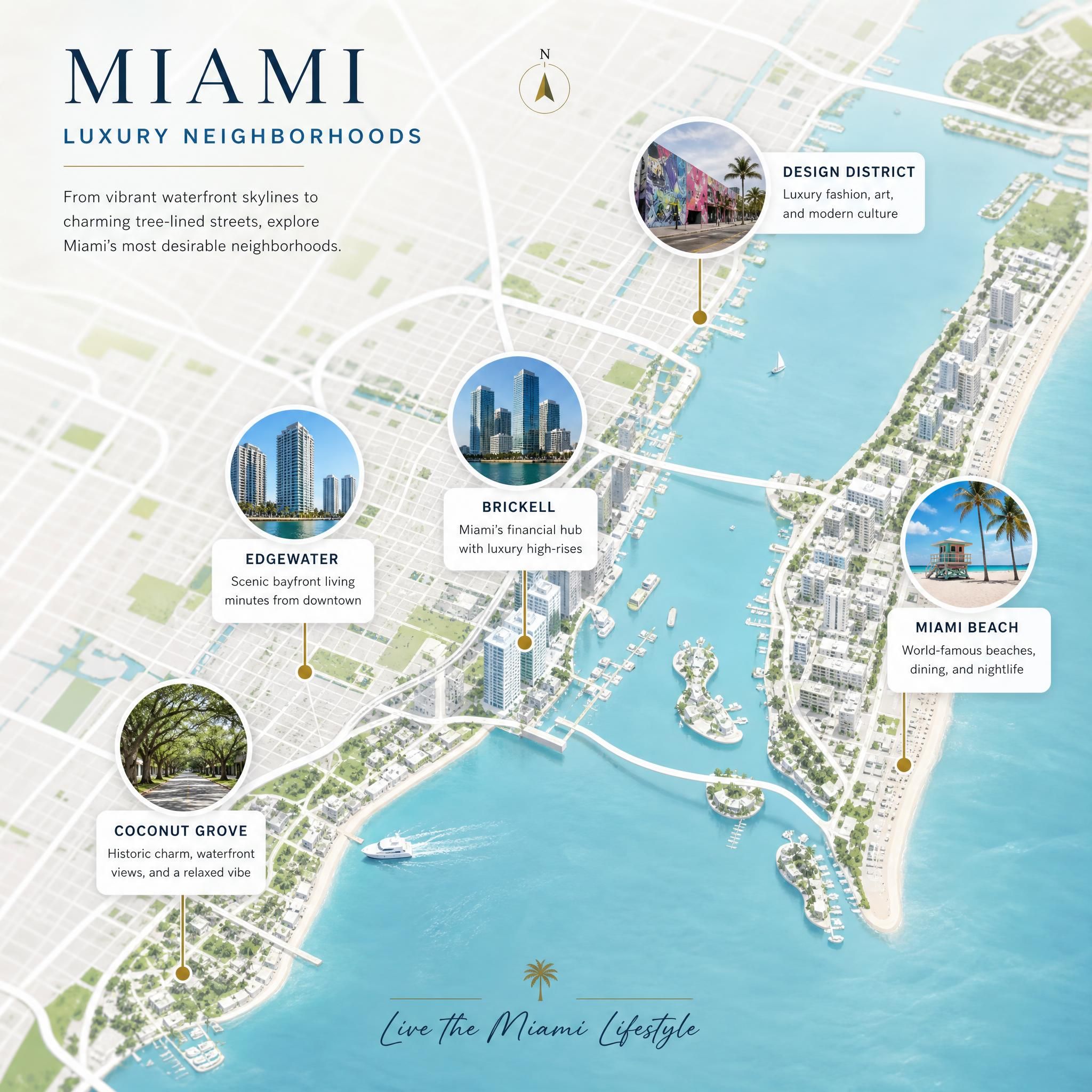
Every Miami neighborhood for luxury new construction has a distinct risk/reward profile. Choosing the wrong one is the single most expensive mistake buyers make. Here's how to evaluate each:
| Neighborhood | Price Range (New Construction) | Best For | Key Watch-Out |
|---|---|---|---|
| Brickell | $1,650–$3,000+/sq ft | Urban professionals, investors | HOA fees $0.80–$2.50/sq ft/mo |
| Edgewater | $900–$1,800/sq ft | Bayfront living, value relative to Brickell | Emerging area — verify surrounding development |
| Coconut Grove | $2M–$6M+ (Four Seasons tier) | Families, long-term appreciation | Limited inventory, moves fast |
| Miami Beach / SoFi | $2,500–$5,000+/sq ft | Oceanfront lifestyle, international cache | Insurance costs, flood zone review required |
| Design District | $1,500–$2,500/sq ft | Culture, boutique living | Smaller building counts, less liquidity |
| Sunny Isles Beach | $1,800–$3,500/sq ft | Branded ultra-luxury, privacy | Higher concentration of speculative buyers |
Brickell remains one of Miami's most expensive condo neighborhoods, with median prices approaching $790,000, supported by full-service luxury towers, walkability, and proximity to the financial district.
Meanwhile, Edgewater offers newer waterfront developments with bay views and a growing arts and dining scene, often at more accessible price points than Brickell. This makes Edgewater one of the strongest value plays in 2026 for buyers who want waterfront luxury without the Brickell premium.
Actionable tip: Before committing to a neighborhood, spend at least two weekends walking it at different times of day. A building's amenities are irrelevant if the surrounding block doesn't match your lifestyle.
Strategy 2: vet your developer like a pro {#strategy-2-vet-your-developer-like-a-pro}
The most important decision in any pre-construction purchase isn't the unit — it's the developer. Miami's pre-construction market has had spectacular successes (Related Group, Swire, Dezer, Mast Capital) and spectacular failures — projects that never broke ground, projects that delivered years late, projects that delivered with major defects.
Use this 7-point framework before writing any deposit check:
1. Count completed projects in the last 10 years. A developer with fewer than three completed Miami high-rises carries meaningfully more execution risk.
2. Audit delivery timeline accuracy. For each completed project, compare the original estimated delivery date to the actual delivery date. 80% of Miami pre-construction delivers within 30% of the original timeline. Developers with consistent patterns of 2+ year delays should be flagged.
3. Verify the construction lender. A project with a committed construction loan from a major institutional lender is far less likely to stall than one relying on pre-sales to fund construction.
4. Assess the general contractor. In Miami, look for firms with hurricane-resilient building experience and high-rise vertical construction expertise. Some developers cut costs by choosing cheaper contractors — this is where issues begin.
5. Check pipeline concentration. Developers running 5+ simultaneous pre-construction projects are stretched. Developers running 1–2 projects can focus.
6. Search public court records. Search Miami-Dade and Broward court systems for lawsuits naming the developer entity. Common litigation signals: construction defect claims from prior buildings, unpaid subcontractor suits, unit owner disputes over delivered amenities. The Aston Martin Residences defect claims (reported in 2026) are a timely reminder that brand prestige doesn't guarantee construction quality.
7. Review the pre-sales absorption rate. A project like the Mandarin Oriental Brickell — with 57% of residences already under contract representing $1.2 billion in commitments before construction has begun — signals genuine market validation, not just developer hype.
Strategy 3: decode the deposit structure {#strategy-3-decode-the-deposit-structure}
Pre-construction deposits in Miami are substantial. Understanding the structure protects you from liquidity surprises and gives you negotiating leverage.
Expect 40–50% total deposits before closing, paid in stages tied to milestones. Typical construction runs 3–5 years, with 20–50% total deposit paid in phased stages: 10% at contract, 10% at groundbreaking, 10% at halfway, 10% at top-off.
Your legal protections under Florida law:
Under Florida condominium law, deposits up to 10% of the purchase price are required to be held in a separate escrow account with a bank, title company, or law firm, and not released to the developer until substantial completion or closing.
Amounts above 10% are also held in escrow by default. Developers can request the right to use those additional funds for actual construction costs once work has begun, but only if the contract contains clear language that you acknowledge when signing.
The 15-day rescission window: Florida requires contracts to include a statutory legend that gives you a defined rescission window after you receive the offering documents — often 15 days in many pre-construction contracts — and buyers cannot waive these protections.
Actionable tip: Never wire deposits without first having a Florida real estate attorney review the escrow clause. Confirm: who holds the escrow, what conditions allow release, and what happens to your deposit if the project is cancelled or substantially delayed.
📊 40–50% of purchase price committed before closing – Miami Luxury Pre-Construction Deposits
Strategy 4: evaluate the building — not just the unit {#strategy-4-evaluate-the-building}
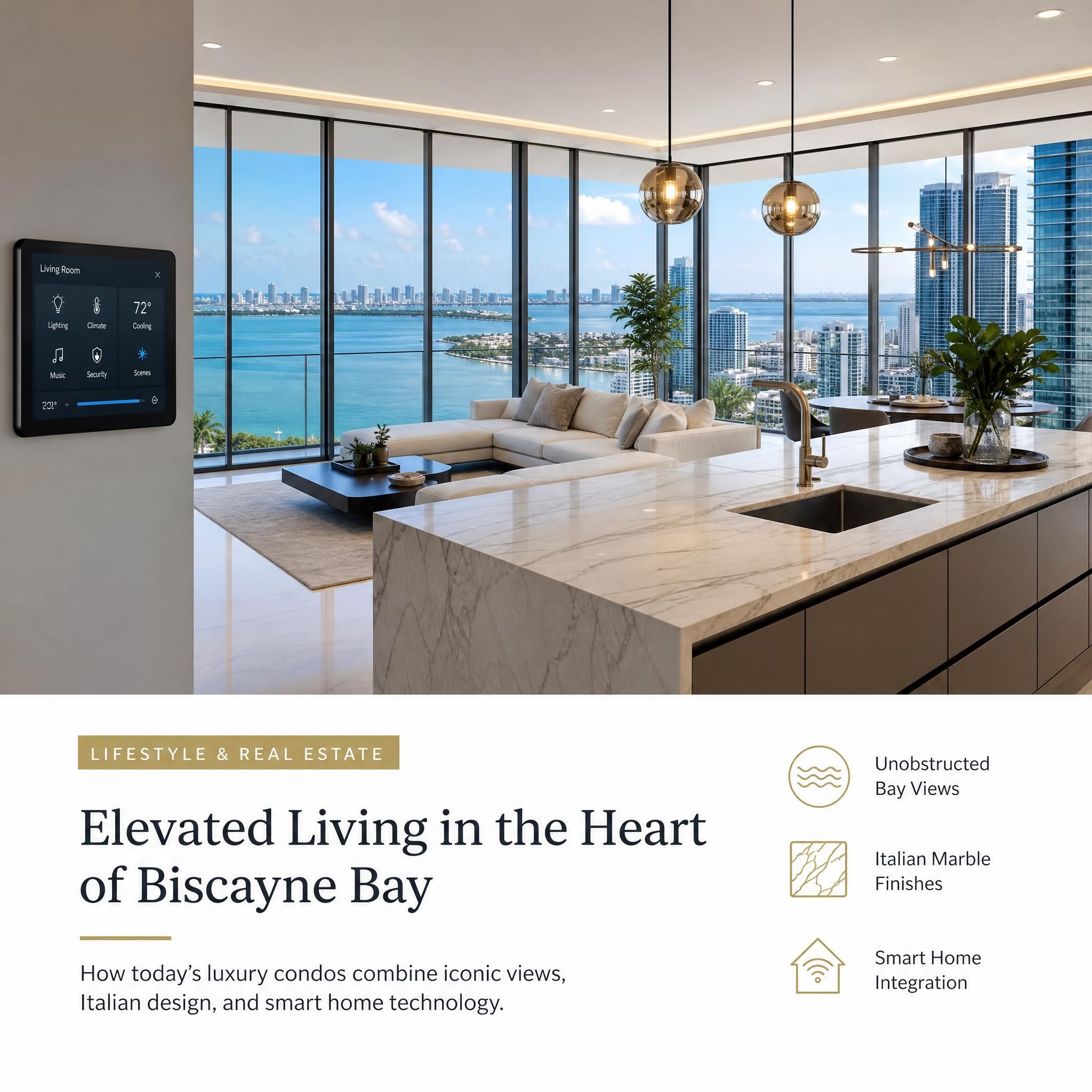
Your unit's long-term value is inextricably tied to the building's financial health and operational quality. Here's what to scrutinize:
HOA Fees and Reserve Funding
In Brickell, HOA fees range from $0.80 to $2.50 per square foot per month. On a 2,500 sq ft unit, that's $2,000–$6,250 per month — a cost that dramatically affects your true cost of ownership and rental yield calculations.
Post-SB 4D (Florida's stricter reserve requirements legislation), buildings with underfunded reserves face special assessments and financing restrictions. Always request the most recent reserve study and budget before signing.
Unit Selection Within the Building
Not all units in a luxury tower are equal. Consider:
- View corridor protection: Research neighboring entitlements. A clear bay view today can be blocked by a future tower. Ask the developer to show you the surrounding zoning envelope.
- Floor and stack position: Corner units and high floors command premiums at resale. Flow-through floor plans (windows on two sides) maximize natural light and cross-ventilation — a genuine differentiator in Miami's climate.
- Finish packages vs. upgrades: Clarify what's standard. Upgrades can add $100,000–$500,000 to your cost and don't always translate to equivalent resale value.
Building Certifications and Resilience
Miami's climate demands scrutiny of storm readiness. Ask specifically about impact-resistant glazing specifications, generator capacity, flood elevation, and insurance costs. Buildings designed to LEED or WELL standards increasingly command resale premiums and attract higher-quality tenants.
Strategy 5: negotiate smarter in a buyer-friendly window {#strategy-5-negotiate-smarter}
Here's what most buyers miss: the Brickell condo market in Q1 2026 represents the most buyer-friendly conditions since 2019, with high inventory in luxury condos ($1M+) creating leverage for buyers.
This doesn't mean prices are falling — it means terms are negotiable. In the current environment, sophisticated buyers are extracting value through:
- Developer-paid closing costs: In a 17-month supply environment, many developers will absorb 2–3% of closing costs rather than reduce the headline price (which affects their comparable sales).
- Upgrade packages at cost: Request that premium finishes — Sub-Zero appliances, Italian marble, smart home systems — be included at the developer's cost rather than retail markup.
- Flexible deposit milestones: Some developers will extend the timeline between deposit tranches, giving you more time to manage liquidity.
- Assignment rights: If your plans change, the ability to assign your contract (sell your position before closing) is enormously valuable. Assignment is entirely contract-dependent — some buildings do not allow it at all. Others permit a one-time assignment only after specific sales or construction milestones, subject to developer approval and usually an assignment fee. Negotiate this upfront.
- Guaranteed parking and storage: In luxury towers, premium parking spots and storage units are often sold separately. Locking these in at contract is a negotiating point, not an afterthought.
What you cannot negotiate: In the most in-demand projects — Mandarin Oriental Brickell, Four Seasons Coconut Grove, St. Regis Brickell — the developer holds all the cards. Here, your strategy shifts from negotiating price to securing allocation before the best units are gone.
Strategy 6: structure your purchase for tax and investment efficiency {#strategy-6-structure-your-purchase}
Miami's financial advantages are real — but only if you structure your purchase correctly from day one.
Florida's Tax Advantages
Florida has no state income tax, no state capital gains tax, and no estate tax. For buyers relocating from New York, California, or Illinois, the effective tax savings on a $5M+ income can exceed $500,000 annually — making even a premium Miami property price look conservative by comparison.
Entity Structure for Investors
If you're purchasing as an investment or rental property, consult a Florida real estate attorney about holding the property in an LLC. This provides liability protection and, in some cases, estate planning advantages.
Rental Income Potential
More than 15,000 luxury condo units are expected across 40+ developments in 2026, many with premium waterfront views or close access to water. This increases rental competition — meaning buildings with short-term rental flexibility (like LOFTY Brickell) and those with hotel-managed rental programs (branded residences) will outperform generic luxury towers for yield.
Pre-Construction Appreciation Mechanics
Buying in pre-construction at today's prices with a 3–5 year delivery horizon has historically generated 15–30% appreciation before you even close — but this is not guaranteed. Experts anticipate moderate growth of around 2–4% in many segments as mortgage rates potentially ease later in 2026. For ultra-luxury branded residences with true scarcity (sub-100 units), the appreciation case is stronger.
Financing Timing
Most buyers close their construction loans at final completion. Most buyers close their loans at final completion, not during construction, and lenders will review the project's eligibility, including whether it is warrantable under Fannie Mae standards. If you're financing, engage a luxury mortgage specialist 12–18 months before expected delivery to ensure the building qualifies.
Strategy 7: work with a specialist, not a generalist {#strategy-7-work-with-a-specialist}
The single highest-leverage decision you'll make in this process is who represents you. Miami's new construction luxury market rewards insiders — and punishes those who navigate it with a generalist agent.
A specialist luxury buyer's agent will provide:
- Off-market and pre-launch access: The best units in the most sought-after buildings are allocated before public launch to developer-preferred brokers. Without the right relationships, you're competing for leftovers.
- Unbiased building rankings: A data-driven agent will tell you which buildings to avoid — and why. In 2026, several high-profile branded towers have been flagged by independent analysts for overpricing relative to resale comps, poor developer track records, or HOA structures that will create financial stress for owners.
- Contract review coordination: Your agent should coordinate with a Florida real estate attorney to review the Purchase and Sale Agreement before you sign. No exceptions.
- Comparable sales analysis: Pre-construction prices should be benchmarked against existing resale comps in the same building class. If a developer is pricing 40%+ above resale comps with no clear scarcity argument, the appreciation thesis doesn't hold.
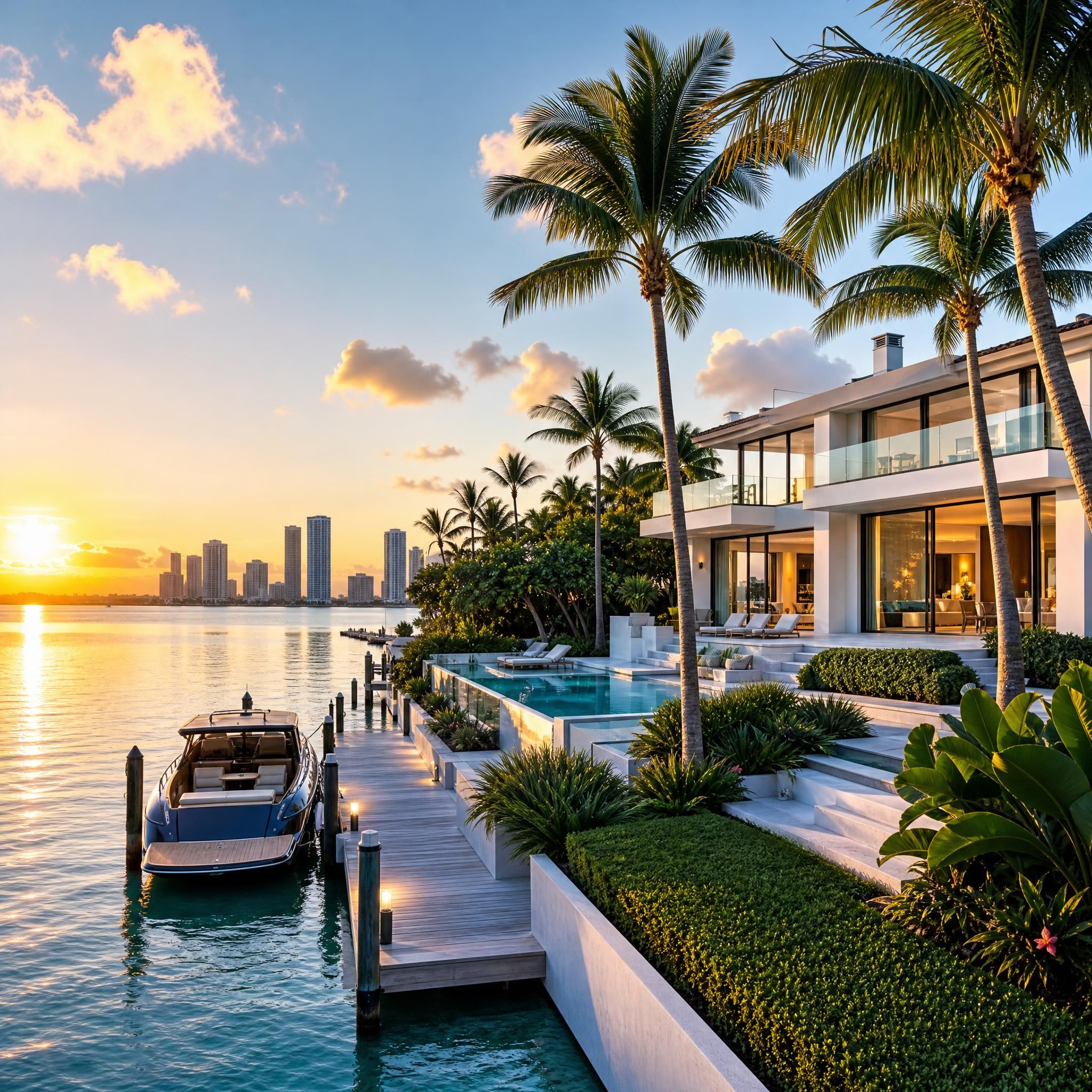
📊 52% of new-construction homes in key Florida cities purchased by foreign buyers – Miami International Buyer Share
[CITATION: Pre-construction reservation volume in Miami-Dade is running 14% above Q4 2025, which tightens negotiation leverage for late-arriving buyers | LuxuryDade / Compass Q1 2026 Data]
Questions fréquentes (FAQ)
What is the typical deposit required for a new construction luxury condo in miami?
Expect to commit 40–50% of the total purchase price in staged deposits over the construction period — typically 10% at contract signing, 10% at groundbreaking, 10% at mid-construction, and 10% at topping off. The remaining balance is due at closing. Under Florida law, your first 10% is held in protected escrow and cannot be used by the developer for operating expenses.
How long does pre-construction take in miami?
Most Miami luxury towers have a construction timeline of 3–5 years from groundbreaking to delivery. Factor in 6–12 months from contract signing to groundbreaking. Always ask for the developer's historical delivery record — the best developers in Miami (Related Group, Swire, Mast Capital) have consistent track records, while others have a pattern of multi-year delays.
Is it better to buy pre-construction or a completed new construction unit in miami?
Both have merit depending on your goals. Pre-construction offers the best unit selection, potential for price appreciation before closing, and customization opportunities. Completed new construction lets you see exactly what you're buying, move in immediately, and avoid construction-period carrying costs. In a market with 17 months of supply in Brickell, completed luxury units also offer negotiating leverage that pre-construction doesn't.
What are the biggest mistakes buyers make when purchasing luxury new construction in miami?
The most common mistakes include: (1) choosing a building based on brand name without vetting the developer's track record; (2) underestimating HOA fees and their impact on total cost of ownership; (3) failing to have a Florida real estate attorney review the Purchase and Sale Agreement; (4) ignoring view corridor risk from neighboring developments; and (5) buying in a neighborhood based on past trends rather than current supply/demand fundamentals.
Can international buyers purchase new construction luxury condos in miami?
Yes — and they do so in large numbers. Miami is one of the most international real estate markets in the world. International buyers should be aware of FIRPTA withholding requirements on eventual sale, the importance of working with a tax advisor familiar with both U.S. and home-country tax implications, and the need for a U.S. bank account and ITIN for the purchase process. Many luxury developers in Miami have dedicated international buyer teams and multilingual staff.
Chiffres clés
📊 $5B+ in combined pre-construction luxury inventory across 66 active Miami developments in 2026 (Source: Manhattan Miami Market Intelligence)
🏙️ 10,513 active million-dollar listings in Miami — surpassing New York City for the first time (Source: Realtor.com Luxury Outlook 2026)
💰 $1,650/sq ft — average pre-construction price per square foot across Brickell in Q1 2026, ranging from $500 to $3,000+ depending on tier (Source: Marcelo Steinmander Real Estate)
🌊 52% of new-construction homes in key Florida luxury markets purchased by international buyers (Source: New York Post, December 2025)
Conclusion: the window is open — but not forever
Miami's new construction luxury market in 2026 is a buyer's market in inventory terms and a developer's market in the buildings that truly matter. That paradox is your opportunity: you have more time to negotiate, more data to analyze, and more supply to compare than at any point since 2019 — but the best-positioned buildings are still selling out, and the gap between a great purchase and a costly mistake has never been wider.
The seven strategies in this guide — from neighborhood selection and developer vetting to deposit structures, negotiation tactics, and tax efficiency — give you a systematic edge over buyers who rely on marketing brochures and developer sales teams.
Your next step: Schedule a private consultation with a luxury new construction specialist who can provide unbiased, data-driven guidance on which of Miami's 66 active developments actually deserves your capital — and which ones to walk away from.
Ready to explore Miami's finest new construction luxury homes? Connect with a specialist to access curated listings, off-market opportunities, and an honest assessment of every major development in the pipeline.


