
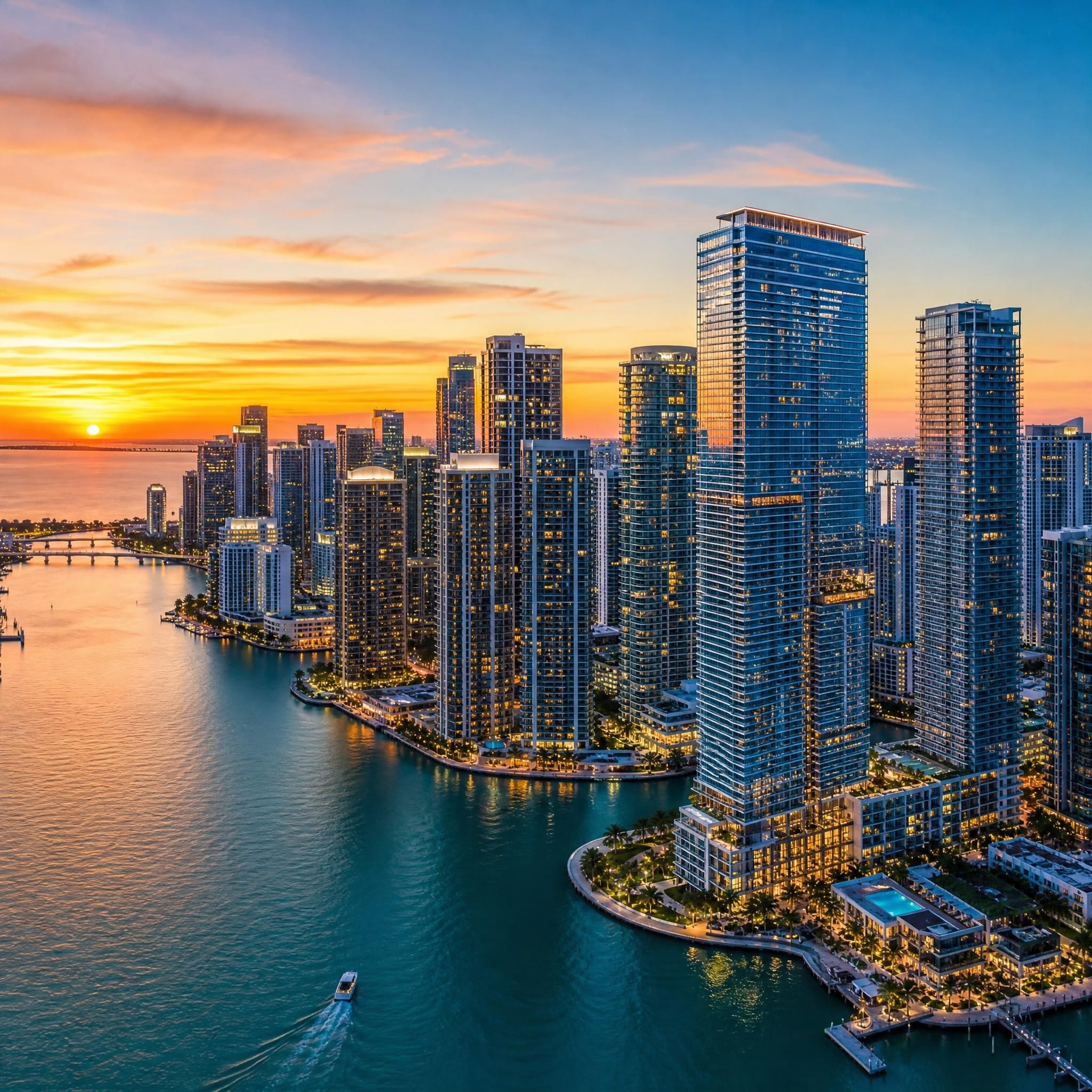
Miami has crossed a threshold that no other American city has ever reached. By the end of 2025, Miami officially overtook New York City as the major U.S. city with the most $1 million-plus homes — a milestone that signals far more than a statistical footnote. It signals that the window to buy new construction luxury homes in Miami before the next wave of appreciation is open right now, in 2026.
But here's what separates the buyers who win in this market from those who don't: strategy. Miami's luxury new construction landscape is sophisticated, competitive, and full of nuance. From navigating pre-construction deposit schedules to vetting developer track records, the path to your dream residence requires more than a large budget. It requires a playbook.
This guide gives you exactly that — seven proven, actionable strategies to buy smart, protect your investment, and secure the right luxury property in Miami's new construction market in 2026.
Table of contents
- Why Miami's New Construction Market Demands a New Approach
- Strategy 1: Choose Your Neighborhood Based on Growth Trajectory
- Strategy 2: Vet the Developer Before You Fall in Love with the Renderings
- Strategy 3: Decode the Pre-Construction Deposit Structure
- Strategy 4: Use Your 15-Day Rescission Window Like a Pro
- Strategy 5: Underwrite HOA Fees, Insurance, and Carrying Costs
- Strategy 6: Understand Your Financing Options Before You Tour
- Strategy 7: Hire a Buyer's Agent Who Specializes in New Construction
- Key Statistics
- FAQ
- Conclusion
Why miami's new construction market demands a new approach
Miami's real estate market is dynamic, competitive, and unlike any other in the country. The city's luxury new construction pipeline is unlike anything in the U.S. — from the branded residences of Brickell Key to the boutique waterfront towers of Edgewater and the iconic Four Seasons in Coconut Grove.
What's driving the demand? International buyers account for a significant 52% of all new-construction sales in South Florida, and this trend is driven largely by Latin American investors, who represent 86% of all foreign transactions in the region. Domestic buyers from New York, California, and Chicago are also flooding in, attracted by Florida's zero state income tax and Miami's world-class lifestyle.
The defining feature of the Miami housing market in 2026 is the strength of the luxury segment. But with strength comes complexity. The Aston Martin Residences — one of Miami's most high-profile luxury towers — is currently embroiled in litigation, with its condo association suing the developer over allegations that balconies are improperly sloped, and that cracks, corrosion and leaking are present throughout parts of the tower. The lesson is clear: in Miami's new construction luxury market, due diligence isn't optional. It's everything.
Strategy 1: choose your neighborhood based on growth trajectory
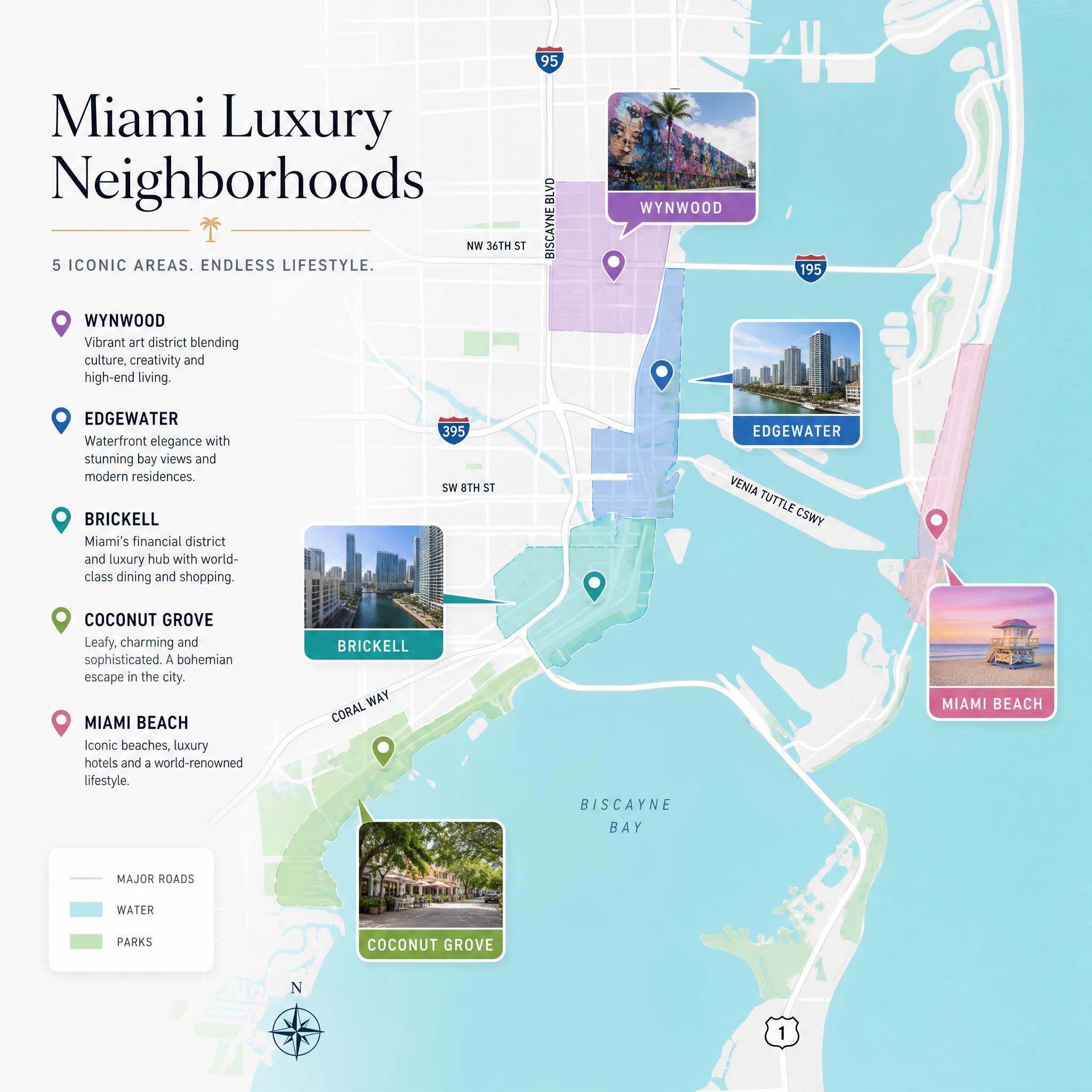
Not all Miami luxury neighborhoods are created equal — and in 2026, where you buy matters as much as what you buy. Each area offers a distinct risk/reward profile for new construction buyers.
Brickell: established prestige, premium pricing
Brickell remains one of Miami's most expensive condo neighborhoods, with median prices approaching $790,000. Full-service luxury towers, walkability, and proximity to the financial district continue to support demand. New developments here include the 74-story 619 Brickell and the St. Regis Residences. Brickell's major development boom happened years ago — iconic towers like Four Seasons, SLS Brickell, and Reach/Brickell City Centre are already established. While some new projects still break ground, the neighborhood is largely built out. This means less pre-construction opportunity but more pricing certainty.
Edgewater: the highest new construction upside
Edgewater is experiencing a construction boom that shows no signs of slowing. Multiple towers are under development. Most importantly, Edgewater offers superior bay views from lower floors. Because there's less development east of Biscayne Boulevard, many Edgewater condos enjoy unobstructed water views that would cost significantly more in Brickell. Villa Miami and other boutique luxury projects are transforming this corridor into Miami's most exciting emerging luxury district.
Coconut grove: boutique luxury with long-term stability
Coconut Grove is considered one of the most desirable luxury residential areas in Miami, particularly for buyers seeking privacy and scenic views. The Four Seasons Coconut Grove has emerged as one of the most talked-about new condo developments in the city, blending branded hospitality with waterfront living. Coral Gables and Coconut Grove remain the top choice for families seeking historic charm and long-term appreciation.
Miami beach: trophy assets, trophy prices
Miami Beach remains the pinnacle of oceanfront luxury. A Miami Beach estate recently sold for $24M, and a $110M compound was listed in 2026 — illustrating the extraordinary ceiling of this market. For new construction buyers, Miami Beach offers unmatched lifestyle but requires the deepest pockets and the most rigorous due diligence.
| Neighborhood | New Construction Pipeline | Price Range (Luxury) | Best For |
|---|---|---|---|
| Brickell | Moderate (mostly built out) | $790K–$5M+ | Urban professionals, corporate relocators |
| Edgewater | Very Active | $600K–$3M+ | Investors, upside seekers, waterfront lifestyle |
| Coconut Grove | Selective / Boutique | $1M–$10M+ | Families, privacy seekers, long-term holds |
| Miami Beach | Limited / Ultra-Luxury | $2M–$100M+ | Trophy asset buyers, international investors |
| Wynwood / Design District | Emerging | $800K–$3M+ | Cultural buyers, younger HNW individuals |
Strategy 2: vet the developer before you fall in love with the renderings
This is the most important strategy in this guide — and the one most buyers skip. The Aston Martin Residences situation is a masterclass in what happens when buyers prioritize brand cachet over developer due diligence.
Before falling in love with a building's renderings, evaluate: the developer's track record (have they delivered comparable projects?), the project's financing (is it fully capitalized, or does it depend on presales reaching 50%+?), the contract terms (what are the deposit structure, cancellation rights, and assignment restrictions?), and the location's appreciation potential (is this neighborhood genuinely growing, or has it already peaked?).
Your developer vetting checklist:
- ✅ Past project delivery record — Have they completed similar luxury towers on time and on budget?
- ✅ Litigation history — Search for any active or past lawsuits involving their buildings
- ✅ Financing status — Is the project fully capitalized, or still dependent on presale thresholds?
- ✅ Construction team — Who is the general contractor? What is their track record in South Florida?
- ✅ Condo association governance — Does the developer retain control of the HOA post-delivery, and for how long?
- ✅ Active lawsuits — Always ask whether the association is involved in any active lawsuits. Even newer buildings can have construction defect claims that affect insurability and resale value.
📊 Buildings with litigation history see 15–25% lower resale liquidity – Developer Vetting Impact
Strategy 3: decode the pre-construction deposit structure
Pre-construction is where Miami's new construction luxury market offers its greatest opportunity — and its greatest complexity. Understanding the deposit architecture is non-negotiable.
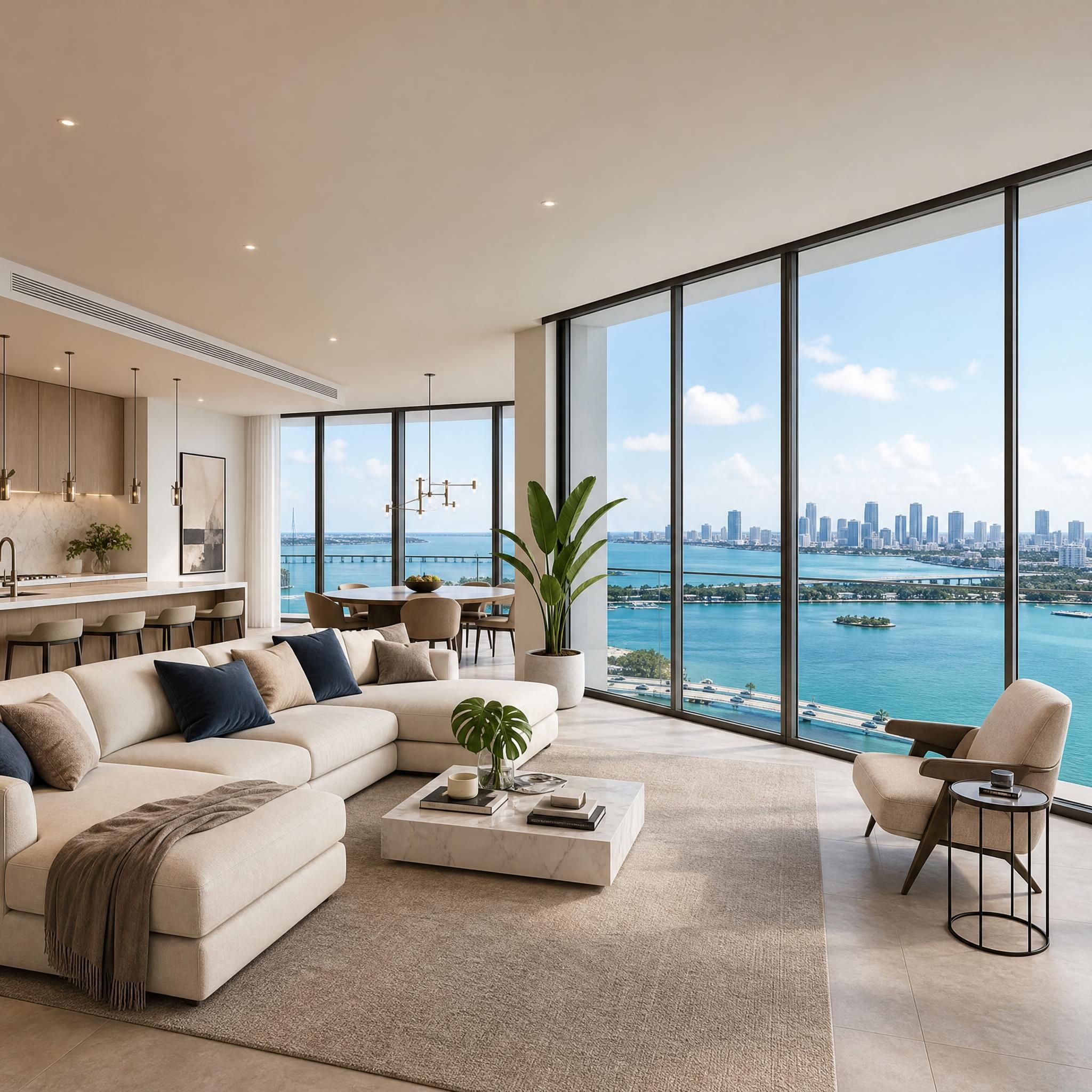
In pre-construction, especially in the ultra-luxury tier, deposits are staged across the life of the project. For flagship towers like Waldorf Astoria Residences Downtown Miami, St. Regis Residences Brickell, and The Perigon Miami Beach, the typical deposit calendar looks like this:
| Deposit Stage | Typical Amount | Timing |
|---|---|---|
| Reservation Deposit | $50K–$100K (refundable) | At reservation |
| Contract Signing | 10–20% of purchase price | At contract |
| Construction Milestone 1 | 10% | Foundation/groundbreaking |
| Construction Milestone 2 | 10% | Mid-construction |
| Closing | Remaining balance | Certificate of Occupancy |
What smart buyers negotiate:
- Assignment rights: Can you sell your contract before closing? Some developers restrict this entirely. Buyers should review assignment rights in a separate due-diligence conversation.
- Finish package upgrades: Pre-construction finish packages deserve a separate negotiation strategy. Early buyers often have the most leverage to customize finishes and upgrade packages at minimal cost.
- Deposit refund conditions: Know exactly under what circumstances your deposit is — and isn't — refundable.
"Pre-construction allows buyers to secure prime inventory early—often at better pricing and with structured deposits"
— B&S Luxury Miami
Strategy 4: use your 15-day rescission window like a pro
Florida law gives you a powerful consumer protection tool — and most buyers waste it by not knowing how to use it.
Florida law gives condo buyers a review period, sometimes called the rescission period, of at least three business days after receiving the condo documents. For new construction, that window is 15 days. This is your opportunity to conduct deep due diligence on every aspect of the development before you're legally committed.
What to review during your 15-day window:
For new construction, the developer provides a prospectus. This document — often hundreds of pages — contains everything you need to evaluate the investment. Focus on:
- Reserve funding projections — Is the proposed reserve fund adequate for a luxury high-rise? Underfunded reserves are a leading cause of special assessments.
- Estimated HOA fees — Compare against comparable luxury towers in the same neighborhood. Artificially low estimates often spike post-delivery.
- Management contracts — Does the developer control building management post-delivery, and at what cost to owners?
- Estimated closing costs — New construction and pre-construction purchases may include additional developer-related fees that should be reviewed before entering into a contract. These can include capital contribution fees, transfer fees, and move-in deposits.
- Structural and engineering reports — For any building with a Milestone Inspection requirement, review the findings carefully.
- Litigation disclosures — Any active or threatened legal action must be disclosed in the prospectus.
Pro tip: Hire a real estate attorney who specializes in Florida condo law to review the prospectus during your rescission window. The cost — typically $500 to $2,000 — is negligible compared to the protection it provides on a multi-million dollar purchase.
Strategy 5: underwrite HOA fees, insurance, and carrying costs
One of the most common mistakes luxury buyers make is evaluating a new construction condo based solely on the purchase price. A new residence may be architecturally compelling, beautifully serviced, and positioned in a desirable neighborhood, but underwriting it solely through appreciation potential is incomplete. Insurance, HOA fees, building policy, financing flexibility, and the rhythms of daily use all shape the future value of the decision.

Build your true cost of ownership model:
- HOA fees: Luxury towers in Brickell and Miami Beach commonly range from $1,500 to $5,000+ per month. These cover amenities, staff, insurance, reserves, and building operations.
- Property taxes: In Miami-Dade, taxable values are certified annually, and taxing authorities set millage rates based on those values. If you are buying a luxury condo as a non-homestead property, your future tax burden may change over time, so it should be built into your underwriting assumptions.
- Insurance: Florida's property insurance market has hardened significantly. Luxury high-rises carry master policies, but individual unit coverage (HO-6) and flood insurance add meaningful annual costs.
- Special assessments: Even brand-new buildings can face unexpected special assessments. Ensure the developer's reserve funding projections are realistic and independently reviewed.
| Cost Category | Typical Annual Range (Luxury Miami Condo) |
|---|---|
| HOA Fees | $18,000 – $60,000+ |
| Property Taxes | $25,000 – $100,000+ |
| Unit Insurance (HO-6) | $3,000 – $10,000 |
| Flood Insurance | $2,000 – $8,000 |
| Total Annual Carrying Cost | $48,000 – $178,000+ |
📊 Average $2,800/month in Brickell luxury towers – Miami Luxury Condo HOA Fees
Strategy 6: understand your financing options before you tour
Many luxury new construction buyers — particularly international purchasers — assume they must pay cash. In 2026, that's no longer the only option, and understanding your financing landscape gives you significant strategic flexibility.
Common loan options include: conforming loans (available up to current conforming loan limits), jumbo loans (commonly used for luxury condominium purchases), super jumbo financing (available for high-end luxury residences), foreign national programs (designed for international buyers), DSCR loans (popular among investors purchasing rental properties), and pre-construction financing (typically requires staged deposits prior to completion).
Key financing considerations for new construction:
- Warrantability: Not all luxury buildings are eligible for conventional financing. Buildings with a high percentage of investor-owned units, pending litigation, or inadequate reserves may be classified as "non-warrantable," limiting your financing options.
- Pre-construction financing: Most lenders won't commit to a loan until 6–12 months before closing. Budget for this gap and ensure your staged deposits are funded from liquid assets.
- Foreign national programs: International buyers accounted for about 15% of the total residential dollar volume in South Florida in 2025, far exceeding the national average. Specialized foreign national loan programs allow non-U.S. residents to finance luxury purchases, typically requiring 30–40% down.
- Rate lock strategy: For pre-construction purchases with 2–3 year delivery timelines, work with your lender on rate lock options and bridge financing strategies.
Action step: Get pre-qualified with at least three lenders — including one that specializes in jumbo and luxury condo financing — before you begin touring developments. Understanding your financing options before beginning your search can help prevent delays and failed transactions later in the process.
Strategy 7: hire a buyer's agent who specializes in new construction
This is the strategy that ties all the others together — and it costs you nothing as a buyer.
Not all real estate agents possess the same level of condominium expertise. Miami's condo market requires detailed knowledge of individual buildings, financing eligibility, reserve funding status, rental restrictions, and association operations.
An experienced buyer's agent can: identify financing challenges early, review association documents for red flags, evaluate reserve funding levels, assess special assessment risks, provide neighborhood-specific guidance, and negotiate effectively in competitive markets.
What to look for in a Miami new construction specialist:
- Pre-construction experience: Have they personally closed pre-construction transactions in the specific buildings or neighborhoods you're targeting?
- Developer relationships: Access to priority inventory, floor plan selection, and early pricing often comes through agents with established developer relationships.
- Due diligence process: Do they have a systematic approach to reviewing condo documents, reserve studies, and developer backgrounds?
- Legal network: Can they refer you to a Florida condo attorney for contract review?
- Market data access: Do they have real-time data on comparable sales, absorption rates, and price-per-square-foot trends by building?
In Miami's new construction luxury market, building-specific knowledge often makes the difference between a smooth transaction and an expensive surprise after closing.
Chiffres clés
📊 10,591 luxury $1M+ properties listed in Miami — surpassing New York City's 10,176 to make Miami the #1 luxury market in the U.S. (Realtor.com, January 2026)
🌍 52% of all new-construction sales in South Florida are purchased by international buyers, from 73 countries (MIAMI Association of Realtors, 2026)
📊 10,591 active $1M+ listings — more than any U.S. city – Miami Luxury Market Milestone
📊 52% of South Florida new-construction sales – International New Construction Buyers
💡 $790,000 — median luxury condo price in Brickell, Miami's most established luxury neighborhood (Miami Condo Market Report 2026)
🏗️ 15 days — Florida's statutory rescission window for new construction condo buyers to review documents and exit with full deposit refund (Florida Statute)
Questions fréquentes (FAQ)
What is the difference between pre-construction and new construction in miami?
Pre-construction means purchasing a unit before or during the building phase, directly from the developer — often before the tower breaks ground. New construction refers to recently completed buildings that are ready for occupancy. Pre-construction typically offers lower entry pricing, unit selection advantages, and staged deposit schedules, but requires a 2–4 year wait for delivery. New construction allows you to move in immediately but at a higher price point reflecting completed value. Both offer modern systems, warranties, and customization advantages over resale.
How much do i need for a deposit on a luxury pre-construction condo in miami?
Deposit structures vary by developer and project tier. In the ultra-luxury segment (think Waldorf Astoria Residences or St. Regis Brickell), expect to commit 20–30% of the purchase price in staged deposits across the construction timeline. The initial contract deposit is typically 10–20%, with additional milestone payments as construction progresses. All deposits are held in escrow under Florida law and are protected during the statutory rescission period.
Can international buyers purchase new construction luxury condos in miami?
Absolutely. Miami is the #1 U.S. market for international buyers, with foreign purchasers accounting for 52% of all new-construction sales. International buyers can purchase with cash or through specialized foreign national financing programs that typically require 30–40% down. Working with a buyer's agent experienced in international transactions and a Florida real estate attorney familiar with FIRPTA (Foreign Investment in Real Property Tax Act) requirements is strongly recommended.
What are the biggest risks when buying a new construction luxury condo in miami?
The primary risks include: developer financial instability or project delays; construction defects not discovered until post-delivery; HOA fees and special assessments that exceed initial projections; financing challenges if the building is classified as non-warrantable; and market timing risk if you're buying at a price premium that doesn't materialize in appreciation. Mitigating these risks requires thorough developer vetting, careful review of condo documents during the rescission period, conservative financial modeling, and working with experienced local professionals.
Is buying a new construction luxury condo in miami a good investment in 2026?
Miami's luxury new construction market in 2026 demonstrates strong fundamentals: record luxury inventory demand, sustained international buyer participation, zero state income tax attracting domestic relocators, and a pipeline of world-class branded residences. However, investment performance varies significantly by neighborhood, developer, building quality, and unit selection. Pre-construction purchases in well-capitalized projects by proven developers in growth neighborhoods (Edgewater, Coconut Grove waterfront) have historically outperformed. Always model your investment based on conservative assumptions and consult with a luxury real estate specialist before committing.
Conclusion: your miami luxury playbook starts here
Miami's new construction luxury market in 2026 is extraordinary — and it rewards buyers who come prepared. The city has earned its place as America's luxury real estate capital not by accident, but through a confluence of tax advantages, global connectivity, world-class lifestyle, and an architectural pipeline that is genuinely redefining what luxury living looks like.
But the buyers who thrive here are the ones who treat this purchase as both a lifestyle decision and a sophisticated financial transaction. They vet developers relentlessly. They read the prospectus. They model their true carrying costs. They hire the right specialists. And they act decisively when the right opportunity aligns with their strategy.
Whether you're eyeing a waterfront residence in Edgewater, a branded penthouse in Brickell, or a boutique estate in Coconut Grove — the strategies in this guide give you the foundation to buy with confidence.
Ready to take the next step? Schedule a private consultation with a Miami luxury new construction specialist, request access to our curated portfolio of pre-construction opportunities, and let us help you navigate this market with the precision it demands.
Your Miami luxury residence awaits — and the smartest buyers are already moving.


