
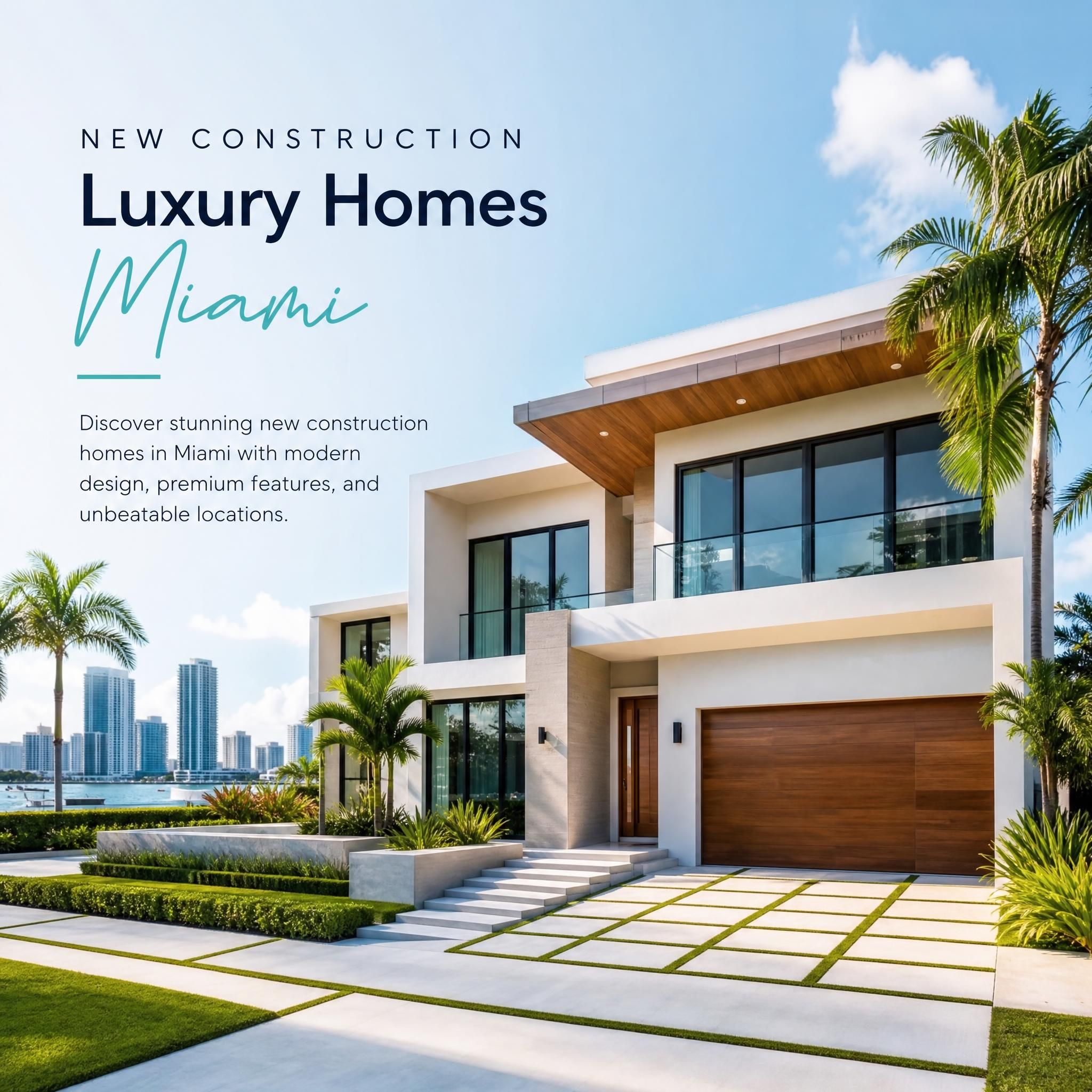
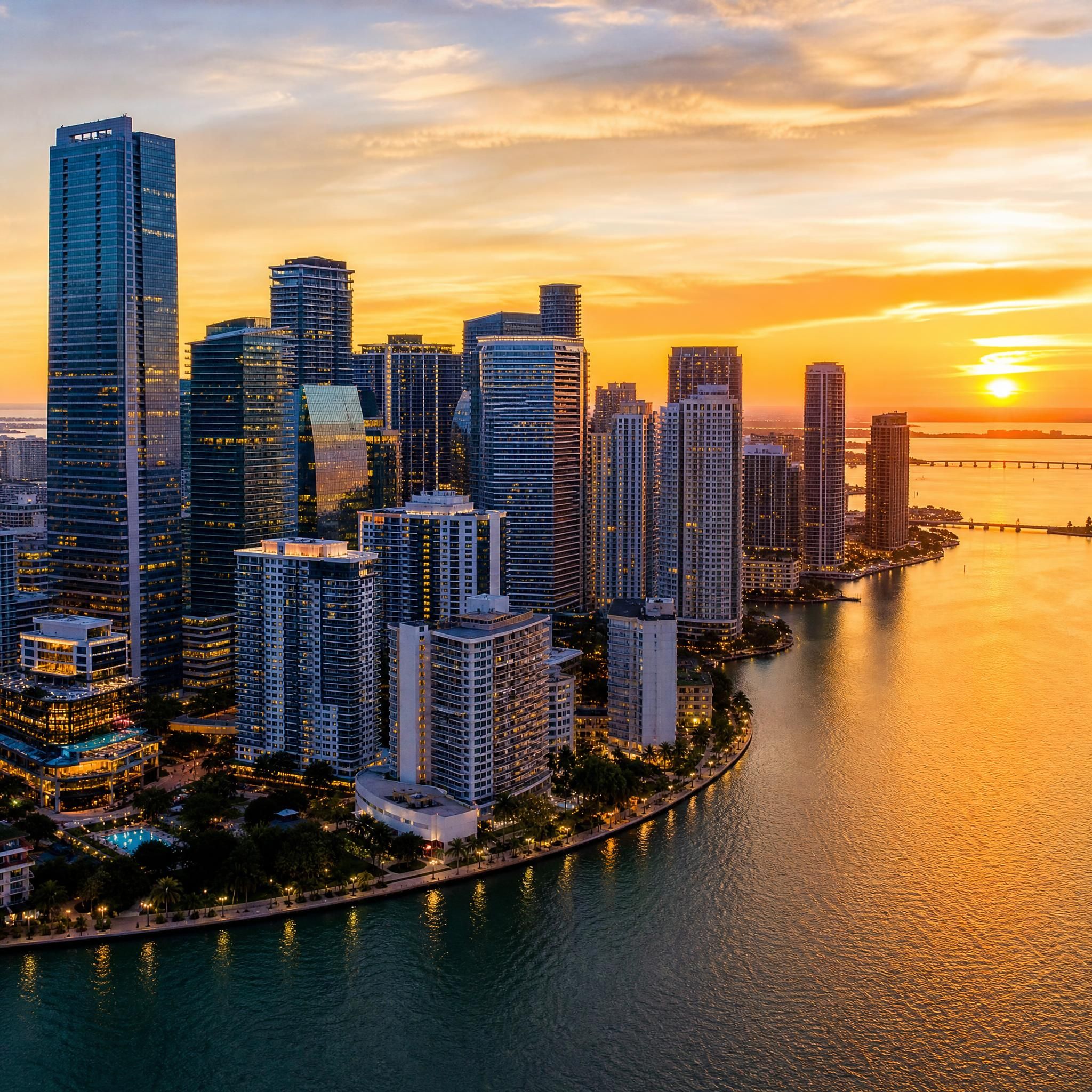
What does it actually look like when a buyer bets on Miami's new construction luxury market — and wins? Not the brochure version. The real version: the Argentine family who locked in a Brickell pre-construction contract during a currency crisis and watched their dollar-denominated asset appreciate 24% before the building topped out. The Silicon Valley billionaire who assembled a $188 million Coconut Grove compound in three quiet transactions. The Colombian investor who bought two units in the same Edgewater tower and now generates rental yields that outpace his entire Latin American portfolio.
Miami's luxury new construction market in 2026 is not short on headlines. But behind every record-breaking transaction is a human story — a calculated decision, a leap of faith, or a generational wealth move made at exactly the right moment. This article goes beyond the listings to explore the real-world case studies, buyer profiles, and development stories that are defining new construction luxury homes Miami buyers are talking about right now.
Table of contents
- The Billionaire Blueprint: Larry Page's Coconut Grove Masterclass
- The Latin American Investor Playbook: Brickell as a Dollar Safe Haven
- The Pre-Construction Appreciation Story: How Early Buyers Win Big
- Edgewater's Emergence: The Case of a Neighborhood Transformed
- Coconut Grove's Boutique Boom: When 50% Sold Means Something
- The Condo Queen Effect: What $1B+ in Annual Sales Reveals
- Key Statistics
- FAQ
The billionaire blueprint: larry page's coconut grove masterclass
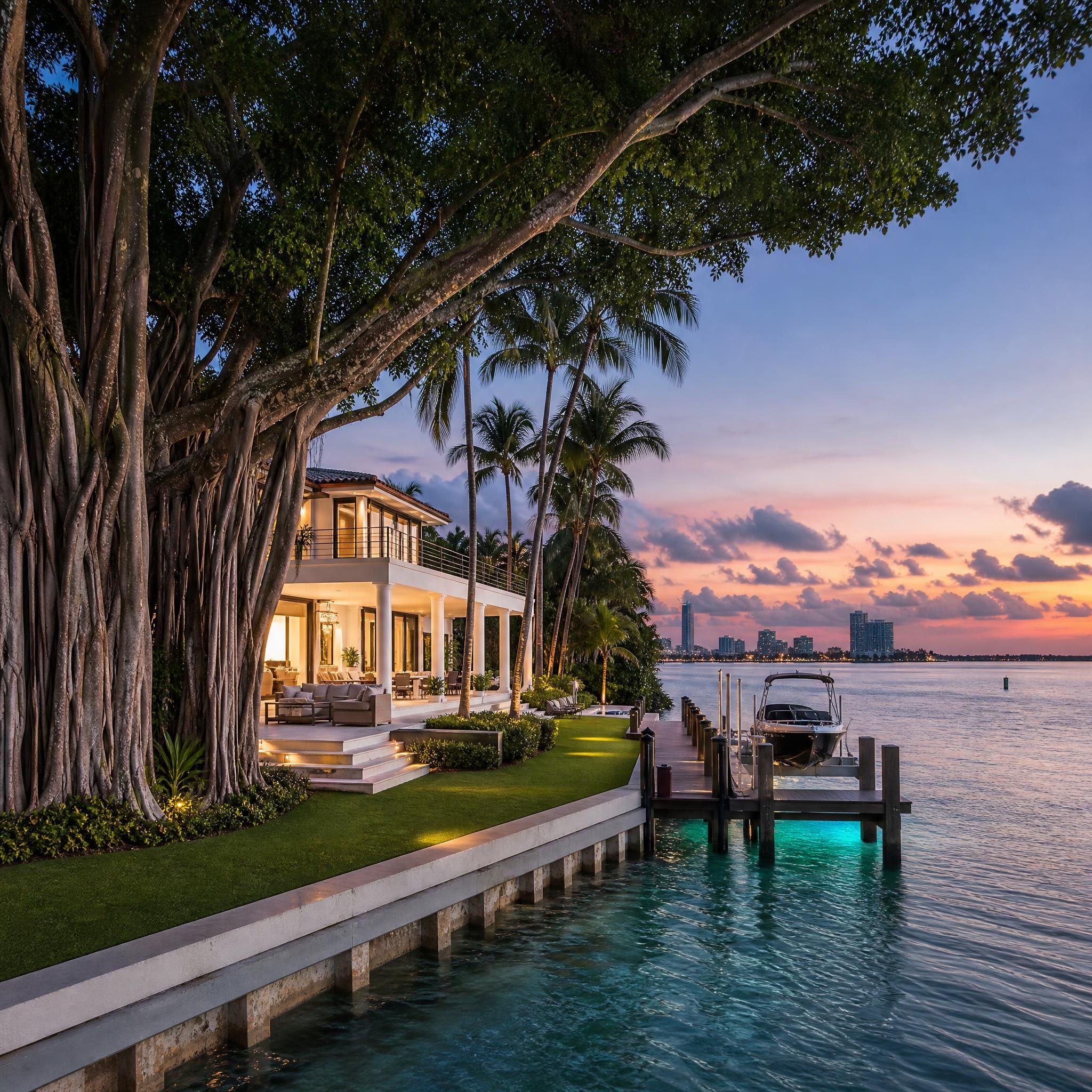
When one of the world's most powerful technologists makes a real estate move, the market pays attention. In late 2025 and early 2026, Google co-founder Larry Page quietly assembled one of Miami's most remarkable private waterfront compounds — not in a flashy headline grab, but through a series of disciplined, off-market acquisitions in Coconut Grove.
Page's purchases included the centerpiece "Banyan Ridge," a 4.5-acre Biscayne Bay estate at 3585 Anchorage Way, acquired for $101.5 million — one of the most expensive residential sales in Coconut Grove history, nearly matching Ken Griffin's then-record $107 million Coconut Grove purchase in 2022. In January 2026, Page purchased a nearby waterfront mansion for another $71.9 million in an off-market deal, followed by a third, smaller parcel acquired for nearly $15 million later that same month, forming a sprawling bayfront enclave with multiple homes, tropical gardens, and private marina access.
The total? Over $188 million invested in a single neighborhood. But the more instructive story isn't the price tag — it's the strategy.
Page's purchases reflect a broader shift among ultra-high-net-worth individuals relocating from California to Florida, driven by favorable tax policies, a pro-business environment, and an unmatched waterfront lifestyle that continues to draw billionaires and executives to South Florida.
For luxury buyers watching this market, the lesson is clear: Coconut Grove's value proposition is structural, not speculative. In March 2026, the median listing price in Coconut Grove reached $2,399,250 — more than double the September 2019 median price of $1.0 million. That is a decade-defining appreciation story, validated by one of the world's most data-driven investors.
The latin american investor playbook: brickell as a dollar safe haven
Walk through any new sales center in Brickell on a Saturday afternoon and you will hear Spanish before you hear English. This is not coincidence — it is strategy.
Argentine investment patterns show a strong preference for luxury condominiums in prime locations such as Brickell, Miami Beach, and Coral Gables. These buyers typically favor new construction projects that offer modern amenities, professional property management, and the potential for rental income — and the ability to generate U.S. dollar-denominated rental income has become particularly attractive to Argentine investors dealing with currency devaluation concerns in their home market.
The numbers behind this trend are staggering. International buyers accounted for 49% of new construction and pre-construction sales in South Florida over the 18 months ending July 2025. Latin American buyers represent approximately 86% of that international pool, with growing activity from Middle Eastern and European buyers at the ultra-luxury tier.
What does this look like in practice? Consider the Colombian buyer profile documented across multiple Miami brokerage case studies: a Bogotá-based entrepreneur purchases two units in a Brickell new construction tower at pre-construction pricing. By delivery, the building is 90% occupied, and her units are generating rental yields above 6% annually in well-located Brickell properties — a figure that dramatically outperforms comparable real estate in her home market.
Brickell's investment case is defined by three forces no other Miami submarket delivers simultaneously: Miami's most walkable urban lifestyle, a rental demand engine fueled by corporate relocation and international buyers, and a city government that has aggressively courted the financial services firms that drive high-income tenant demand.
The RSS-reported story of Latin Americans purchasing new Brickell condos specifically to convert them into rentals is not a niche phenomenon — it is a dominant market force reshaping how new developments are designed, financed, and marketed. Developers now routinely build in rental-friendly policies and third-party management infrastructure because the buyer demand requires it.
📊 86% of all international pre-construction buyers – Latin American Buyers in South Florida New Construction
The pre-construction appreciation story: how early buyers win big
The most compelling case studies in Miami's luxury condos Miami new construction market involve buyers who understood one fundamental principle: time in the deal beats timing the market.
According to developer data, Brickell branded projects that delivered in 2023 and 2024 showed 18 to 28 percent appreciation from initial contract to first resale. For a buyer who committed $1.5 million at pre-construction pricing, that translates to $270,000 to $420,000 in paper gains — before a single mortgage payment was made.
The mechanics of this advantage are specific to new construction. Most Miami pre-construction projects require 30 to 50 percent of the purchase price in deposits, paid over the construction timeline, with the remaining balance due at closing. During the construction period, the buyer pays zero mortgage interest, zero HOA fees, zero property taxes, and zero insurance. The capital works while the building rises.
The Waldorf Astoria Residences Miami offers a current illustration of this dynamic. Pricing at the Waldorf Astoria ranges from approximately $1.2 million for entry-level residences to $8 million or more for upper-floor units, targeting Q1 2027 delivery. Early buyers who locked in contracts when the project launched at lower price points are now sitting on significant unrealized appreciation as the building nears completion and comparable unit pricing has climbed.
Miami ranks second only to Dubai globally in the pipeline of branded residences according to the Savills 2025/2026 Branded Residences Report — a distinction that makes Miami's pre-construction market a global institutional investment target, not merely a domestic luxury play.
📊 18–28% from contract to first resale in branded Brickell projects – Pre-Construction Appreciation
Edgewater's emergence: the case of a neighborhood transformed
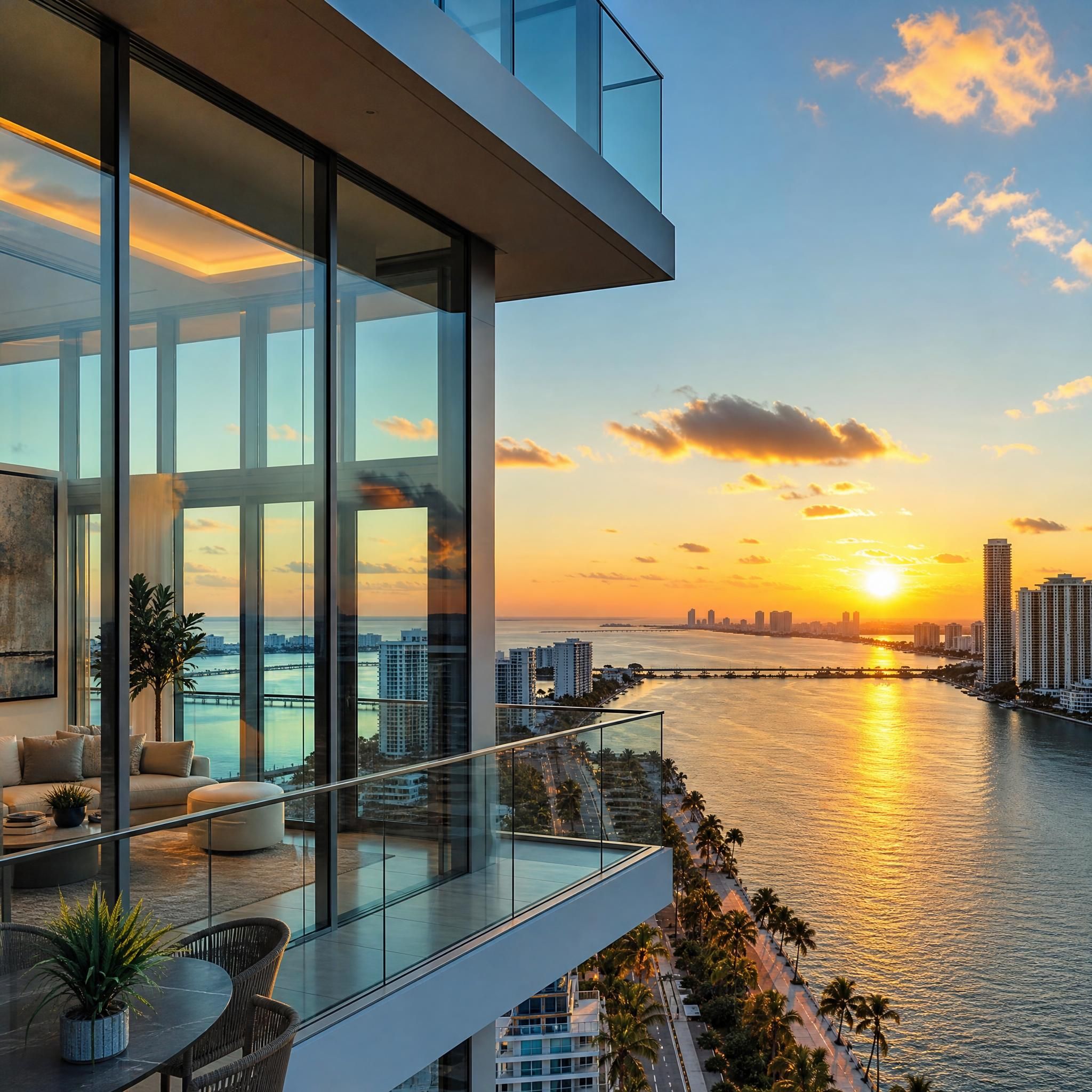
Five years ago, Edgewater was an afterthought for luxury buyers. Today, it is arguably Miami's most compelling new construction story — a neighborhood that went from overlooked to oversubscribed in a single development cycle.
The case study here is not a single buyer but an entire neighborhood's transformation. Positioned between Brickell's financial energy and Wynwood's cultural vitality, Edgewater has become the address for buyers who want Miami waterfront properties without the price premium of Miami Beach or the urban density of Brickell's core.
The most dramatic recent proof point is Lilli, a 53-story tower just revealed by OKO Group. Designed by Adrian Smith + Gordon Gill Architecture — the firm behind Dubai's Jeddah Tower — Lilli will yield 117 condominium residences overlooking Biscayne Bay at 717 NE 27th Street, rising 636 feet on one of the final major undeveloped bayfront parcels in Edgewater. Residences range from one-bedroom homes to penthouses nearing 7,000 square feet, with prices starting at $1.65 million.
Amenities are organized around four "living pillars" — movement, recovery, nourishment, and connection — and include a waterfront garden, infrared saunas, cold plunge pools, a treatment room, a movement studio, and a rooftop saltwater pool, plus a dedicated lifestyle and wellness director.
For buyers who purchased in Edgewater's first wave of luxury towers — Missoni Baia, Elysee, or EDITION Edgewater — the appreciation story has been extraordinary. Edgewater leads Miami's emerging luxury neighborhoods with bayfront condo momentum, and buyers seeking design-forward, hospitality-leaning tower experiences are increasingly using projects like EDITION Edgewater as a signal of where the market is heading.
The JLL-reported construction financing story reinforces this trajectory. JLL secured over $565 million in construction financing for an ultra-luxury condominium tower in Miami, reflecting institutional confidence in the market's depth and durability.
📊 $1,100–$1,600/SF for new waterfront product – Edgewater Luxury Price Per SF
Coconut grove's boutique boom: when 50% sold means something
Not every Miami luxury success story involves a 60-story tower or a nine-figure price tag. Some of the most instructive case studies come from boutique developments where scarcity and neighborhood authenticity drive demand that no marketing budget can manufacture.
OPUS Coconut Grove — a 14-residence boutique development by META Development — reached 50% sold in pre-construction. The project's developer noted that "Coconut Grove has always attracted buyers who value character, authenticity, and a more residential way of living," with OPUS offering "the scale and comfort of a single-family home within a boutique building of 14 residences" — a more intentional form of luxury that prioritizes space, privacy, and ease of living.
This is the Coconut Grove buyer profile in sharp focus: not the investor chasing yield, but the established professional or family seeking permanence. The Grove's new construction pipeline — which includes Mr. C Tigertail, Four Seasons Private Residences, and The Well — is attracting buyers who have already lived in Brickell or Miami Beach and are now seeking something quieter, more rooted, and architecturally distinctive.
Terra's collaboration with Bjarke Ingels Group on Grove at Grand Bay produced a twisting tower design that maximizes water views and has become one of Miami's most architecturally significant residential developments — a building that now commands resale premiums over comparable towers precisely because its design is irreplaceable.
The broader Coconut Grove market data validates these individual buyer decisions. In March 2026, the median listing price in Coconut Grove was $2,399,250, more than double the September 2019 median price of $1.0 million — a 140% appreciation over seven years that outperforms nearly every comparable luxury submarket in the United States.
The condo queen effect: what $1b+ in annual sales reveals
Perhaps the most telling case study in Miami's Miami luxury real estate 2026 landscape is not a building or a buyer — it is a broker. The HousingWire-reported story of a Miami broker closing over $1 billion in annual condo sales is not an anomaly. It is a symptom of a market operating at a scale that few cities outside New York and Los Angeles have ever seen.
What does a $1 billion annual sales volume tell us? It tells us that the depth of demand is real — not a handful of trophy transactions, but sustained, high-velocity deal flow across multiple price points and buyer profiles. It tells us that the infrastructure supporting luxury buyers (legal, financial, advisory) has matured to institutional quality. And it tells us that Miami has crossed the threshold from "emerging luxury market" to established global destination.
From January through September 2025, there were 609 condo sales above $3 million across Miami-Dade, Broward, and Palm Beach Counties — nearly double the 330 sales recorded during the same period in 2024. The ultra-luxury segment saw similar strength, with condo sales above $10 million nearly doubling from 36 in 2024 to 71 in 2025, signaling sustained demand at the very top of the market.
The Surf Club transaction reported by The Real Deal — a finance executive selling a Surf Club condo for $27 million — is a single data point in this broader pattern. The Miami Beach mansion purchased by the firm led by MasTec CEO Jorge Mas for $19 million is another. These are not outliers. They are the new normal.
What the case studies tell us: patterns every buyer should know
Across these real-world stories, several patterns emerge that are directly actionable for buyers considering Brickell luxury condos or any new construction in Miami:
| Buyer Profile | Strategy | Neighborhood | Outcome |
|---|---|---|---|
| Tech billionaire (Larry Page) | Off-market compound assembly | Coconut Grove | $188M+ in assets; neighborhood benchmark reset |
| Latin American investor | Pre-construction, dollar-denominated | Brickell | 6%+ rental yield; currency hedge achieved |
| Early branded tower buyer | Pre-construction contract | Brickell/Downtown | 18–28% appreciation by delivery |
| Domestic relocator from CA | Boutique new construction | Coconut Grove | 140% neighborhood appreciation since 2019 |
| International investor | Waterfront new development | Edgewater | Positioned in last major bayfront parcels |
The common thread is not wealth — it is conviction backed by research. Every successful buyer in these case studies understood their use case (primary residence, investment, hedge), chose their neighborhood based on structural drivers rather than hype, and worked with advisors who had genuine insider access to pre-construction opportunities.
Chiffres clés
📊 609 luxury condo sales above $3M in Miami-Dade, Broward & Palm Beach in just nine months of 2025 — nearly double the prior year (Source: South Florida Ultra-Luxury Market Panel, 2025)
💡 18–28% appreciation from initial pre-construction contract to first resale in branded Brickell projects delivering 2023–2024 (Source: Q1 2026 Miami Pre-Construction Market Report)
🏙️ #2 globally — Miami's ranking for branded residence pipeline, behind only Dubai (Source: Savills 2025/2026 Branded Residences Report)
🌎 49% of all South Florida new construction sales over 18 months were to international buyers, with Latin Americans representing 86% of that pool (Source: Miami Beach Real Estate Blog, Q2 2026)
📊 Doubled from 36 to 71 sales in 2024 vs. 2025 – Miami Luxury Condo Sales $10M+
Questions fréquentes (FAQ)
How much have pre-construction luxury condos in miami appreciated in recent years?
Branded pre-construction projects in Brickell that delivered in 2023 and 2024 showed appreciation of 18 to 28 percent from the initial contract price to the first resale at closing. For buyers who committed at pre-construction pricing, this translates to significant unrealized gains — often hundreds of thousands of dollars — before the building is even complete. The key driver is the combination of deposit leverage (buyers pay only 30–50% during construction), no carrying costs during the build period, and sustained demand from both domestic and international buyers at delivery.
Why are international buyers — especially latin americans — so active in miami's new construction market?
Miami offers international buyers something few global cities can match: U.S. dollar-denominated real estate with strong rental yields, no state income tax, a familiar cultural environment, and legal title security. For buyers from countries experiencing currency volatility or economic uncertainty, a Miami new construction condo is simultaneously a lifestyle asset, a rental income generator, and a currency hedge. Latin American buyers represent approximately 86% of international new construction buyers in South Florida, drawn by rental yields of 5–7% in Brickell and 4–6% in Miami Beach.
What makes edgewater miami a compelling new construction opportunity in 2026?
Edgewater sits between Brickell and Wynwood, offering Biscayne Bay waterfront access at price points that remain more accessible than Miami Beach. The neighborhood is in the middle of a transformation from low-rise residential to a vertical luxury corridor, with projects like Lilli (53 stories, designed by the architects of the Burj Khalifa) occupying some of the last undeveloped bayfront parcels. Buyers who entered in the first wave of luxury towers have seen significant appreciation, and the pipeline of new development continues to elevate the neighborhood's profile and pricing benchmarks.
Is coconut grove a good choice for buyers who want luxury new construction without the high-rise density?
Coconut Grove is the answer for buyers who have "done" Brickell or Miami Beach and are now seeking something more permanent and intimate. The neighborhood's boutique new construction pipeline — including projects like OPUS (14 residences), Mr. C Tigertail, and Four Seasons Private Residences — offers single-family-scale privacy within a managed luxury building. The Grove's median listing price has more than doubled since 2019, and Larry Page's $188M+ compound assembly has set new pricing benchmarks that validate long-term appreciation for all buyers in the neighborhood.
What deposit structure should i expect for miami luxury pre-construction condos?
Most Miami luxury pre-construction projects require 40 to 50% of the purchase price in staged deposits paid over the construction timeline, with the remaining balance due at closing. For a $3 million acquisition, plan for $1.2 to $1.5 million in deposits before the closing balance is due. The advantage of this structure is that your deposit capital appreciates with the building while you incur zero carrying costs (no mortgage interest, HOA fees, property taxes, or insurance) during the construction period — a financial efficiency that resale purchases cannot replicate.
Conclusion: the stories are the strategy
Miami's luxury new construction market in 2026 is not a market you understand by reading price lists. You understand it by studying the decisions of the buyers who have already moved — the billionaire who quietly assembled a bayfront compound, the Argentine investor who parked capital in Brickell while her home currency collapsed, the early Waldorf Astoria buyer now sitting on a 25% paper gain.
Every one of these stories shares a common architecture: a clear use case, a neighborhood chosen for structural reasons, and a commitment made before the crowd arrived. The developments launching sales today — from Lilli's 53 stories of Edgewater bayfront to the boutique intimacy of Coconut Grove's newest addresses — represent the next chapter in that same story.
The question is whether you are reading about it or writing it.
Schedule a private consultation with our luxury new construction specialists to explore curated opportunities across Miami's most compelling neighborhoods — before the next success story is already sold.
"Miami ranks second only to Dubai globally in the pipeline of branded residences"
— Savills 2025/2026 Branded Residences Report


