
What separates the sellers who close at or above asking price from those whose listings grow stale? In South Florida's dynamic market, the answer almost always comes down to strategy, preparation, and the right professional guidance. In 2026, the stakes are higher than ever — and the proof is in the outcomes.
Over $5.7 billion in real estate has already closed in Miami-Dade County alone in 2026, and we're not even halfway through the year. Behind every transaction in that number is a seller who made a series of decisions — some brilliant, some costly. In this article, we break down real-world examples and lessons from actual South Florida sales to show you exactly what works when you're ready to sell property in Miami-Dade or sell home in Broward County.
Table of contents
- The Market in 2026: What Sellers Are Working With
- Case Study #1: The AI Listing That Almost Went Wrong
- Case Study #2: The Pembroke Pines Seller Who Timed the Market Perfectly
- Case Study #3: The Industrial Property That Sold for 5x Its Purchase Price
- What These Stories Teach Every South Florida Seller
- Pricing Intelligence: The Make-or-Break Factor
- FAQ
- Key Statistics
The market in 2026: what sellers are working with {#the-market-in-2026}
Before diving into the case studies, context matters. Miami-Dade total home sales rose year over year for the seventh consecutive month as South Florida real estate continues to outperform national trends.
Broward County sold 2,239 homes in April 2026 for a local economic impact of $288 million, with total dollar volume increasing 9.06% year-over-year to $1.4 billion.
In Miami-Dade County, single-family home sales went up more than 5%, while in Broward County, sales went up more than 14%. Prices of single-family homes went up more than 3% in Miami-Dade, and in Broward County, they went up close to 7%.
This is a market that rewards well-prepared sellers — and punishes those who cut corners. The case studies below illustrate exactly why.
Ready to sell your South Florida property? Schedule your free consultation today and get a professional market analysis tailored to your neighborhood.
Case study #1: the AI listing that almost went wrong — and the agent who saved it {#case-study-1}
The setup
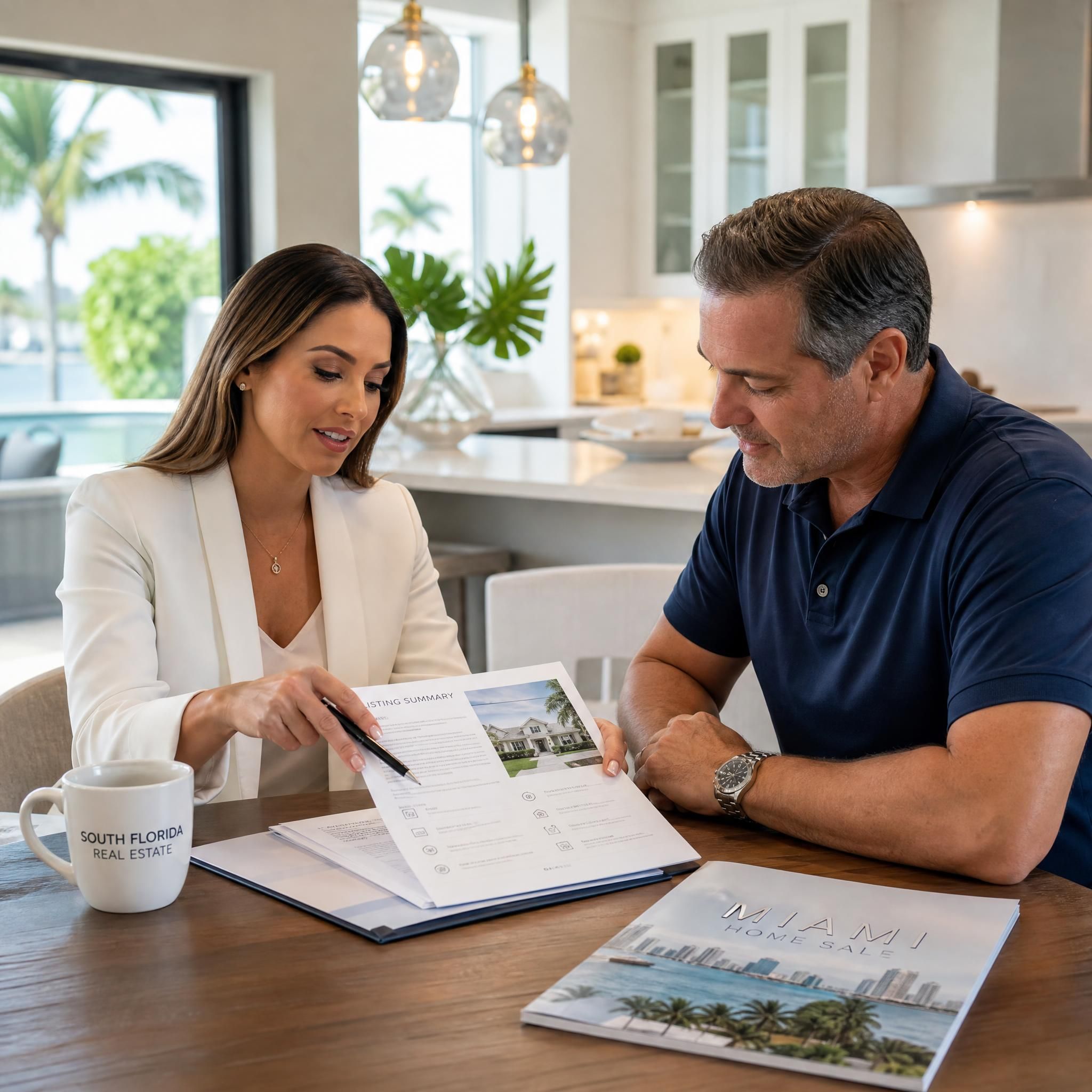
In early 2026, a Miami homeowner decided to skip hiring a listing agent and instead used AI tools to generate his listing, set his price, and market his property. The story, reported by the National Association of REALTORS® in March 2026, became a cautionary tale about what AI missed — and what only a skilled agent could provide.
What went wrong
The buyer's agent, Elinor Solomonoviz, and her broker, Ines Hegedus-Garcia, noted that AI missed key market nuances that likely cost the seller money. When Solomonoviz arrived at the showing with her buyer, she immediately noticed the photos from the listing didn't match the property.
The AI had generated a description and price based on surface-level data — square footage, bedroom count, and general neighborhood comps — but it couldn't assess the property's actual condition, the impact of deferred maintenance, or the emotional appeal that drives competitive offers in South Florida's buyer pool.
The turning point
Despite choosing not to hire a listing agent, the seller still needed help navigating contracts, disclosures, and next steps. When Solomonoviz and her client were ready to make an offer, the seller directed them to her for help — and she ended up answering all of his questions, including being on the phone one night until 11 p.m. to go over everything.
The lesson for miami-dade sellers
This story isn't anti-technology — it's pro-expertise. AI can assist with marketing drafts and data aggregation, but it cannot:
- Walk a property and assess condition relative to price
- Navigate Florida's complex disclosure requirements
- Negotiate on your behalf when an offer comes in
- Protect your legal and financial interests at closing
The takeaway: A skilled real estate agent in South Florida doesn't just list your home — they manage the entire transaction, protect your equity, and bridge the gaps that technology simply cannot fill.
Case study #2: the pembroke pines seller who timed the market perfectly {#case-study-2}
The setup
Pembroke Pines, one of Broward County's most established family communities, made headlines in 2026 when it was named a hot market for home and condo sales in the first quarter of 2026. One seller in the Chapel Trail neighborhood had been sitting on a four-bedroom home for two years, unsure whether to list. Their agent's advice? The window was now.
The strategy
Rather than listing immediately, the agent recommended a 45-day preparation period:
| Preparation Step | Cost | Estimated Value Added |
|---|---|---|
| Fresh exterior paint (tropical palette) | $3,200 | +$8,000–$12,000 |
| Landscaping and curb appeal | $1,800 | +$5,000–$7,000 |
| Professional staging (2 rooms) | $1,500 | +$6,000–$10,000 |
| Professional photography + drone | $650 | Faster sale, more offers |
| Pre-listing inspection | $450 | Reduced buyer negotiations |
| Total Investment | ~$7,600 | +$19,000–$29,000 |
The home was listed at a data-backed price using a Comparative Market Analysis (CMA) that accounted for the neighborhood's rising absorption rate and the area's low inventory.
The outcome
The property received three offers within the first eight days. The seller accepted an offer 4.2% above asking price, with a 30-day close and no repair contingencies — because the pre-listing inspection had already addressed every potential objection.
The lesson for broward county sellers
In 2026, if your specific neighborhood has less than three months of inventory, a pricing strategy can afford to be aggressive. But homes still require a smarter strategy than they did three years ago.
Preparation is not optional — it's leverage. The Pembroke Pines seller's $7,600 investment returned roughly $22,000 in net value above what a rushed, as-is listing would have achieved.
Case study #3: the industrial property that sold for 5× its purchase price {#case-study-3}
The setup
Not all South Florida success stories involve residential homes. One of the most striking transactions of 2026 involved a commercial property near Miami International Airport. Jacavi Properties (operating as Meuchadim of Miami LLC) sold a 68,000-square-foot warehouse at 1800 NW 70th Avenue to Miami-Dade County for $19.2 million. The company had purchased the property in 2005 for $3.755 million.
That's a return of more than 5× the original purchase price over roughly two decades — but the timing and positioning of the sale were anything but accidental.
What made this sale work
The deal was two years in the making. Miami International Airport acquired the property as part of its $14 billion decade-long expansion plan, with plans to use the industrial property for indoor storage and as a construction staging site tied to future projects under MIA's "Modernization in Action Plan."
The sellers understood their asset's strategic value to a motivated institutional buyer. Rather than listing on the open market and accepting the first reasonable offer, they engaged in a targeted negotiation that maximized their position.
The lesson for south florida property sellers
Whether you own a single-family home in Coral Gables or a commercial property in Doral, knowing your buyer is as important as knowing your price. Key principles from this transaction:
- Understand who wants your property most — and why
- Institutional and government buyers move on longer timelines but often pay premium prices
- Patience in negotiation can yield dramatically better outcomes than urgency
- Professional representation ensures you don't leave money on the table during complex multi-year negotiations
What these stories teach every south florida seller {#what-these-stories-teach}
Across these three very different transactions — a Miami home nearly derailed by an AI listing, a Pembroke Pines family home that sold above asking, and a $19M commercial deal two decades in the making — several universal truths emerge:
1. local expertise is irreplaceable
Buyers in 2026 are well-informed, selective, and looking for value, even in the luxury segment. If you're planning to sell your home in Miami-Dade, Broward, or Palm Beach County, your pricing strategy will be the difference between a record-breaking sale and a property that sits on the market.
2. preparation drives premium outcomes
Every seller who achieved an exceptional result in 2026 invested time and resources before listing. Staging, photography, pre-listing inspections, and curb appeal improvements consistently generated returns of 2–4× their cost.
3. pricing precision beats wishful thinking
In 2026, an overpriced listing is a stale listing, quickly losing buyer interest and often selling for less than if it had been priced right initially. A skilled Miami realtor for sellers uses absorption rates, neighborhood-level comps, and condition adjustments to set a price that attracts competition — not crickets.
4. cash buyers are a major force in south florida
Cash sales represented 36.3% of Broward closed sales in April 2026. Cash sales accounted for 49.5% of all Broward existing condo sales and 23.5% of single-family transactions. An experienced agent knows how to market to and negotiate with cash buyers — a critical skill in this market.
Pricing intelligence: the make-or-break factor {#pricing-intelligence}
The most common thread in failed South Florida listings in 2026 is overpricing. The median days on market in parts of Broward County has crept up to over 90 days, meaning homes are sitting longer and buyers are taking their time. Depending on the specific neighborhood, year-over-year price corrections ranging from roughly -8% to -20% have been observed in some areas.
A professional CMA (Comparative Market Analysis) from a qualified real estate agent in South Florida accounts for:
- Recent closed sales (not active listings) within 0.5 miles
- Days on market trends for your specific zip code
- Price per square foot adjusted for condition, upgrades, and lot size
- Insurance-adjusted value — a critical 2026 factor as Florida insurance costs affect buyer affordability
- Seasonal demand patterns — South Florida's peak selling season runs November through April, driven by northern buyers escaping cold weather
Get a professional market analysis for your Miami-Dade or Broward property. Contact us today to discuss your selling goals and timeline.
Questions fréquentes (FAQ)
How long does it take to sell a house in miami-dade in 2026?
On average, homes in Miami-Dade County sell after 90 days on the market compared to 83 days last year. However, well-priced, properly prepared homes in high-demand neighborhoods like Coral Gables, Kendall, and Aventura frequently go under contract in under 30 days. Working with an experienced listing agent significantly reduces your time on market.
What is the average home price in broward county in 2026?
Fort Lauderdale has a median listing price of $625,000 with a median of 90 days on market, while Hollywood sits at $499,777 with 87 median days on market. Prices vary significantly by city and property type, making a neighborhood-specific CMA essential before listing.
Do i need a realtor to sell my house in florida?
Florida does not legally require a seller to hire a real estate agent. However, as the AI listing case study above demonstrates, attempting to sell without professional representation in 2026 often costs sellers money — through mispricing, missed disclosures, and poor negotiation. The cost of a listing agent is typically offset many times over by the higher sale price and smoother transaction they deliver.
What is the best time to sell a house in south florida?
The period from November through April is generally considered the peak selling season for South Florida. During these months, buyer demand is incredibly strong, with more eyes on your property, which can create a competitive environment and lead to top offers. That said, motivated buyers exist year-round in Miami-Dade and Broward, especially among cash-heavy international purchasers.
How much does it cost to sell a house in miami-dade?
In Miami-Dade County, typical agent commission ranges are about 5–6%, but rates can vary based on factors such as listing price, property type, services offered, and whether marketing or staging is included. Additional closing costs for sellers typically include title insurance, documentary stamp taxes, and any agreed-upon repairs or concessions.
Key statistics
📊 $5.7 Billion (through mid-year) – Miami-Dade Real Estate Closed in 2026
📊 $5.7 Billion in Miami-Dade real estate has already closed in 2026 — up 10% from Q1 of last year (Source: The Opes Group at Compass, 2026)
📊 $1.4 Billion (+9.06% YoY) – Broward County April 2026 Dollar Volume
💡 $1.4 Billion in Broward County sales volume in April 2026 alone — a 9.06% year-over-year increase (Source: MIAMI REALTORS®, 2026)
📊 36.3% of all closed sales – Broward Cash Sales Share
🏦 36.3% of all Broward County closed sales in April 2026 were cash transactions — nearly 1.5× the national average (Source: MIAMI REALTORS®, 2026)
📊 $19.2M (purchased for $3.8M in 2005) – Jacavi / MIA Warehouse Sale
📈 5× return — A South Florida commercial property purchased for $3.8M in 2005 sold to Miami-Dade County for $19.2M in 2026 (Source: The Real Deal, June 2026)
Conclusion: your sale can be the next success story
The South Florida sellers who win in 2026 share a common playbook: they research the market, prepare their property strategically, price with precision, and partner with a real estate agent in South Florida who understands their neighborhood at a granular level.
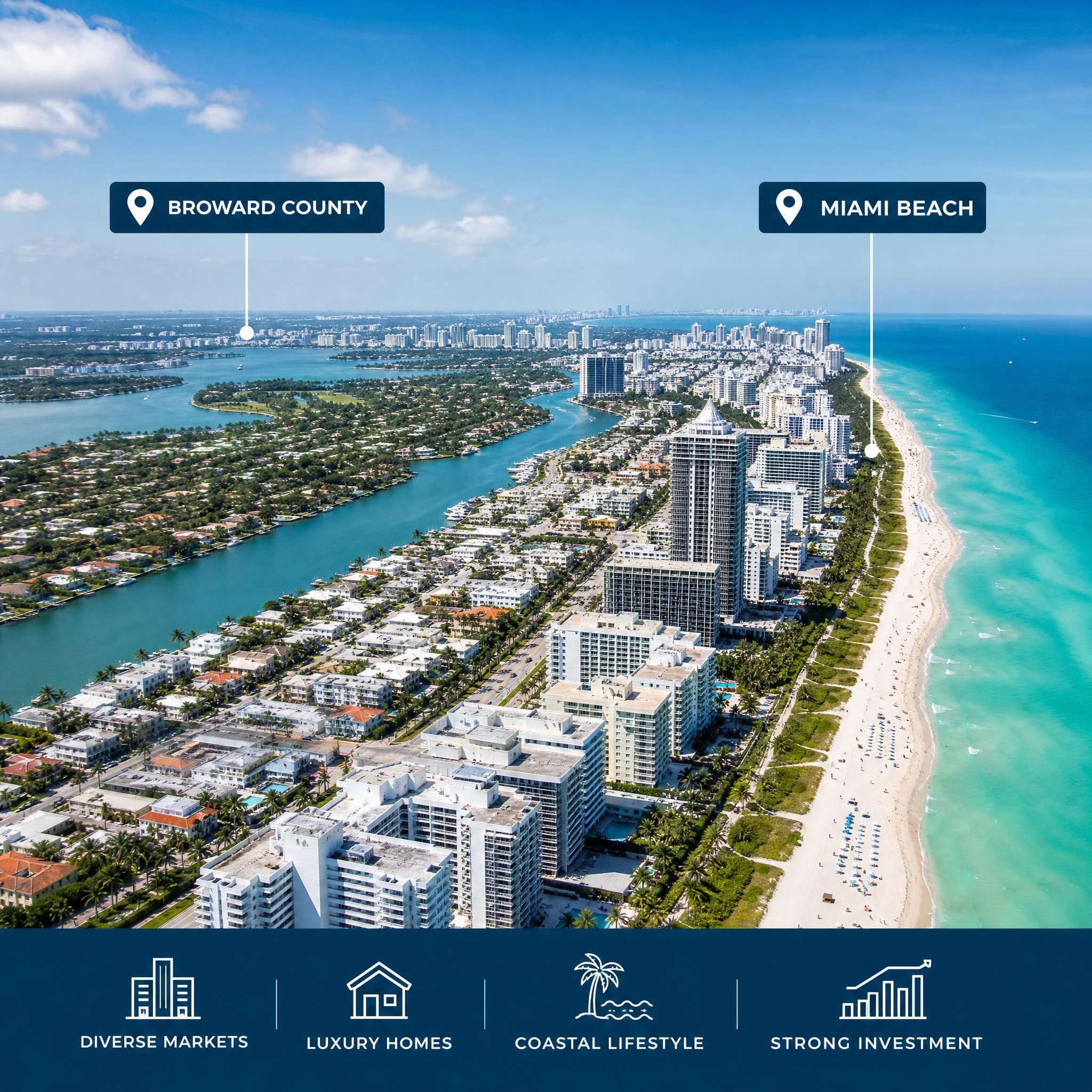
Whether you're selling a primary residence in Pembroke Pines, a luxury waterfront home in Miami Beach, an inherited property in Coral Gables, or a commercial asset in Miami-Dade, the principles are the same — and the results speak for themselves.
In a $5.7 billion market, the difference between an average result and an exceptional one comes down to data-driven pricing strategy, AI-powered marketing and targeting, understanding buyer behavior in specific neighborhoods, and execution from listing to closing.
Ready to write your own success story? Let's create a custom selling strategy for your property. Contact us today for a free, no-obligation consultation — and find out exactly what your South Florida home is worth in today's market.


