
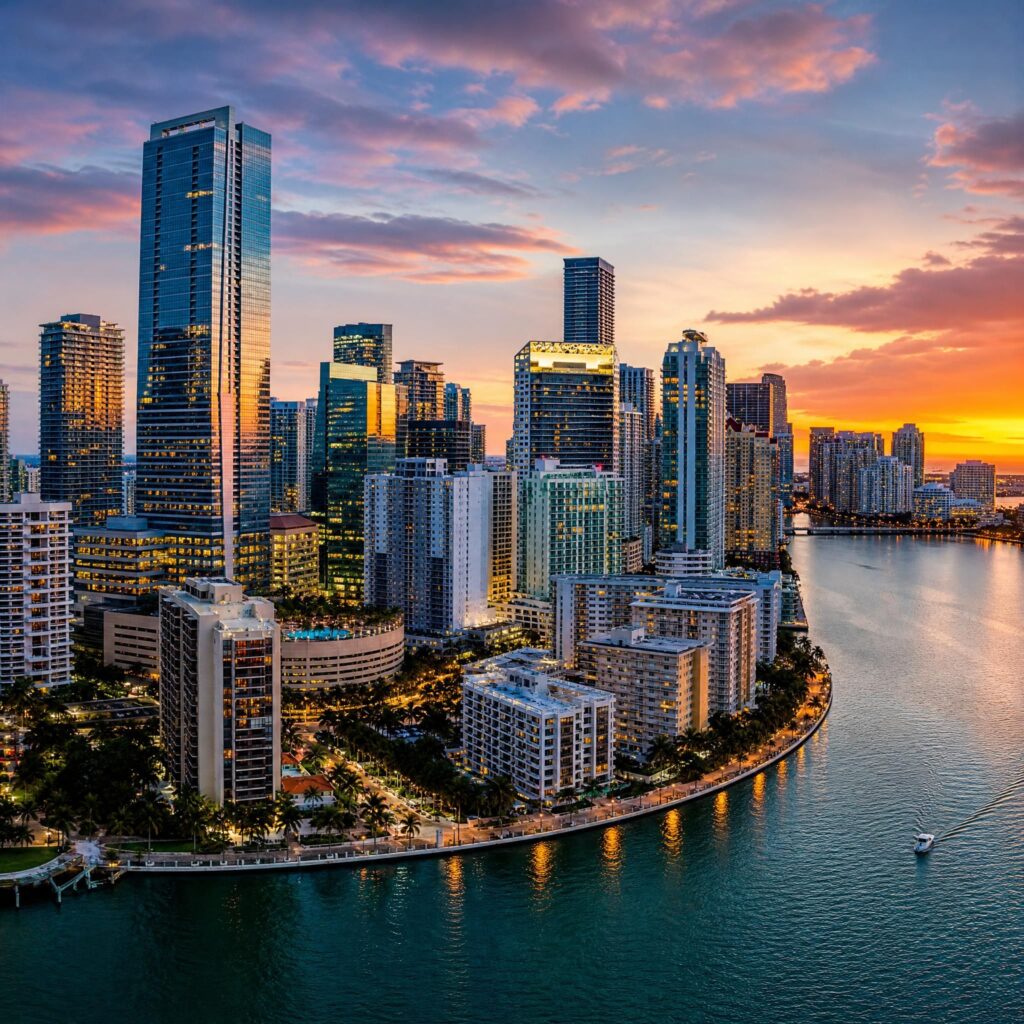
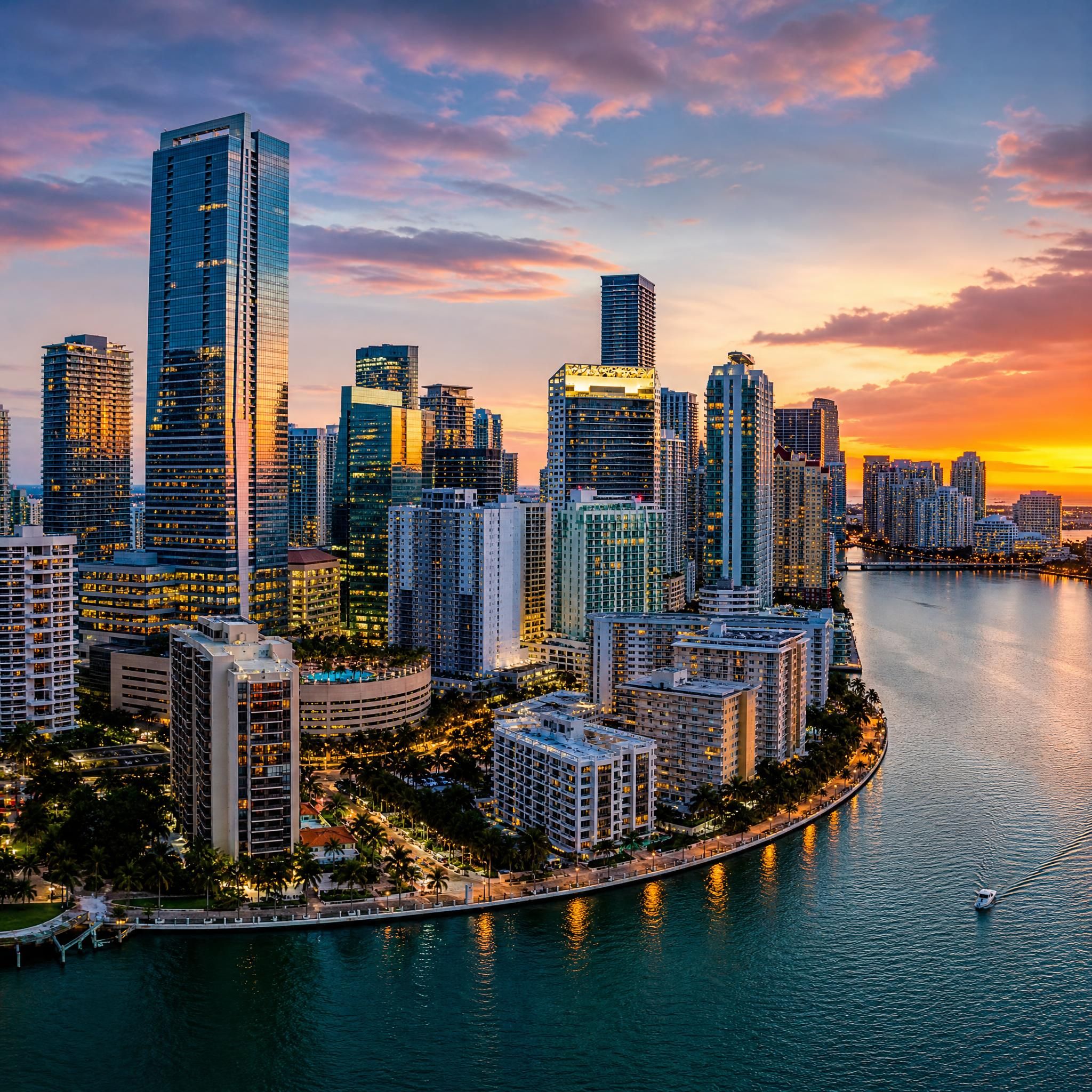
You've decided Miami is the destination. The skyline is calling, the numbers make sense, and the lifestyle is undeniable. But standing between your vision and the keys to a stunning new construction luxury condo is a process that rewards the prepared — and punishes the impulsive.
Buying pre-construction in Miami means purchasing a condo from the developer before it is built, locking in current pricing while the building is under construction. The process takes 2–4 years from reservation to move-in, requires deposits of 20–50% during construction, and has historically delivered 20–30% appreciation by the time the building is completed.
This is not a general overview of Miami's luxury market. This is your step-by-step action plan — the insider moves, critical checklists, and hard-won strategies that separate savvy buyers from those who leave money on the table or, worse, get burned by a bad deal. Whether you're eyeing a Brickell penthouse, a Coconut Grove boutique residence, or a waterfront tower in Edgewater, this guide gives you the tactical edge.
Table of contents
- Step 1: Define Your Goals Before You Browse a Single Listing
- Step 2: Master the Miami Luxury Neighborhood Matrix
- Step 3: Vet the Developer Like a Pro
- Step 4: Navigate the Deposit Structure and Protect Your Capital
- Step 5: Decode the Contract — Before You Sign
- Step 6: Plan Your Financing Strategy Early
- Step 7: Maximize Your Investment Returns
- FAQ
- Key Statistics
Step 1: define your goals before you browse a single listing
The single biggest mistake luxury buyers make? Falling in love with a rendering before clarifying their own objectives. In Miami's new construction market, where projects range from pre-construction opportunities to move-in-ready towers, your goals dictate everything — the neighborhood, the building type, the price point, and the timeline.
Before looking at a single building, clarify your objectives. Are you buying a primary residence, a vacation home, or a pure investment? Your answer determines the neighborhood, price point, and building type. Investors prioritize rental yield and appreciation. End users prioritize location, lifestyle, and finishes.
Ask yourself these four foundational questions:
- What is my primary use? Primary residence, part-time retreat, or investment vehicle?
- What is my liquidity timeline? Pre-construction ties up capital for 2–4 years. Are you comfortable with that?
- What amenity package matters most? Branded hotel services, private marina access, rooftop pool, or concierge?
- What is my exit strategy? Resale appreciation, long-term rental, or short-term vacation rental?
Once your goals are locked in, every subsequent decision — from neighborhood to floor level to unit orientation — flows from that clarity.
Step 2: master the miami luxury neighborhood matrix
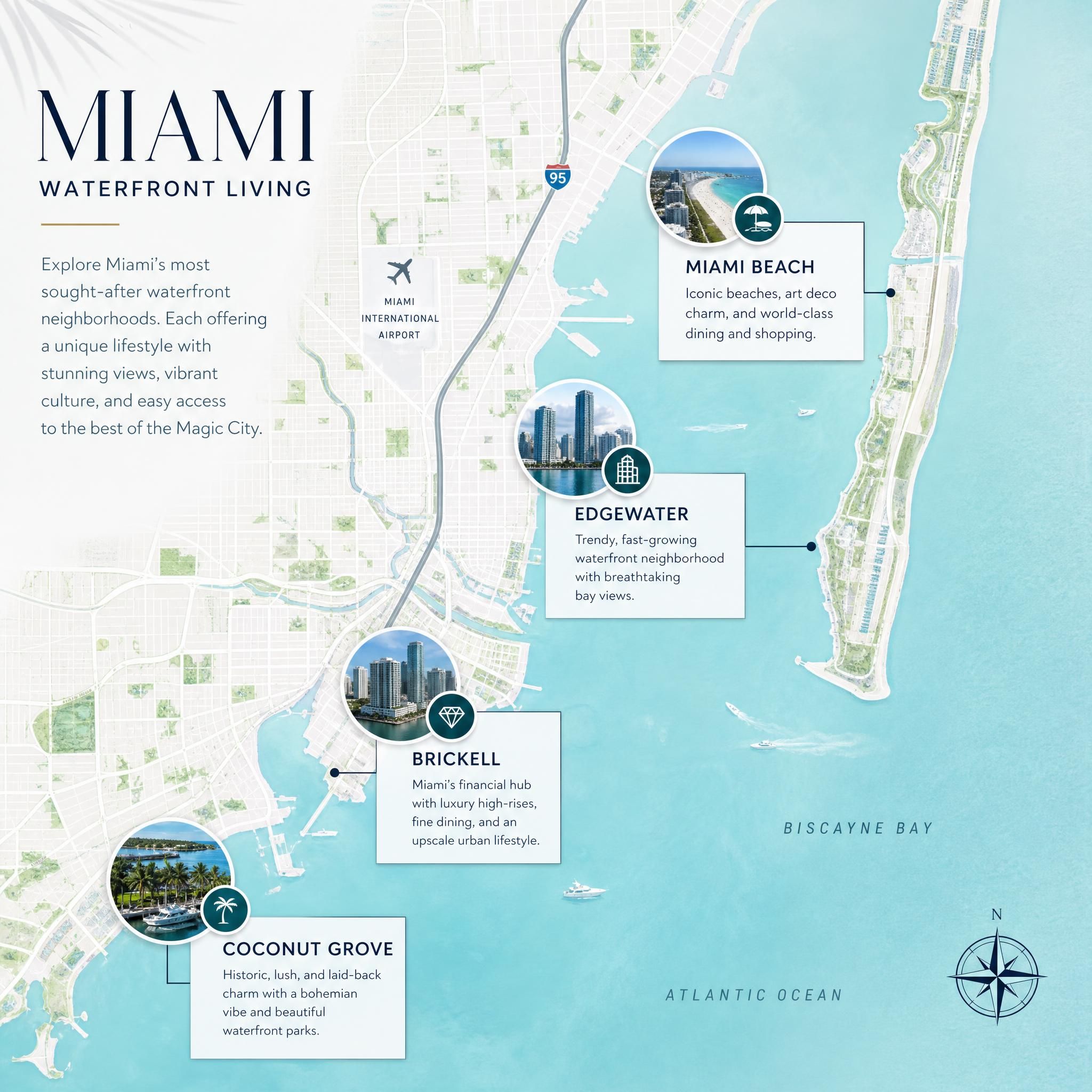
Miami is not one market. It is a collection of distinct micro-markets, each with its own price per square foot, buyer profile, and investment thesis. Here is the practical breakdown:
| Neighborhood | Price/Sq Ft Range | Rental Yield | Best Buyer Profile | 2026 Pipeline Highlight |
|---|---|---|---|---|
| Brickell | $850 – $2,000+ | 5–6% | Finance professionals, investors | 619 Brickell (Nobu/Foster+Partners), St. Regis Residences |
| Miami Beach | $1,500 – $2,500+ | 4–5% | Global trophy buyers, seasonal residents | 72 Carlyle, Ritz-Carlton North Bay Village |
| Edgewater | $750 – $1,200 | 5–6% | Growth-oriented buyers, waterfront value seekers | EDITION Edgewater, 49-story pipeline projects |
| Coconut Grove | $800 – $1,500 | 3–4% | Lifestyle-first buyers, families | Four Seasons Residences Coconut Grove |
| Wynwood/Design District | $850 – $1,100 | 4–5% | Design-forward, cultural scene buyers | Mixed-use luxury residential projects |
Brickell: urban sophistication at scale
619 Brickell is a Nobu-branded 74-story luxury tower planned for 619 Brickell Avenue in the heart of Brickell, Miami. The project marks the first residential development in Miami from Nobu Hospitality, the globally recognized lifestyle brand founded by Chef Nobu Matsuhisa along with actor Robert De Niro and producer Meir Teper. The tower's design is led by the world-renowned architectural firm Foster + Partners, in collaboration with Miami-based Sieger Suarez Architects — a 74-story tower that blends Nobu's minimalist Japanese sensibility with the dynamic rhythm of Miami's skyline.
Practical tip: In Brickell, high floors with direct bay views command a 15–25% price premium over identical units on lower floors. Secure your floor selection early in the sales process, as developers release inventory in phases — the best views go first.
Coconut grove: boutique luxury with enduring value
Four Seasons Residences Coconut Grove at 2699 S Bayshore Drive is a 20-story development with estimated completion in 2028, offering residences ranging from 2-bedroom to 4-bedroom layouts with interior sizes up to 3,974 square feet plus expansive terraces. This is the rare Miami project where boutique scale (fewer units) meets global brand cachet — a combination that historically supports stronger resale values.
Practical tip: Coconut Grove's low-rise, low-density zoning means supply is permanently constrained. Fewer new projects can be built here than in Brickell or Edgewater, making scarcity a structural advantage for long-term holders.
Step 3: vet the developer like a pro
"The developer matters more than the building. A mediocre unit at a great developer almost always outperforms a spectacular unit at a mediocre developer over a 5-year hold." This is the single most important insight in Miami luxury new construction — and most buyers skip this step entirely.
Here is your 7-point developer due diligence checklist:
- Track record on completed projects — How many buildings have they delivered, and were they on time and on spec?
- Construction lender identity — Most Miami construction lenders require 50–70% pre-sales before releasing construction funding. Top-tier projects hit this in 6–18 months. Projects still below 40% after 18 months have funding risk.
- Escrow structure — All deposits should be held in a Florida-regulated interest-bearing escrow account.
- Principal track record — Research the principals behind the LLC, not just the LLC itself.
- Active litigation — Check whether the developer has unresolved construction defect claims on prior projects.
- Pre-sales absorption rate — A healthy project should be 50%+ sold within 12–18 months of launch.
- Change order history — Have they materially changed unit specs or amenity packages after contract signing on prior developments?
Red flags that should make you pause
Yellow-flag patterns to watch include: a brand-new developer entity with no principal track record on other LLC names; a project at 40% or less pre-sales 18 months into construction; repeated delay announcements with generic "supply chain" language but no specifics; escrow held by an unrelated third-party LLC with no title-insurance backing; and a sales team refusing to disclose the construction lender's identity.
Step 4: navigate the deposit structure and protect your capital
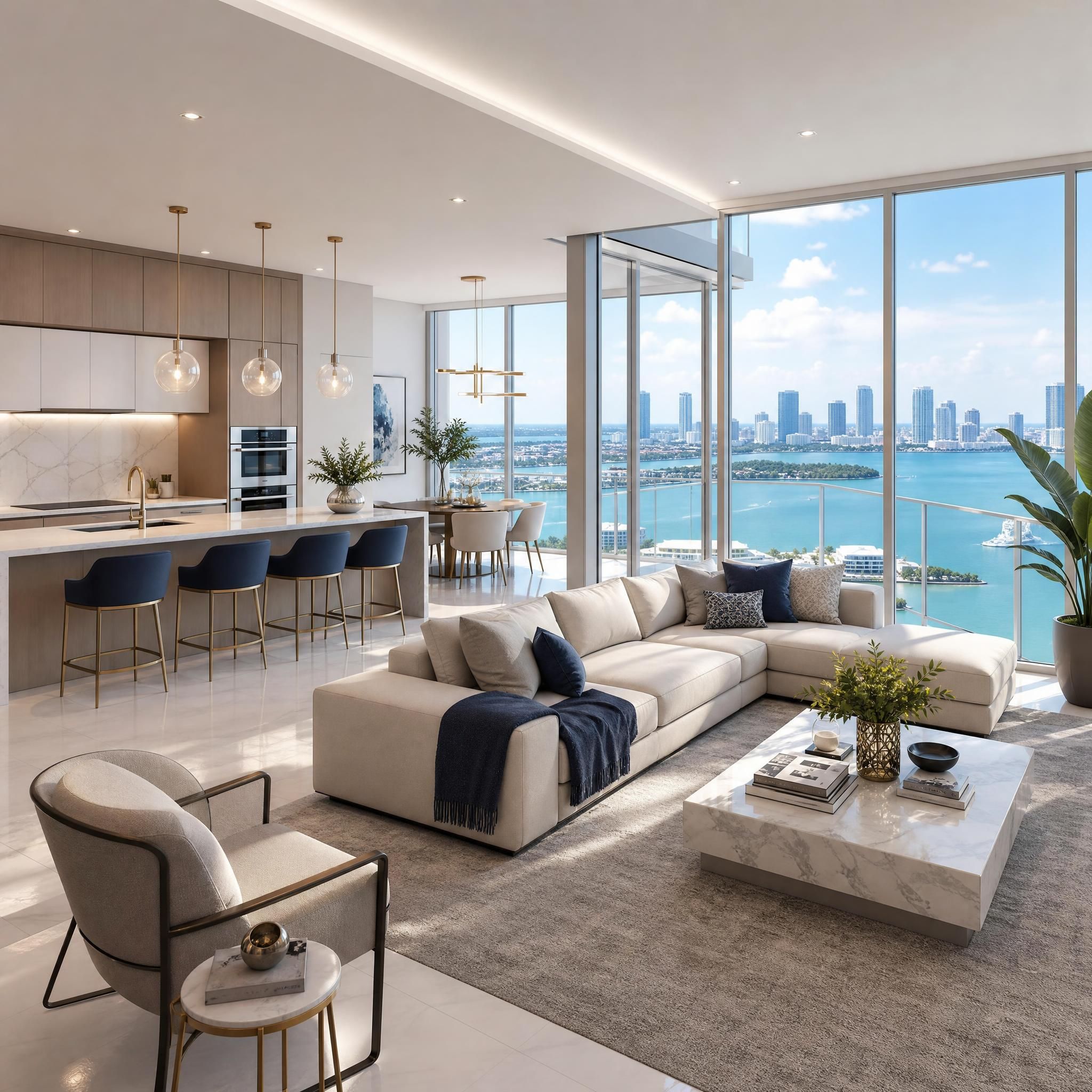
Understanding Miami's deposit mechanics is non-negotiable. This is where uninformed buyers get caught off guard.
The typical deposit structure for a luxury pre-construction condo totals 20 to 50% of the purchase price, paid in installments over the construction period. A common structure is 10% at contract execution, 10% at groundbreaking, 10% at the halfway construction milestone, and 10% at top-off — totaling 40% before closing. Some developers offer a lighter 20% total deposit structure to attract buyers early. The remaining balance (50 to 80%) is due at closing, which is when most buyers arrange financing. All deposits are held in an interest-bearing escrow account governed by Florida condominium law.
Actionable deposit strategies
- Negotiate at the right moment. Developers are most flexible at launch (to build momentum) and near the end of sales (to close out remaining inventory). Avoid the middle phase when demand is highest.
- Understand your recourse. Florida's Condominium Act provides specific buyer protections — including the right to cancel within a rescission period. Know your window.
- Ask about assignment clauses. Some contracts allow you to assign (sell) your contract before closing, creating an opportunity to capture appreciation without taking title. Others restrict this entirely.
- Factor in HOA fees from day one. HOA fees for luxury pre-construction condos in Miami typically range from $0.80 to $2.50 per square foot per month, depending on the building's amenity package and brand affiliation. For a 1,500-square-foot two-bedroom unit, expect monthly HOA fees of roughly $1,200 to $3,750. Branded residences tend to have higher HOA fees because they fund brand-standard services like butler service, concierge, and hotel-grade amenity maintenance.

Step 5: decode the contract — before you sign
The developer's purchase agreement is written by the developer's attorneys to protect the developer. Your job — with the help of an independent real estate attorney — is to understand exactly what you are and are not agreeing to.
Florida does not require a lawyer at closing, but a real estate attorney is strongly recommended for pre-construction. A real estate attorney reviews the developer purchase agreement, escrow structure, and assignment clauses. According to the Florida Bar 2025 real estate survey, 78 percent of pre-construction buyers use attorneys. Expect $1,500 to $4,000 in legal fees.
The four contract clauses that matter most
- The "Change" Clause — Developers typically reserve the right to modify unit specifications, amenities, and common areas. Understand the limits of these changes and what triggers your right to cancel.
- The Default Clause — What happens if you miss a deposit installment? What are the cure periods? What are the penalties?
- The Delay Clause — How are construction delays handled? What is the outside delivery date beyond which you can cancel and recover deposits?
- The Substitution Clause — Can the developer substitute finishes, fixtures, or appliances with "comparable" alternatives? Get specifics on what "comparable" means.
Pro Tip: Never go directly to the developer's sales office without an independent buyer's agent. The developer's team will never tell you that a competing project offers better value, a more favorable deposit structure, or a stronger developer track record. A specialist buyer's agent is compensated by the developer — meaning their expertise costs you nothing.
Step 6: plan your financing strategy early
The mortgage only enters the picture when the building is nearing completion and the developer issues a closing notice. That is when you finance the remaining balance. This structure gives buyers a significant advantage: time. You have years to plan your financing strategy, improve your credit profile, accumulate additional funds, and shop for the best rates.
For domestic buyers
Begin the mortgage pre-qualification process at least 18 months before your projected delivery date. Miami's luxury condo market has specific warrantability requirements — buildings with high investor concentrations or significant commercial components can limit conventional loan options.
With over 15,000 luxury condos delivering in Miami through 2026, buyers are entering a more complex closing environment. For many buyers, Miami condo bridge loans have become a critical tool for buyers looking to close efficiently and protect their equity, especially in high-value condo purchases.
For international buyers
Foreign buyers can absolutely purchase pre-construction condos in Miami — in fact, international buyers represent a significant portion of South Florida's luxury pre-construction market. The process is straightforward: no special visa or residency status is required to purchase real estate in the US. Foreign buyers typically pay the same deposit schedule as domestic buyers (20 to 50% during construction). Financing options are more limited for non-residents, but several banks offer foreign national mortgage programs with 30 to 50% down.
International demand continues to drive Miami's new construction market. Foreigners are buying 52% of new-construction homes in certain Florida cities, spanning buyers from 73 countries.
International buyer action items:
- Establish a U.S. bank account before making deposit transfers
- Retain a U.S.-based real estate attorney for contract review
- Investigate FIRPTA withholding obligations at the time of future resale
- Explore private banking relationships with institutions that have dedicated foreign national mortgage programs
Step 7: maximize your investment returns
Buying right is only half the equation. The other half is managing your asset strategically from day one.
The appreciation play
Pre-construction purchases have historically delivered 20–30% appreciation by delivery date. The typical appreciation spread between pre-construction entry pricing and resale value at delivery in prime Brickell towers has been approximately $350 per square foot.
The rental income strategy
Miami's luxury real estate market offers diverse investment strategies: long-term appreciation at 5–7% annual appreciation, rental income at 4–8% rental yield, and vacation property returns at 8–12% annually. Brickell and Edgewater currently deliver the strongest rental yields for luxury condos, driven by the concentration of finance, tech, and international corporate tenants.
Latin American investors have been particularly active in this strategy. Recent reports note that Latin American buyers are purchasing new Brickell condos specifically to convert them into rental income properties — a trend that validates the neighborhood's rental demand fundamentals.
The tax advantage multiplier
Florida has no state income tax. For a high-net-worth investor earning $500K+, this saves $25K–$50K+ annually compared to New York (10.9%) or California (13.3%). This single factor has driven a sustained wealth migration that supports property values.
Stack this against rental income, depreciation deductions, and long-term appreciation, and the total return picture for Miami luxury new construction becomes compelling on multiple dimensions simultaneously.
Frequently asked questions (FAQ)
How long does it take to buy a new construction luxury condo in miami from start to finish?
From initial reservation to receiving your keys, expect 2–4 years for a pre-construction purchase. The timeline breaks down as follows: contract signing and initial deposit (months 1–3), construction period with staged deposits (years 1–3), closing notice issued by developer (60–90 days before completion), and final closing and key delivery. Move-in-ready new construction can close in 30–60 days.
Do i need a real estate agent to buy new construction in miami?
You do not legally need one, but you should absolutely use one. Buyer's agents for new construction are paid by the developer — meaning their expertise costs you nothing. An experienced agent provides access to pre-launch pricing ("Friends & Family" pricing tiers), independent assessment of developer credibility, negotiation leverage on upgrades and deposit terms, and critical guidance on unit selection within the building.
What is HB 913 and how does it affect luxury condo buyers in miami in 2026?
Following the 2026 regulatory changes and HB 913, Miami offers diverse condo options that cater to various buyer needs, emphasizing compliance, safety, and financial transparency. HB 913 sets higher standards for safety and financial transparency, allowing buyers to invest with greater confidence. For new construction buyers, these regulations primarily affect resale due diligence on older buildings — new construction is built to current standards and is generally unaffected.
Can i customize my unit in a pre-construction luxury condo?
Yes — and this is one of the most valuable advantages of buying pre-construction. Most developers offer a design selection process where buyers choose finishes, flooring, kitchen configurations, and sometimes structural modifications (combining units, moving walls). The earlier you buy in the sales cycle, the more customization options are available. Late-stage buyers may find selections already locked in.
What closing costs should i budget for on a new construction condo in miami?
Closing costs on a new construction condo in Miami typically range from 1.5% to 3% of the purchase price for the buyer. Unlike resale transactions, the developer typically pays for documentary stamps on the deed and the owner's title insurance policy in new construction deals, which saves the buyer significant money. Budget for title search fees, recording fees, lender fees (if financing), estoppel fees, and prorated property taxes and HOA dues.
Key statistics
📊 52% of purchases from buyers spanning 73 countries – International buyer share of Miami new construction
📊 15,000+ new luxury condo units expected to deliver across 40+ Miami developments in 2026 — the largest wave in the city's history (Source: MGroup Compass, 2026)
💡 20–30% typical appreciation delivered between pre-construction entry pricing and building completion in prime Miami developments (Source: LuxuryDade, 2026)
🏙️ $350/sq ft average appreciation spread between pre-construction entry pricing and resale value at delivery in prime Brickell towers (Source: Florida Real Estate Specialist, 2026)
💰 $25K–$50K+ annual tax savings for high-net-worth buyers relocating from New York or California, thanks to Florida's zero state income tax (Source: LuxuryPriceDrops, 2026)
📊 4–8% depending on neighborhood and unit type – Miami luxury condo rental yield
"The developer matters more than the building. A mediocre unit at a great developer almost always outperforms a spectacular unit at a mediocre developer over a 5-year hold."
— LuxuryDade / Gerardo Gonzalez, Compass
Conclusion: your miami luxury purchase starts with a plan
The Miami luxury new construction market in 2026 is extraordinary in its scale, its quality, and its opportunity — but it is not a market that rewards passive participation. Navigating Miami's condo market in 2026 requires a keen understanding of new regulations and market trends. By choosing the right neighborhood and ensuring compliance, you safeguard your investment and lifestyle.
The buyers who win here are the ones who define their goals first, vet developers rigorously, understand the contract before signing, plan their financing 18 months ahead, and work with specialists who live in this market every day.
Whether you're drawn to the urban sophistication of Brickell's newest branded towers, the boutique elegance of Coconut Grove, or the waterfront serenity of Edgewater, the actionable steps in this guide are your roadmap. Miami's skyline is being rewritten right now — and the best positions in the best buildings are claimed by those who move with knowledge and conviction.
Ready to take the next step? Schedule a private consultation with our luxury real estate specialists, view our curated collection of new construction properties, or download our exclusive Miami Luxury Market Report to start your journey with the insider advantage.


