
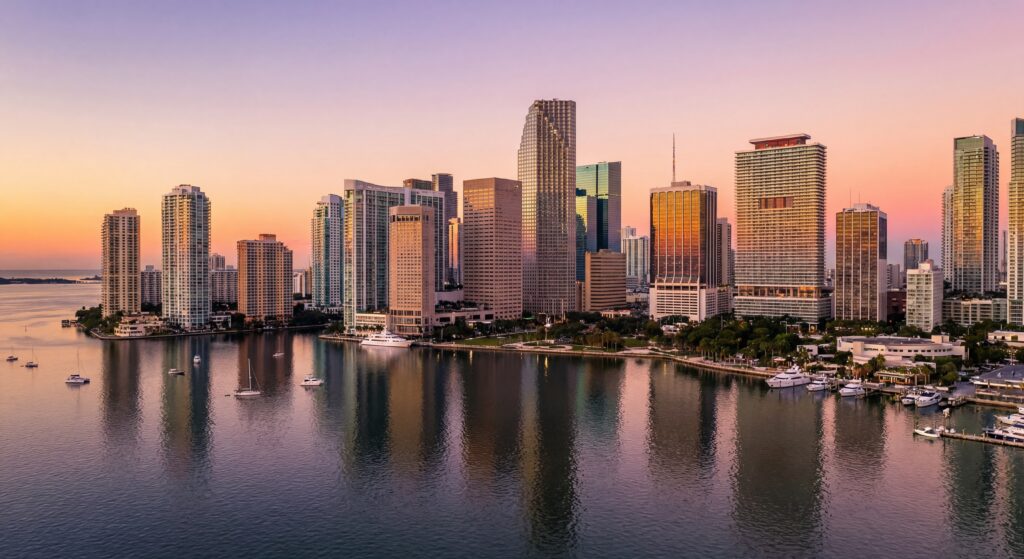
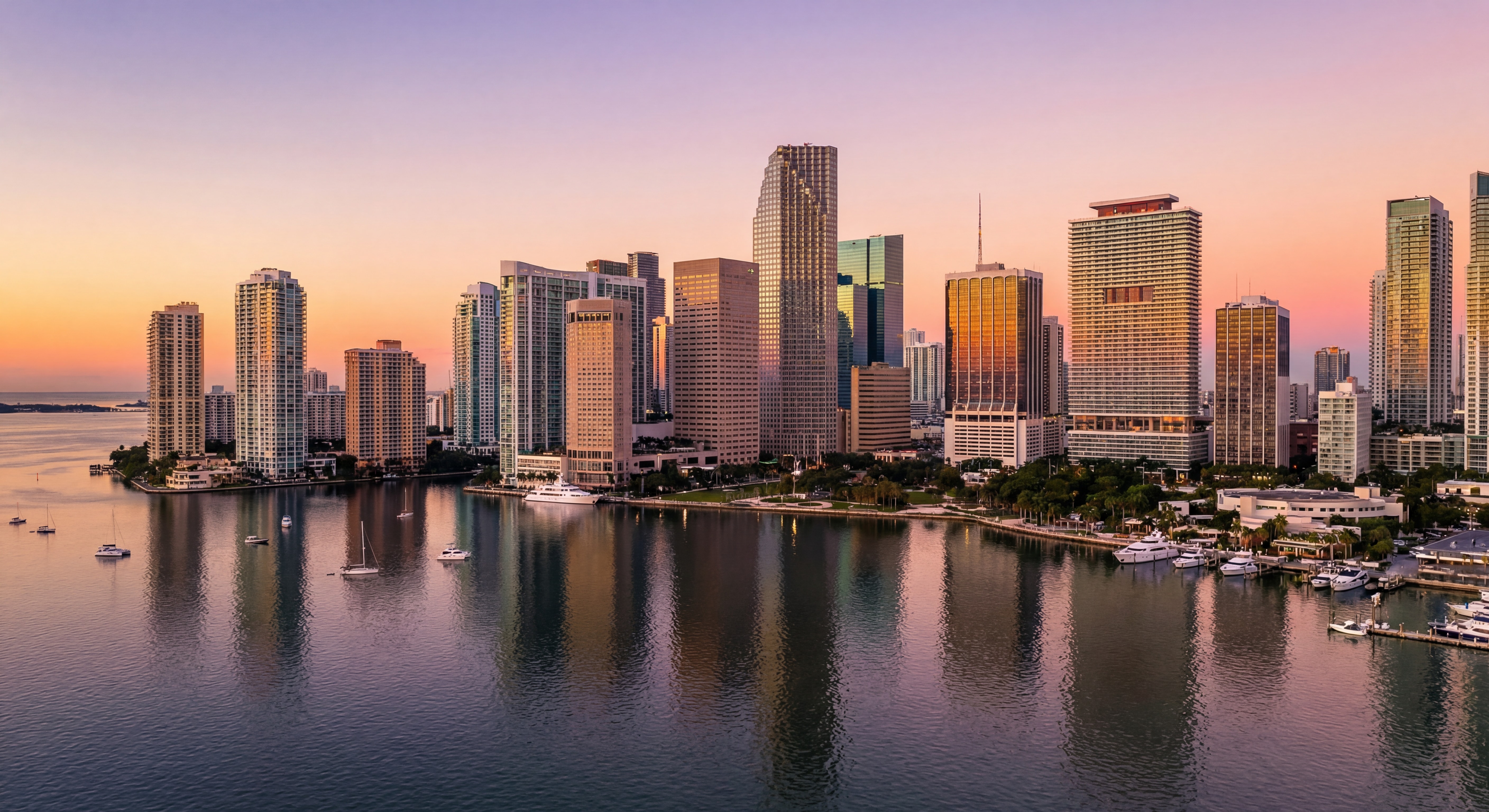
What does it actually look like when someone bets big on Miami luxury new construction — and wins? Beyond the glossy renderings and developer promises, a growing body of real-world outcomes is telling a compelling story. Buyers from Manhattan and Medellín, boutique developers from New York, and Colombian entrepreneurs are all writing the same headline: Miami's new construction luxury market is delivering on its promises in 2026.
This isn't a general overview. It's a deep dive into the deals, the data, and the people whose experiences reveal exactly why new construction luxury homes Miami has become one of the most searched phrases in high-net-worth real estate circles. From a Bay Harbor Islands boutique project that sold out before completion to a Brickell supertall that secured $565 million in institutional financing, the evidence is concrete — and the lessons are transferable.
Table of Contents
- The Milestone That Changed Everything
- Case Study 1: Indian Creek Residences & Yacht Club — The Boutique Sellout
- Case Study 2: The Residences at 1428 Brickell — Institutional Confidence at Scale
- Case Study 3: Latin American Investors Rewrite the Brickell Rental Playbook
- Case Study 4: The NYC-to-Miami Relocation Math
- Case Study 5: PMG's Delano Residences — Branding as a Value Multiplier
- What These Stories Have in Common
- Key Statistics
- FAQ
The Milestone That Changed Everything
In January 2026, Realtor.com published a report that sent shockwaves through the real estate world: Miami had officially overtaken New York City as the U.S. metropolitan area with the most homes listed above $1 million. By December 2025, Miami recorded 10,591 active listings priced at seven figures or higher, edging past New York City's 10,176.
"Miami has officially overtaken New York City as the nation's epicenter of million-dollar homes"
— Realtor.com Luxury Housing Market Report
For Ana Bozovic, founder of Analytics Miami, the data confirmed what market observers had long anticipated. "It quantifies an ongoing structural shift that has been building for years," she noted. "Taxpayers are on the move, and wealth — both domestic and international — is increasingly mobile."
More than a quarter of Miami's luxury home demand now originates from the New York City metro area alone — a share larger than the next eight feeder markets combined. Meanwhile, foreigners are buying 52% of new-construction homes in Miami, according to reporting by the New York Post, cementing the city's status as a global luxury capital.
📊 10,591 active listings — more than New York City – Miami Million-Dollar Listings
These numbers set the stage for the real stories. Here's what success actually looks like on the ground.
Case Study 1: Indian Creek Residences & Yacht Club — The Boutique Sellout
The Project: A nine-unit luxury waterfront condominium on Bay Harbor Islands, developed by Landau Properties, designed by acclaimed Miami architect Kobi Karp with interiors by Zarifi Design.
The Outcome: Complete sellout before construction completion, capped by a record-breaking $12 million penthouse sale that set a new benchmark for Bay Harbor Islands.
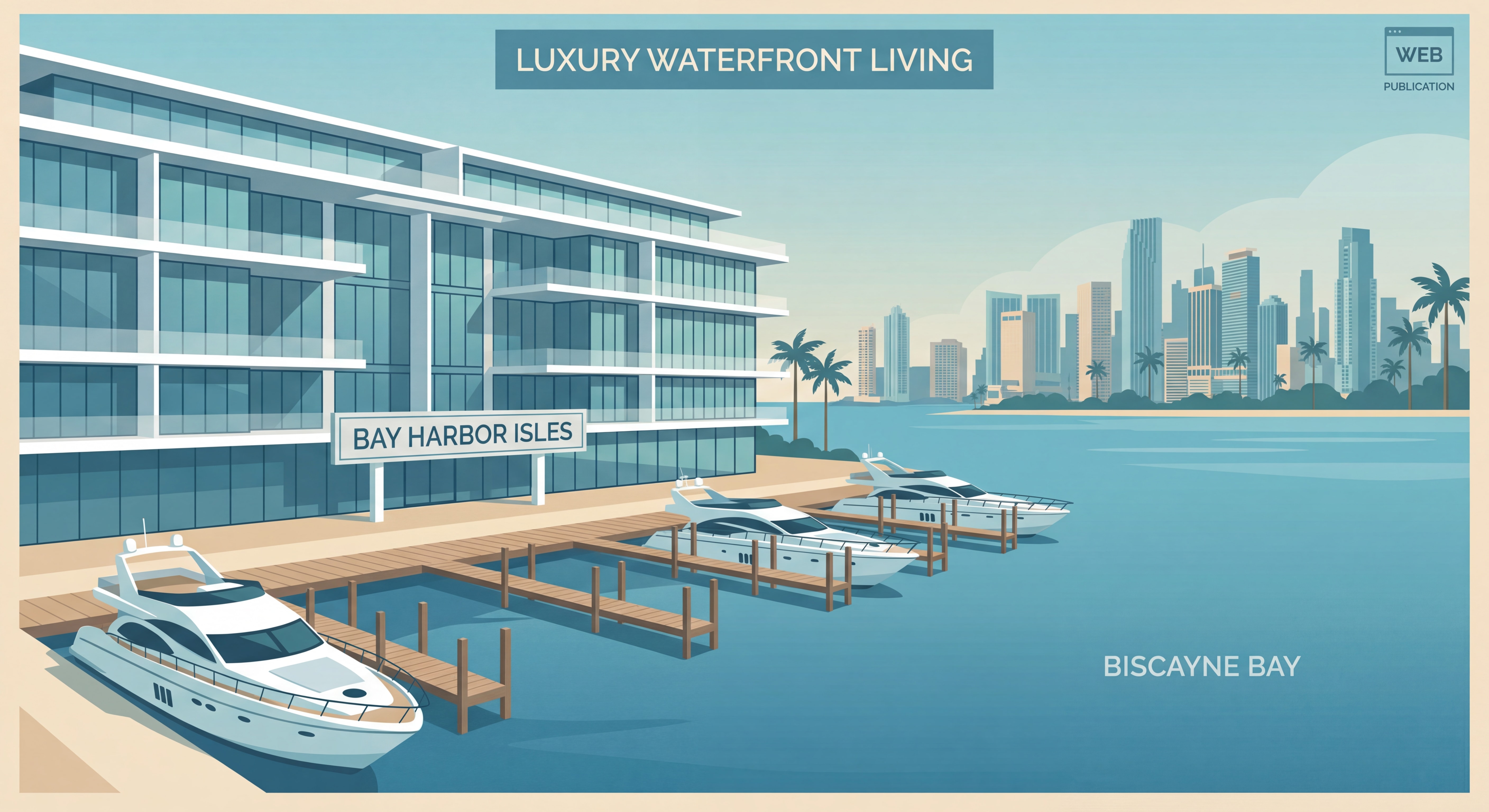
This project is a masterclass in what happens when design-forward thinking meets a supply-constrained market. Jonathan Landau, Founder and CEO of Landau Properties, launched Indian Creek Residences & Yacht Club as the first true luxury boutique new development overlooking Indian Creek Lake — a site offering something extraordinarily rare: direct waterfront views of the coveted Indian Creek Island and access to a private yacht club.
The building offered only nine half- and full-floor homes, each with private terraces, resort-style amenities, and six deeded yacht slips. The exclusivity wasn't manufactured — it was geographic and architectural.
"Indian Creek was conceived as an architectural dialogue with the water. We wanted to create a graceful, enduring sense of belonging, where every detail celebrates the light, views and intimacy of living by the bay." — Jonathan Landau, Founder & CEO, Landau Properties
The market validation was swift. According to data from MILLION Luxury, the project sold out at an average of roughly $1,900 per square foot — approximately 14% above Miami's overall luxury condo market average at the time. The sellout ahead of completion demonstrated that discerning buyers will move decisively when supply is genuinely limited and design quality is unimpeachable.
The lesson for buyers: Boutique, design-driven waterfront projects in supply-constrained Miami sub-markets are not just lifestyle purchases — they are high-conviction investment vehicles. The Indian Creek story proved that scarcity, combined with architectural integrity, produces outsized premiums.
Case Study 2: The Residences at 1428 Brickell — Institutional Confidence at Scale
The Project: A 70-story, ultra-luxury condominium tower in Miami's Brickell Financial District, developed by Ytech (led by Colombian-American entrepreneur Yamal Yidios), featuring 195 residences and 80,000 square feet of resident-exclusive amenities.
The Outcome: In November 2025, JLL's Capital Markets Group secured $565.35 million in construction financing from JPMorgan Chase and Sculptor Real Estate — one of South Florida's largest construction loans of the year. As of October 2025, the tower was already 57% presold.
📊 $565.35M construction loan secured from JPMorgan – The Residences at 1428 Brickell
This is where the story gets particularly instructive. When JPMorgan — one of the world's most sophisticated institutional lenders — writes a $565 million check for a Miami luxury real estate 2026 project, it is not doing so on sentiment. It is doing so because the underwriting supports it.
The tower's distinguishing features read like a checklist of what today's ultra-luxury buyer demands:
| Feature | Specification |
|---|---|
| Height | 70 stories |
| Residences | 195 ultra-luxury units |
| Amenity Space | 80,000 sq ft (resident-exclusive) |
| Sustainability | 500 photovoltaic-integrated windows; up to 175 MW of clean energy annually |
| Interiors | Gaggenau appliances, Arclinea and Vaselli cabinetry, natural stone and marble throughout |
| Delivery | Q4 2028 |
| Presale Rate | 57% as of October 2025 |
The solar-integrated façade — a genuine engineering achievement for Miami — positions 1428 Brickell not just as a luxury address but as a prototype for sustainable, primary-home living in vertical format.
"The strong presales performance, world-class design team and innovative sustainability features position 1428 Brickell as a landmark addition to Miami's skyline"
— Melissa Rose, Senior Managing Director at JLL Capital Markets
The lesson for buyers: When a project attracts institutional capital at this scale and achieves majority presales before breaking ground, it signals something critical: the market is not speculating. It is underwriting. For buyers evaluating Brickell luxury condos in pre-construction, the 1428 story offers a template for what conviction looks like when it's backed by data.
Case Study 3: Latin American Investors Rewrite the Brickell Rental Playbook
The Buyer Profile: High-net-worth Latin American investors — predominantly from Colombia, Brazil, Argentina, and Venezuela — purchasing new construction condos in Brickell as income-generating rental assets.
The Outcome: A structural transformation of Miami's rental market, with Brickell properties generating rental yields above 6% annually in well-located buildings, and Latin American buyers accounting for 86% of international new construction purchases in Downtown Miami over the 18-month period ending June 2025.
According to Miami Today, Latin Americans are systematically "scooping up" new Brickell condos and converting them into rentals — a strategy that is working precisely because the demand fundamentals support it. Brickell's median rent of $2,669 per month significantly outpaces the national average of $1,348, while the neighborhood's median household income of $137,810 sustains premium rental rates.
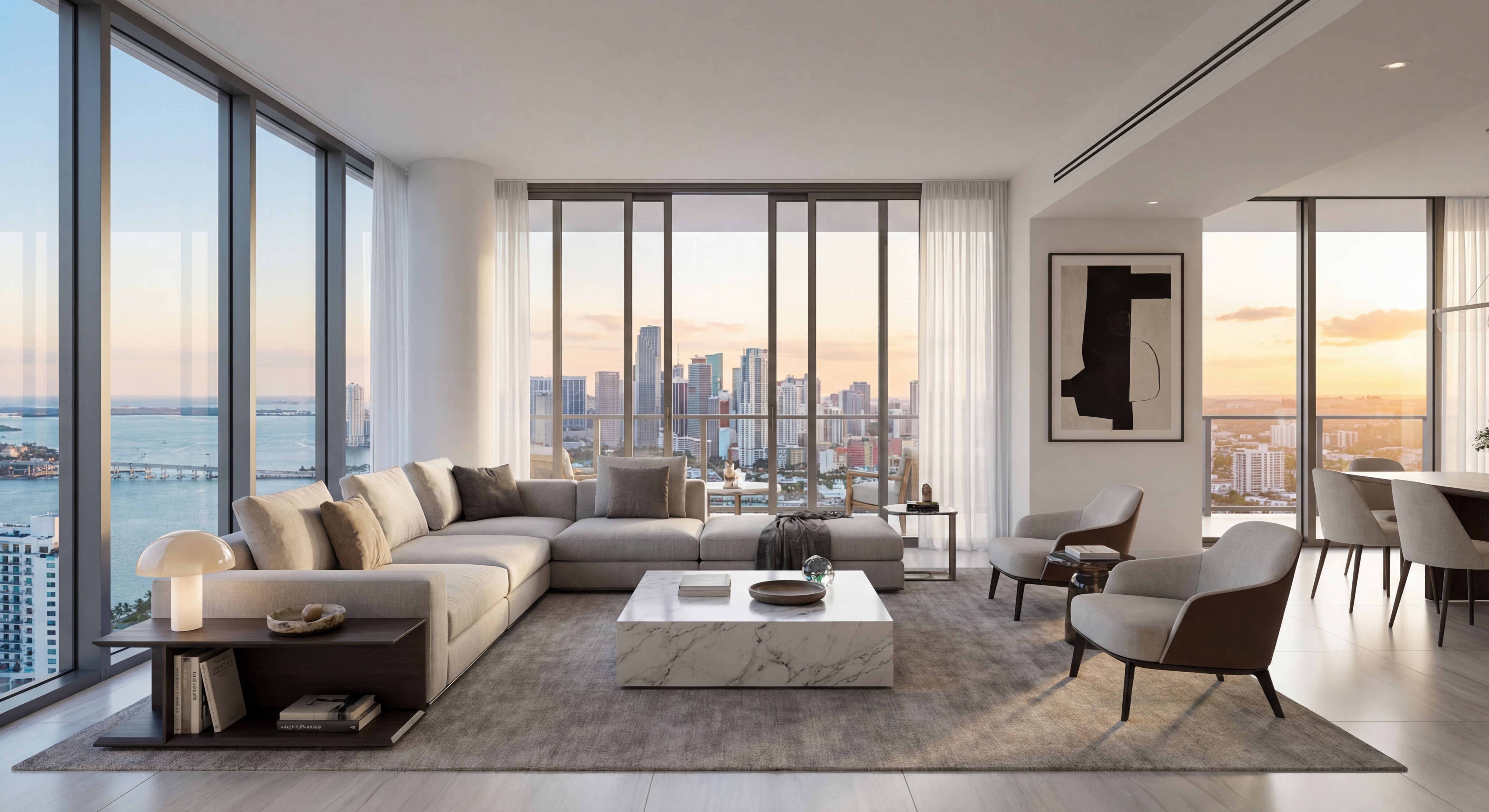
The investment thesis that Latin American buyers are executing is straightforward:
- Currency arbitrage: Dollar-denominated assets hedge against local currency volatility in home markets
- Rental yield: Above-6% annual yields in Brickell outperform many comparable global markets
- Capital appreciation: Market studies anticipate property value increases of 15% to 25% at closing for well-positioned pre-construction purchases in Brickell
- Visa pathways: EB-5 and E-2 immigration programs create additional motivation to establish U.S. property ownership
The data from the Miami Association of Realtors is unambiguous: in the 18-month period ending June 2025, 49% of all new construction sales in the Miami metro were made by international buyers, with 86% of those buyers originating from Latin America. This isn't a trend — it is a structural market feature.
The lesson for buyers: Miami waterfront properties and Brickell luxury condos are functioning as global wealth-preservation vehicles. The Latin American investor playbook — buy pre-construction, hold through delivery, lease at premium rates — is producing documented, repeatable results. For buyers evaluating luxury condos Miami new construction as income assets, the rental math is compelling and proven.
Case Study 4: The NYC-to-Miami Relocation Math
The Buyer Profile: Finance and tech professionals earning $1 million to $5 million annually, relocating from Manhattan to Miami's luxury new construction market to capture Florida's zero state income tax advantage.
The Outcome: Annual tax savings that, for many buyers, effectively subsidize their entire Miami mortgage payment — while simultaneously purchasing into a market where luxury square footage costs 40–50% less than comparable Manhattan product.
This case study is less about a single project and more about a repeatable financial pattern that has driven over 700,000 net new residents from New York State to Florida between 2020 and 2025.
The numbers, sourced from Manhattan Miami Real Estate's Q1 2026 tax analysis, are stark:
| Annual Income | NYC State + City Tax | Florida Tax | Annual Savings |
|---|---|---|---|
| $500,000 | ~$50,000 | $0 | ~$50,000 |
| $1,000,000 | ~$122,000 | $0 | ~$122,000 |
| $2,000,000 | ~$267,000 | $0 | ~$267,000 |
| $5,000,000 | ~$695,000 | $0 | ~$695,000 |
| $10,000,000 | ~$1,435,000 | $0 | ~$1,435,000 |
Source: Manhattan Miami Real Estate tax analysis, Q1 2026. Consult a qualified tax advisor for your specific situation.
A household earning $2 million annually saves approximately $267,000 per year by establishing Florida residency. Over a decade, that is $2.67 million in cumulative savings — enough to fully fund a luxury Miami condo purchase with the tax savings alone.
Simultaneously, Manhattan luxury condos average $2,200 to $3,500 per square foot in the $3M+ segment, while comparable Miami luxury real estate 2026 product averages $1,000 to $1,800 per square foot. Buyers are getting more space, in a superior climate, at a 40–50% discount, while eliminating state income tax entirely.
The New York Times called it "The New Miami Gold Rush" in March 2026 — and for the finance professionals running the numbers, the gold rush metaphor is apt. The math is not aspirational. It is arithmetic.
The lesson for buyers: For domestic relocators, the decision to purchase new construction luxury homes Miami is as much a financial optimization as a lifestyle choice. The tax savings alone can justify the move. The lifestyle is the bonus.
Case Study 5: PMG's Delano Residences — Branding as a Value Multiplier
The Project: Delano Residences Miami — a 90-story, 985-foot supertall tower announced in February 2026, developed by PMG in partnership with Ennismore (the hospitality company behind the iconic Delano brand). Located at 400 Biscayne Boulevard in Downtown Miami, adjacent to PMG's first supertall, the Waldorf Astoria Hotel & Residences.
The Outcome: Sales launched in March 2026 with studios starting at $800,000 and a crown penthouse priced at $50 million — the first-ever residential project under the legendary Delano name, with 421 units across studio-to-three-bedroom configurations.
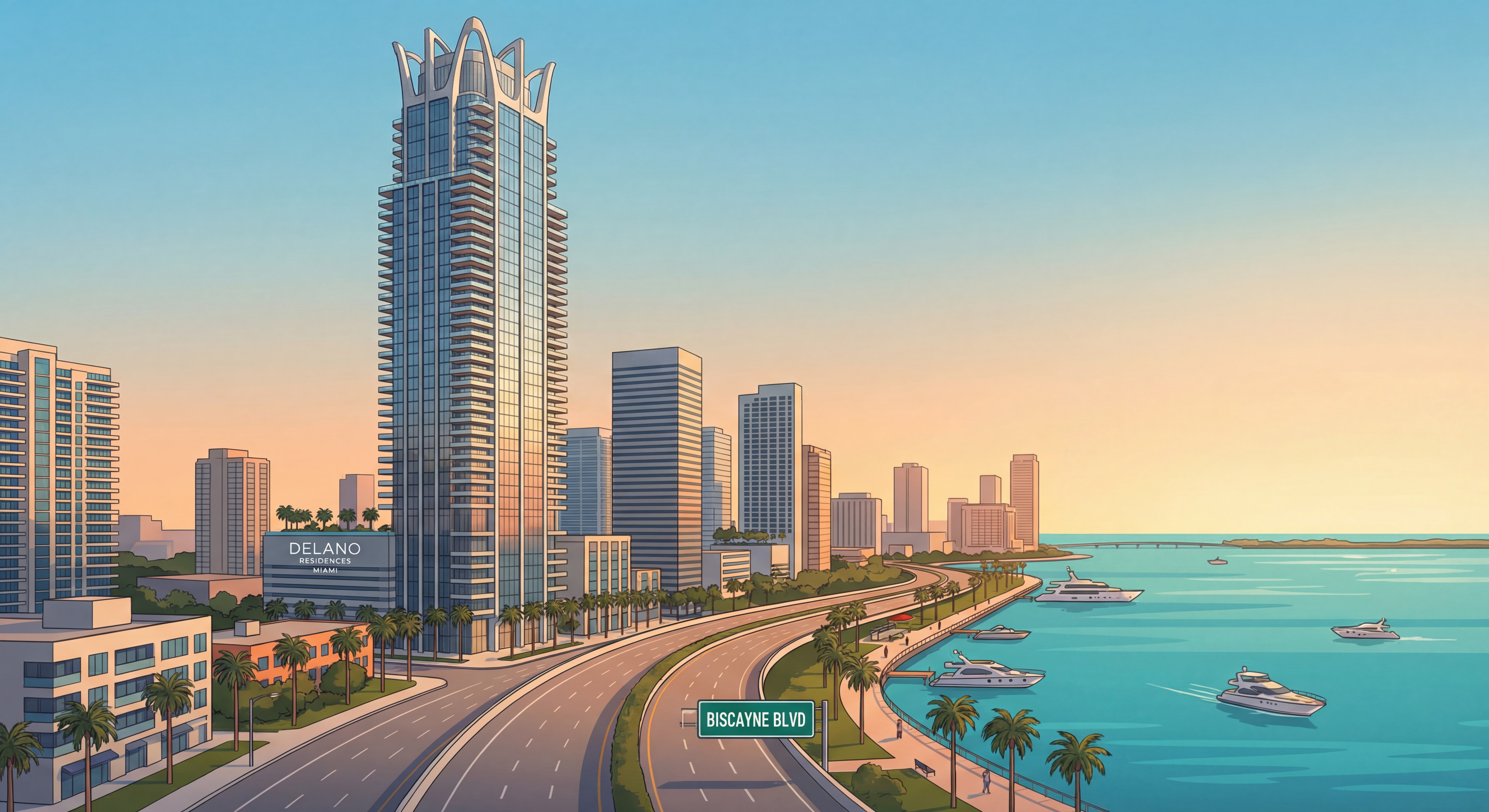
The Delano story illustrates a principle that is reshaping Miami luxury real estate 2026: in a market where multiple towers offer similar views and finishes, brand heritage has become the ultimate differentiator.
The Delano hotel brand's history is woven into Miami's cultural DNA. Originally opened as an Art Deco hotel in 1947 and famously reinvented in the 1990s as a cultural epicenter that attracted Madonna, Prince, and the global creative class, the brand carries a cultural weight that no amount of marketing spend can replicate. PMG Managing Partner Ryan Shear, who was born and raised in Miami, framed it plainly: "For decades, Delano has been one of the most influential brands in shaping Miami's identity."
The tower's amenity stack reflects this heritage-meets-modernity positioning:
- Observation deck at 850 feet — the first in Miami, featuring a cantilevered glass floor
- Sky Pool at 800 feet above the city
- Rose Bar — a reimagining of the iconic venue from the original Delano Miami Beach
- Café Delano all-day dining and a sky restaurant
- Deeded glass-encased office suites for select residences
- Interiors by Meyer Davis featuring Italkraft cabinetry, Sub-Zero and Wolf appliances, and Waterworks bathroom fixtures
📊 90-story supertall, 985 feet tall, studios from $800,000, penthouse at $50 million – Delano Residences Miami
Following the success of the Waldorf Astoria Hotel & Residences — Miami's first supertall — PMG has demonstrated that sequencing branded supertall towers in the same corridor is a viable, high-conviction development strategy. The Waldorf's performance validated the model; the Delano is executing against it.
The lesson for buyers: In Miami's increasingly competitive luxury new construction landscape, branded residences command and sustain premiums through market cycles. The Delano case demonstrates that cultural cachet, when authentically translated into a residential format, creates a value proposition that generic luxury cannot match.
What These Stories Have in Common
Across five distinct case studies — a boutique sellout, an institutional financing triumph, a Latin American rental strategy, a tax-driven relocation, and a branded supertall launch — several consistent themes emerge:
1. Scarcity is the ultimate luxury. Whether it's nine waterfront homes in Bay Harbor Islands or 195 ultra-premium units in Brickell, the projects generating the strongest outcomes are those where supply is genuinely constrained by geography, zoning, or intentional developer discipline.
2. Institutional validation matters. When JPMorgan writes a $565 million check and a boutique project sells out before completion, these are not anecdotal data points. They are market signals. Buyers who align with institutional conviction tend to achieve institutional-grade outcomes.
3. The financial case is structural, not cyclical. Florida's zero state income tax, Miami's 40–50% price-per-square-foot discount to Manhattan, and Brickell's 6%+ rental yields are not temporary conditions. They reflect durable structural advantages that compound over time.
4. Brand and design drive premium pricing. The projects outperforming their sub-markets — Indian Creek, 1428 Brickell, Delano Residences — share a commitment to architectural excellence and lifestyle curation that generic luxury cannot replicate.
5. International demand is structural, not speculative. With foreigners buying 52% of new-construction homes in Miami and Latin Americans accounting for 86% of international Downtown purchases, global demand is a permanent feature of this market, not a cycle-dependent variable.
The New York Times declared it "The New Miami Gold Rush" in March 2026. The Guardian noted that Florida's real estate boom is "drawing the super-rich as rising costs push others out." The data, the deals, and the dollars confirm it: for buyers who understand the market and act with conviction, Miami's new construction luxury sector continues to reward decisively.
Chiffres Clés
📊 10,591 active $1M+ listings in Miami as of December 2025 — surpassing New York City's 10,176 for the first time in history (Realtor.com, January 2026)
💡 $565.35 million — construction loan secured by JPMorgan for The Residences at 1428 Brickell, with the project 57% presold before financing closed (JLL Capital Markets, November 2025)
🌎 52% of new-construction homes in Miami purchased by foreign buyers, with Latin Americans representing 86% of international Downtown purchases (New York Post / Miami Association of Realtors, 2025)
💰 $267,000 — annual tax savings for a household earning $2 million annually by relocating from New York City to Miami (Manhattan Miami Real Estate tax analysis, Q1 2026)
Questions Fréquentes (FAQ)
What makes Miami new construction luxury homes a better investment than resale in 2026?
New construction offers three advantages resale cannot match: customization during the pre-construction phase, modern building systems (solar integration, smart home technology, hurricane-resistant construction), and developer warranties. More critically, pre-construction pricing in projects like The Residences at 1428 Brickell and Delano Residences locks in today's price for a product delivering in 2027–2029 — a period in which market appreciation is expected to continue. The 1428 Brickell case study, 57% presold before institutional financing closed, demonstrates that sophisticated buyers are acting on this logic decisively.
How much can Latin American buyers realistically earn renting out a Brickell luxury condo?
Brickell's median rent of $2,669 per month, combined with rental yields above 6% annually in well-located buildings, makes the rental math compelling. For a $1 million new construction condo generating $5,500–$6,500 per month in long-term rent, annual gross yield approaches 6.6–7.8% before expenses. The Latin American investor playbook — documented by Miami Today and the Miami Association of Realtors — shows this is not theoretical. It is the actual strategy being executed at scale in Brickell today.
What is the typical tax saving for a New York executive who relocates to Miami?
A household earning $1 million annually saves approximately $122,000 per year in state and city income taxes by establishing primary Florida residency instead of New York City residency. At $2 million in annual income, the saving rises to approximately $267,000 per year. Over a decade, a $2 million earner accumulates $2.67 million in cumulative tax savings — enough to fully fund a premium Miami condo purchase. Florida's zero state income tax is a permanent structural advantage, not a policy subject to near-term reversal.
How do branded luxury residences like Delano or St. Regis perform compared to non-branded towers?
Branded residences consistently command premiums in both initial pricing and resale performance. The Indian Creek Residences & Yacht Club case study — which achieved ~$1,900 per square foot, approximately 14% above Miami's overall luxury condo market average — illustrates how design authorship and lifestyle curation translate into measurable price premiums. Branded towers by Cipriani, Dolce & Gabbana, and Delano in Miami's 2026 pipeline leverage hospitality heritage and service infrastructure to create differentiation that holds through market cycles.
Is the Miami luxury new construction market at risk of oversupply?
The data suggests the opposite of oversupply in the ultra-luxury segment. The projects driving the 2026 narrative — boutique sellouts like Indian Creek, 57%-presold towers like 1428 Brickell, and supertalls like Delano — are all constrained by geography (FAA height restrictions limit supertalls to a narrow downtown corridor), developer discipline (boutique projects by design), or exceptional brand positioning. The broader market milestone — Miami overtaking New York in million-dollar listings — reflects a structural demand shift, not a supply bubble. Institutional lenders including JPMorgan are underwriting this thesis with nine-figure construction loans.


